
Card processing is the one bill a SaaS pays on every dollar it earns, and for most US developers it starts as Stripe's 2.9% + 30¢ because that API was the easiest thing to wire up. Once saved cards, webhooks and dispute handling depend on it, nobody revisits the rate.
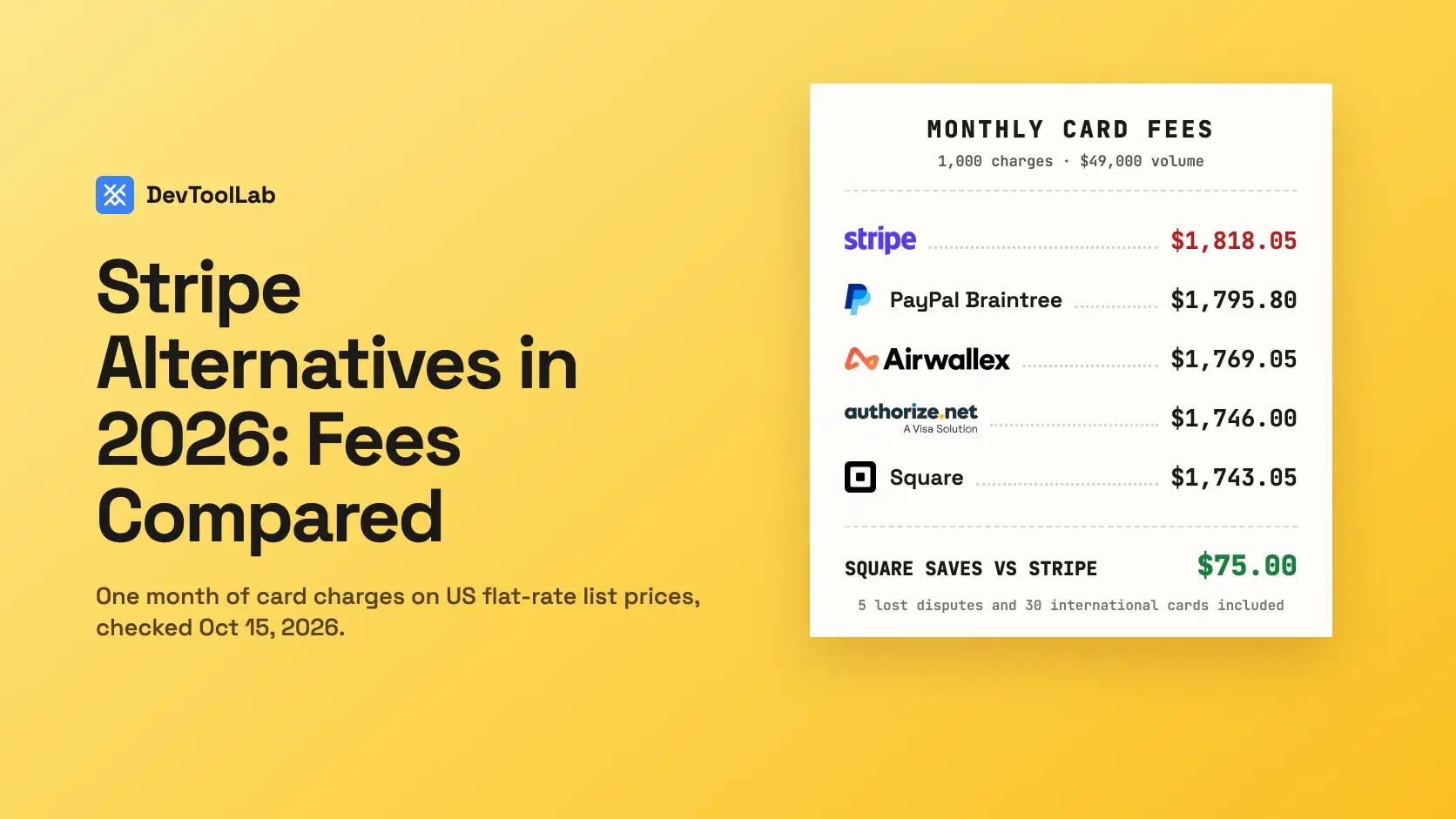
We priced one ordinary month, 1,000 charges averaging $49 with 3% on international cards and five lost disputes, on the US rates each processor published on October 15, 2026. Stripe costs $1,818.05, or 3.71% of revenue. The flat-rate alternatives land between $1,743.05 and $1,795.80, 1 to 4 percent less. Interchange-plus processors reach $1,223.70, but only if your customers' cards stay under a break-even rate the script below computes.
What Stripe Charges a US Business in 2026
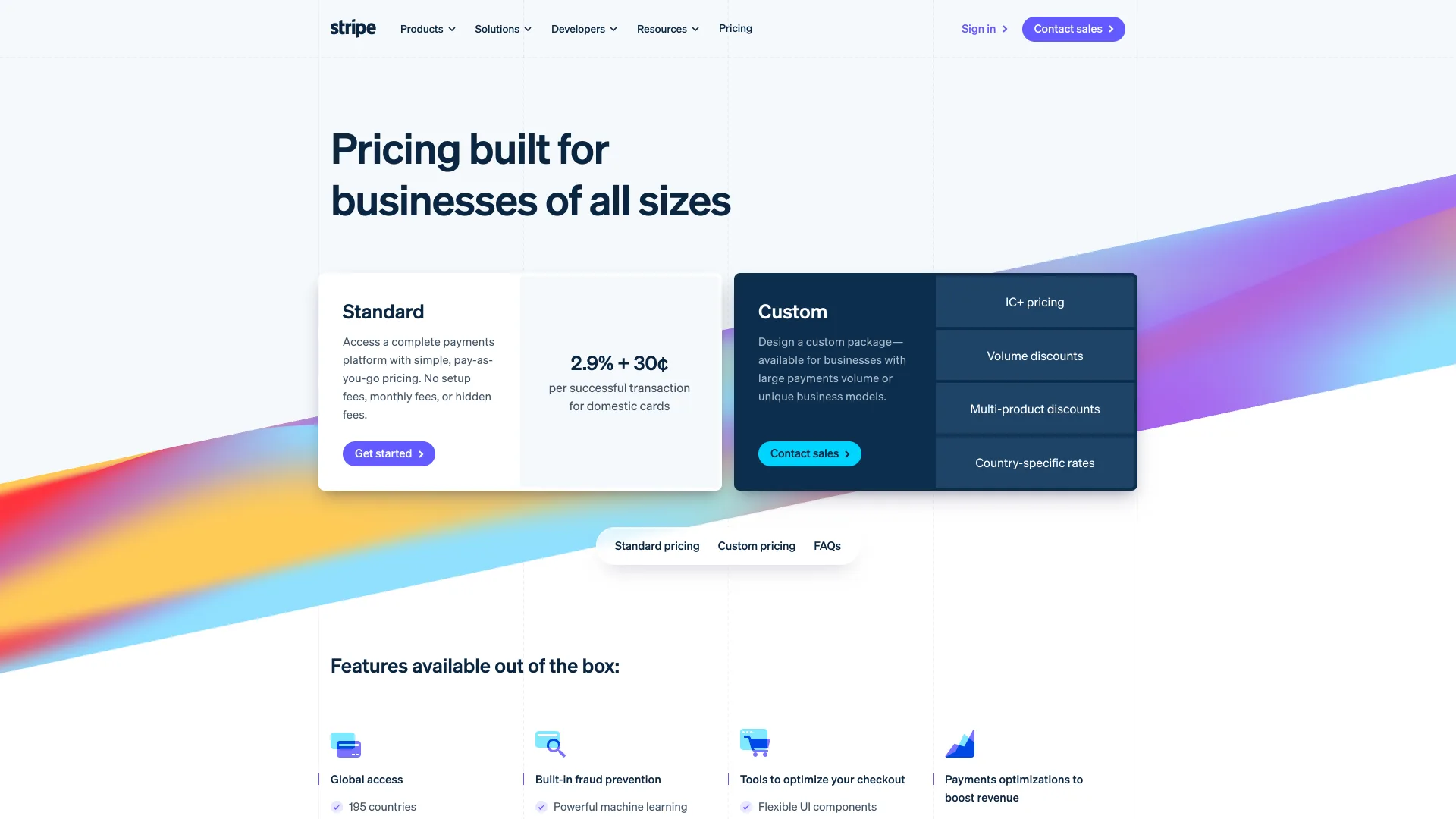
Stripe's US pricing page, checked October 15, 2026, charges 2.9% + 30¢ per successful domestic card charge, with no monthly fee. International cards add 1.5%, currency conversion adds 1%, and Stripe Terminal charges 2.7% + 5¢ in person.
Every chargeback costs a $15 dispute received fee, and responding adds a $15 dispute countered fee that comes back only if you win. Smart Disputes, where Stripe's AI assembles the evidence, takes 30% of the disputed amount on wins. US payouts settle in 2 business days after a first payout that typically takes 7 to 14 days, and Stripe Billing adds 0.7% of billing volume for subscriptions.
What a $49,000 Month Costs on Each Processor
The month costs $1,818.05 on Stripe and $1,743.05 on the cheapest flat-rate alternative, Square. Interchange-plus processors (Adyen, Helcim, Finix) pass through interchange, the fee Visa and Mastercard set and the card's issuing bank receives, so their price depends on the card. Instead of guessing a card mix, the script prices them at two consumer credit rates from Visa's US interchange table, effective April 18, 2026: 1.53% + $0.05 for a recurring charge on a Traditional Rewards card, up to 2.60% + $0.10 for a one-off charge on a spend-qualified Visa Infinite card. Visa business cards run higher, 2.65% to 3.00% + $0.10. It also solves for each one's break-even against Stripe.
js// One month of card processing for a US SaaS on each processor's published US rates. // Rates checked on each vendor's own US pricing page, October 15, 2026. const CHARGES = 1_000, AVG = 49, INTL = 0.03, DISPUTES = 5 // disputes lost, not contested const intl = Math.round(CHARGES * INTL), domestic = CHARGES - intl const volume = CHARGES * AVG const fee = (pct, fixed) => (AVG * pct) / 100 + fixed // one charge // Visa's US consumer credit card-not-present interchange, effective April 18, 2026: // Recurring (untiered) on a Traditional Rewards card (low) to Product 1 on Visa Infinite Spend Qualified (high). const VISA = { low: fee(1.53, 0.05), high: fee(2.6, 0.1) } // flat: price per domestic charge; ic: markup on top of interchange (network fees excluded) const processors = [ { name: "Stripe", flat: fee(2.9, 0.3), intlAdd: 1.5, dispute: 15, billing: 0.7 }, { name: "PayPal Braintree", flat: fee(2.89, 0.29), intlAdd: 1, dispute: 15, billing: 0 }, { name: "Square (Online API)", flat: fee(2.9, 0.3), intlAdd: 1.5, dispute: 0, billing: 0 }, { name: "Airwallex", flat: fee(2.8, 0.3), intlFlat: fee(4.3, 0.3), dispute: 15, billing: 0.5 }, { name: "Authorize.net", monthly: 25, flat: fee(2.9, 0.3), intlAdd: 0, dispute: 0, billing: 0 }, { name: "Adyen", ic: fee(0.6, 0.13), intlAdd: 0, dispute: null, billing: null }, { name: "Helcim", ic: fee(0.5, 0.25), intlAdd: 0, dispute: 15, billing: 0.4 }, { name: "Finix", monthly: 250, ic: fee(0, 0.15), intlAdd: 1.5, dispute: 30, billing: 0.4 }, ] const usd = (n) => "$" + n.toLocaleString("en-US", { minimumFractionDigits: 2, maximumFractionDigits: 2 }) const pct = (n) => ((n / volume) * 100).toFixed(2) + "%" function total(p, interchange = 0) { const perCharge = (p.flat ?? p.ic + interchange) const intlCharges = p.intlFlat ? intl * p.intlFlat : intl * (perCharge + (AVG * p.intlAdd) / 100) return (p.monthly ?? 0) + domestic * perCharge + intlCharges + DISPUTES * (p.dispute ?? 0) } const stripe = total(processors[0]) console.log(`${CHARGES} charges x $${AVG} = ${usd(volume)} | ${intl} international | ${DISPUTES} disputes lost\n`) console.log("Processor".padEnd(22) + "Month".padEnd(24) + "Effective".padEnd(18) + "With its billing") for (const p of processors) { const lo = total(p, VISA.low), hi = total(p, VISA.high) const cost = p.ic ? `${usd(lo)}-${usd(hi)}` : usd(lo) const eff = p.ic ? `${pct(lo)}-${pct(hi)}` : pct(lo) const bill = p.billing === null ? "n/a" : p.ic ? `+${usd((volume * p.billing) / 100)}` : usd(lo + (volume * p.billing) / 100) const flag = p.dispute === null ? " *" : "" console.log(p.name.padEnd(22) + (cost + flag).padEnd(24) + eff.padEnd(18) + bill) } console.log("\nBreak-even pass-through (interchange + network fees) vs Stripe's month:") for (const p of processors.filter((p) => p.ic)) { const fixedPart = total(p, 0) const perCharge = (stripe - fixedPart) / CHARGES console.log(` ${p.name.padEnd(8)} ${usd(perCharge)} per charge = ${((perCharge / AVG) * 100).toFixed(2)}% of $${AVG}`) } console.log(` Visa consumer credit rates used: ${usd(VISA.low)} to ${usd(VISA.high)} per $${AVG} charge`) console.log("\n* dispute fee not published; ranges exclude card network fees")
Real output:
text1000 charges x $49 = $49,000.00 | 30 international | 5 disputes lost Processor Month Effective With its billing Stripe $1,818.05 3.71% $2,161.05 PayPal Braintree $1,795.80 3.66% $1,795.80 Square (Online API) $1,743.05 3.56% $1,743.05 Airwallex $1,769.05 3.61% $2,014.05 Authorize.net $1,746.00 3.56% $1,746.00 Adyen $1,223.70-$1,798.00 * 2.50%-3.67% n/a Helcim $1,369.70-$1,944.00 2.80%-3.97% +$196.00 Finix $1,371.75-$1,946.05 2.80%-3.97% +$196.00 Break-even pass-through (interchange + network fees) vs Stripe's month: Adyen $1.39 per charge = 2.85% of $49 Helcim $1.25 per charge = 2.55% of $49 Finix $1.25 per charge = 2.54% of $49 Visa consumer credit rates used: $0.80 to $1.37 per $49 charge * dispute fee not published; ranges exclude card network fees
Switching between flat-rate processors barely moves the bill: Braintree saves $22.25. Adyen beats Stripe at both consumer credit rates before network fees, with 2 cents a charge to spare at the top, though not on Visa business cards, while Helcim and Finix win on ordinary cards and lose on premium rewards cards. Billing subscriptions through Stripe Billing adds $343, more than the gap between any two flat-rate options.
PayPal Braintree: Cheaper Cards, Pricier PayPal Button
PayPal Braintree is PayPal's developer gateway, and its US page now reads "Braintree is now PayPal Enterprise Payments."
What it does well: cards, PayPal and Venmo in one integration, with US cards at 2.89% + $0.29 (updated May 7, 2026), non-US cards adding only 1%, and no listed fee for recurring billing.
What it does not do: payments through the PayPal button fall under PayPal Checkout's 3.49% + $0.49, so a PayPal-heavy checkout costs more than Stripe. Deposits take 2 to 5 business days after settlement.
Pricing: Cards 2.89% + $0.29 · non-US cards +1% · Venmo 3.49% + $0.49 · chargeback $15.
Square: No Dispute Fees, One Card-on-File Catch
Square is known for card readers, but its Payments and Subscriptions APIs take online charges at Stripe's 2.9% + 30¢.
What it does well: Square charges nothing for chargebacks, the entire $75 it saved here, and transfers arrive the next business day at no cost.
What it does not do: it lists 3.5% + 15¢ for manual entry or card on file, so confirm which bucket your stored-card renewals land in before you build. Instant transfers cost 1.95%.
Pricing: Online API 2.9% + 30¢ · in person 2.6% + 15¢ · international +1.5% · chargebacks $0.
Airwallex: Lowest Flat Domestic Rate, Steepest International
Airwallex bundles card acceptance with multi-currency business accounts, billing and an AI assistant.
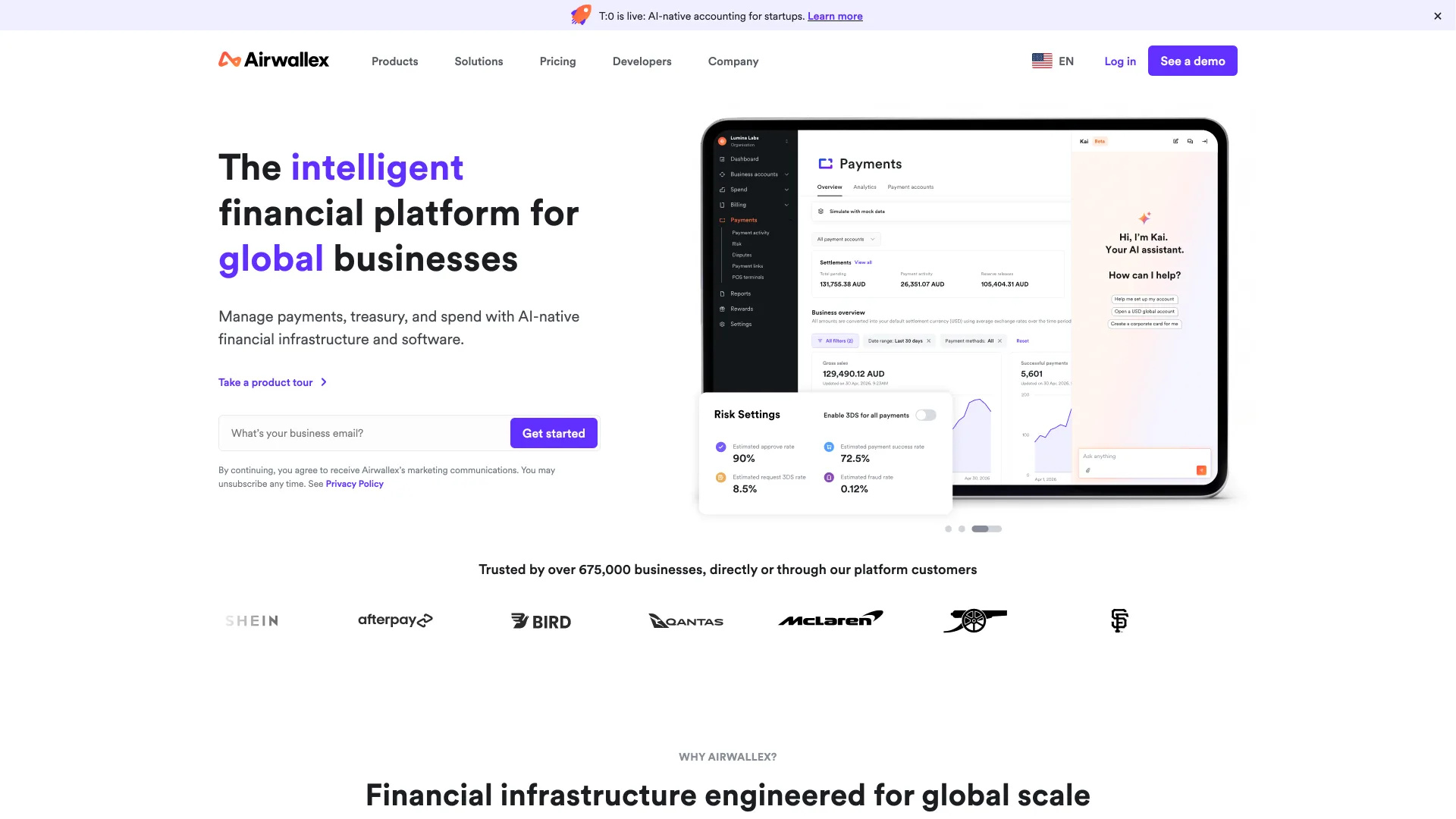
What it does well: domestic cards cost 2.8% + $0.30, the lowest flat rate here, and settle 1 business day after capture. Usage-based billing is 0.50% per transaction, a fit for an AI product billed per token.
What it does not do: international cards jump to 4.30% + $0.30, a lost dispute costs $15 (in its fee schedule, not on the pricing page), and funds land in an Airwallex balance rather than your bank.
Pricing: Domestic 2.8% + $0.30 · international 4.30% + $0.30 · billing +0.50% · dispute $15 · Explore plan $0.
Authorize.net: A $25 Gateway With a Visa Badge
Authorize.net carries "A Visa Solution" under its logo and bundles a gateway and merchant account in one plan.
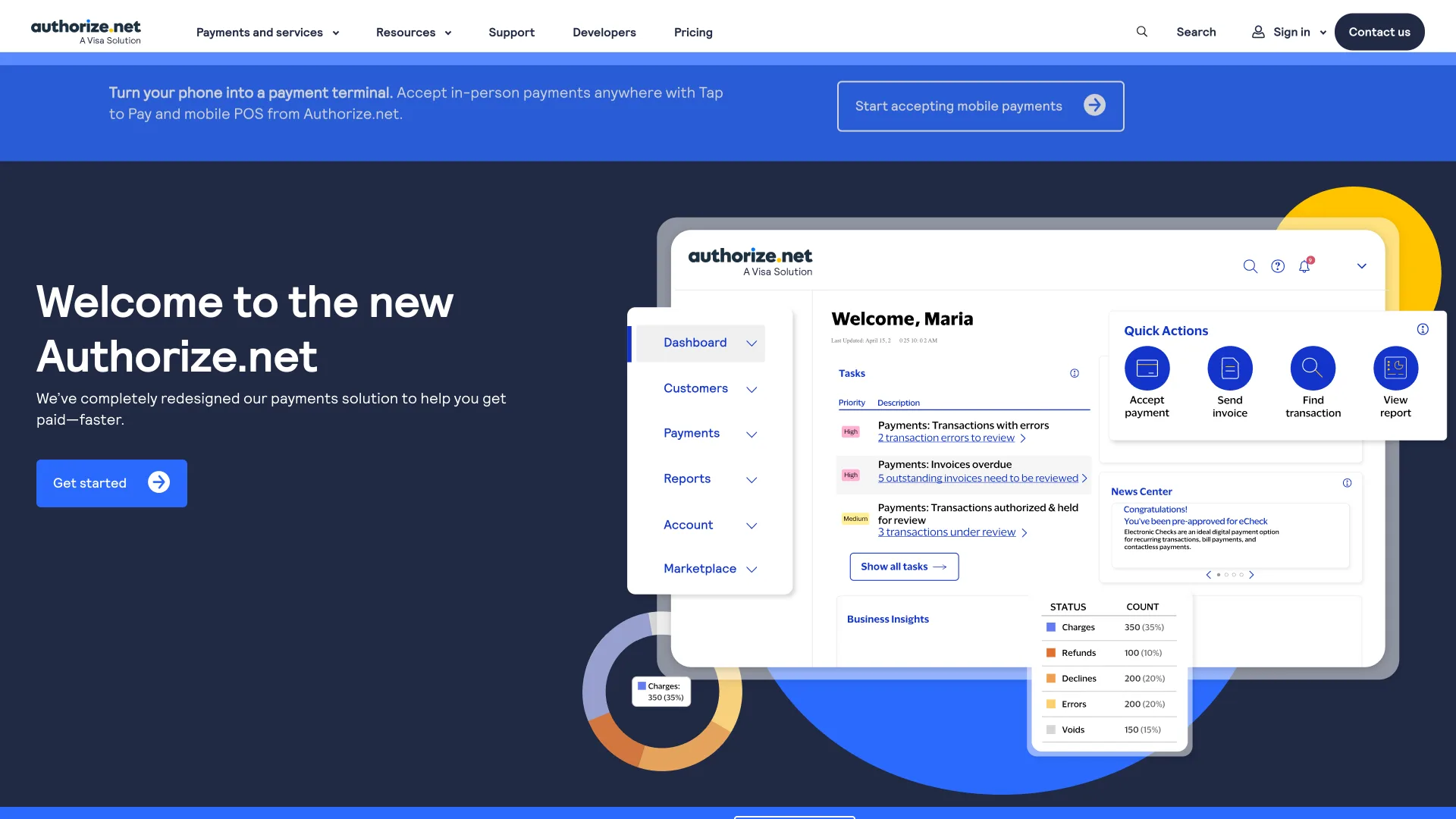
What it does well: All-in-one is 2.9% + 30¢ plus $25 a month, and its gateway fee table lists $0.00 for chargebacks and recurring billing, so it beat Stripe by $72.05 here.
What it does not do: the $25 applies at any volume. Funding runs through your merchant service provider, and the page only cites an industry average of 3 to 5 business days.
Pricing: All-in-one $25/month + 2.9% + 30¢ · Gateway only $25/month + 10¢ per transaction + 10¢ daily batch.
Hyperswitch: Open Source Routing Across Processors
Juspay Hyperswitch is not a processor but an Apache 2.0 payments switch, written in Rust, whose connector list covers every processor in this post.
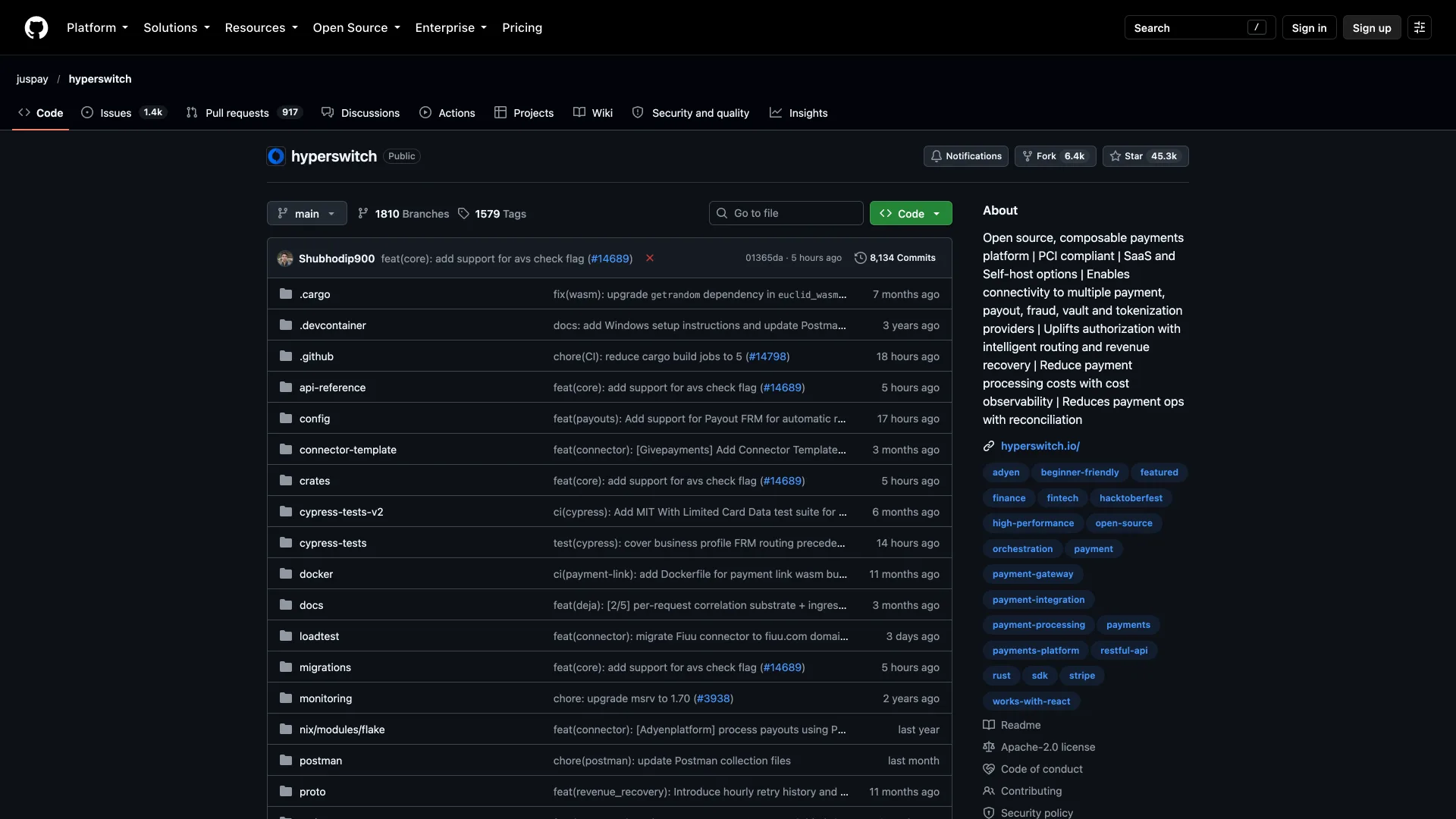
What it does well: the free self-hosted Community Edition connects to 90+ processors with rule-based and ML-driven routing, a card vault and fraud orchestration, so you can send 10% of traffic to Helcim before committing.
What it does not do: process cards. You still pay each processor, and a self-hosted vault puts PCI compliance on you.
License and version: Apache-2.0, 45.3k stars, v1.127.0 released September 28, 2026 · Enterprise and Cloud quote only.
Adyen: Interchange++ at 0.60% Plus 13 Cents
Adyen charges a fixed $0.13 per transaction plus a payment method fee, which for Visa and Mastercard is interchange++ plus 0.60%.
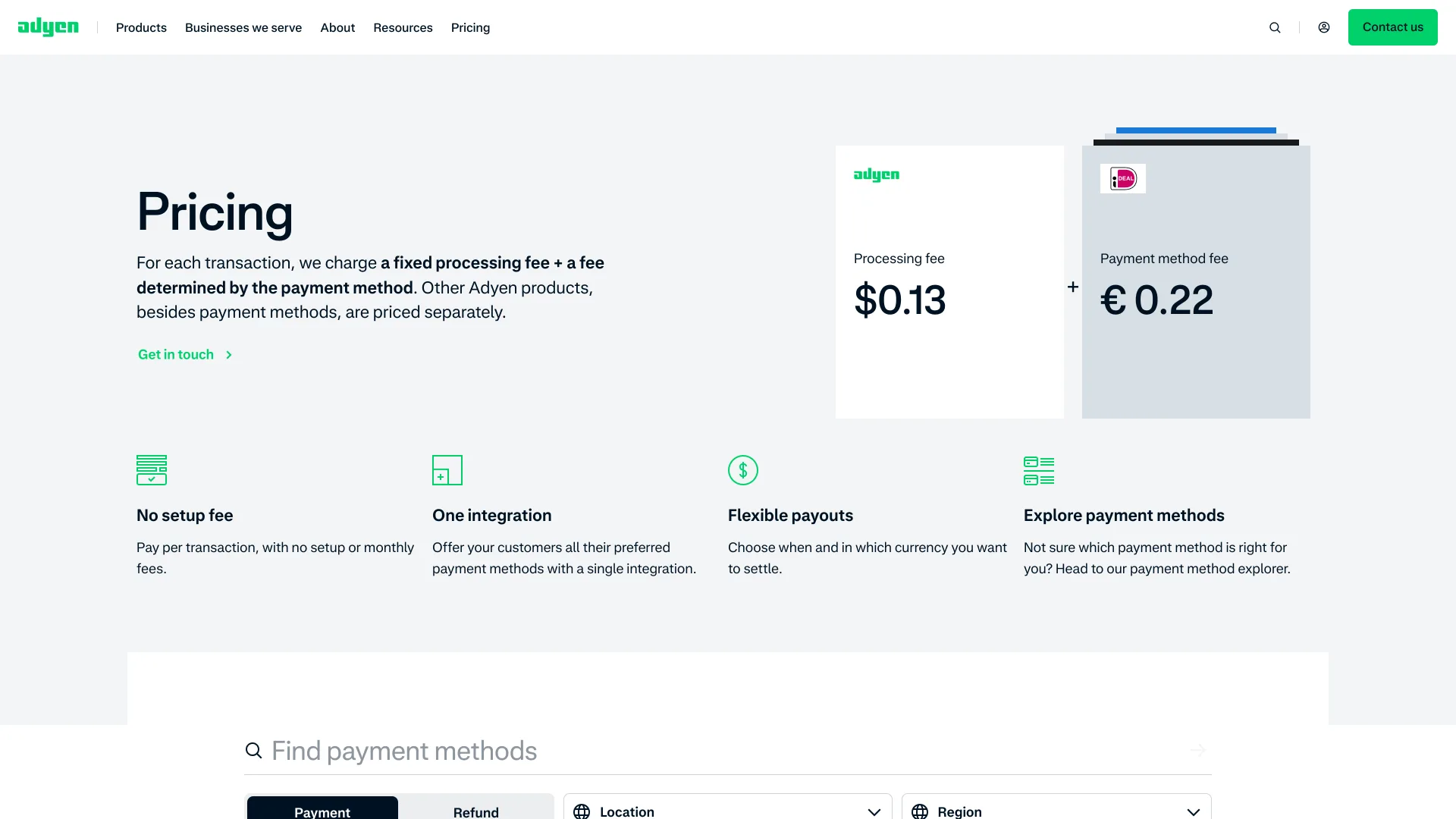
What it does well: the cheapest interchange-plus month in the script, with $0.424 of markup on a $49 charge and no setup or monthly fees. Checkout.com sells a similar interchange++ deal, but only by quote.
What it does not do: small accounts. Its FAQ says a minimum invoice applies by industry or business model, calls the listed fees indicative and publishes no chargeback fee. Payouts start 1 to 2 business days after a batch closes.
Pricing: $0.13 + interchange++ + 0.60% (Visa, Mastercard) · Amex $0.13 + 3.3% + $0.10 · ACH $0.13 + $0.27.
Helcim: Interchange-Plus With No Monthly Fee
Helcim, based in Calgary with a Seattle office, sells interchange-plus pricing and raised a CAD $53 million Series C in August 2026.
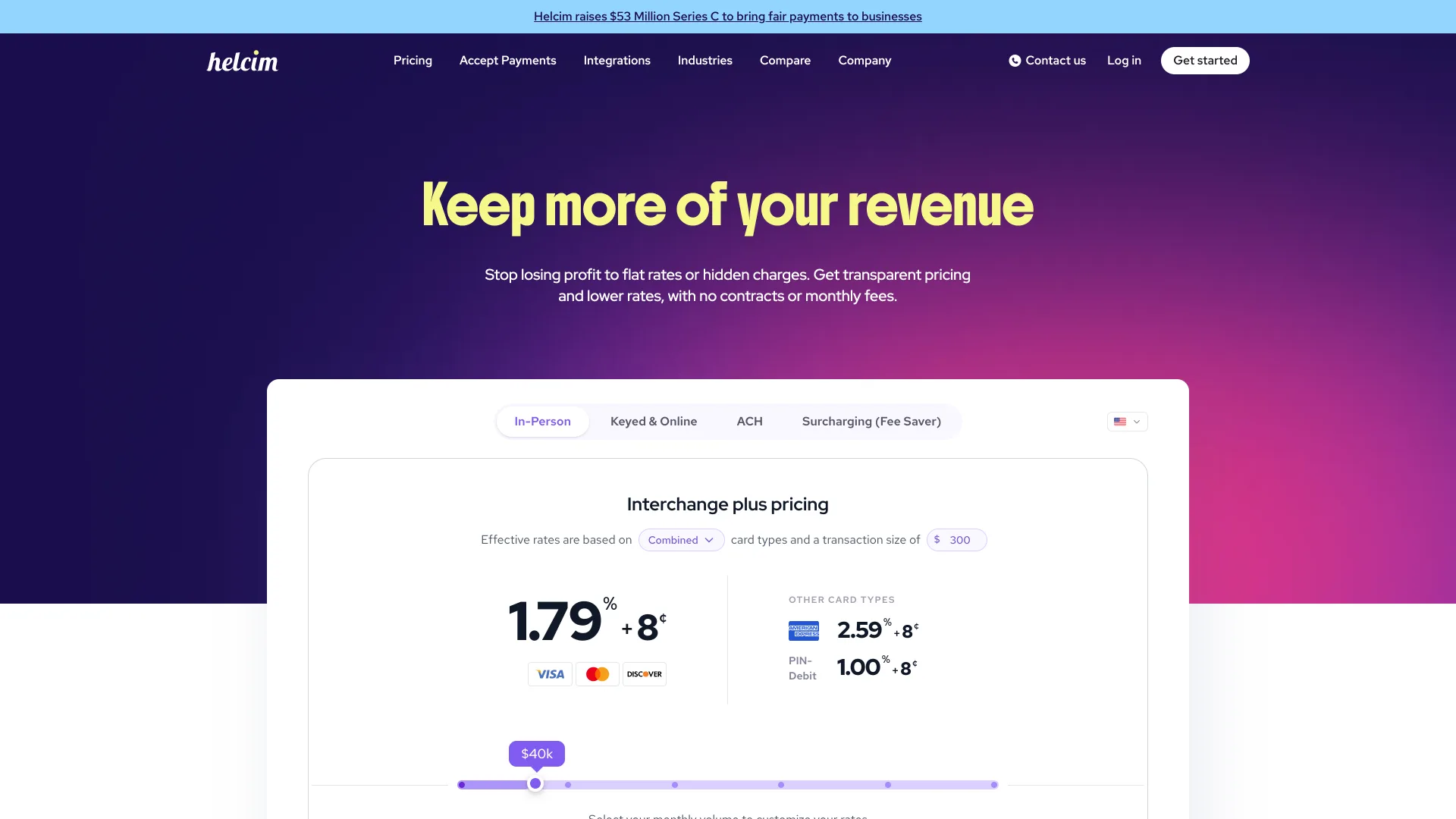
What it does well: online charges cost interchange + 0.50% + 25¢ under $50,000 a month, dropping automatically with volume to interchange + 0.15% + 15¢. There are no monthly or PCI fees, card data migration is free, deposits arrive the next business morning, and a chargeback costs $15 only if you lose.
What it does not do: Recurring Payments adds 0.4% per transaction, and the 2.55% break-even means a base of premium rewards cards can cost more than Stripe.
Pricing: Online interchange + 0.50% + 25¢ (under $50K/month) · in person interchange + 0.40% + 8¢ · recurring +0.4%.
Finix: A $250 Subscription for Wholesale Rates
Finix builds payments infrastructure for software platforms and also sells direct merchant accounts where a monthly fee buys interchange at cost.
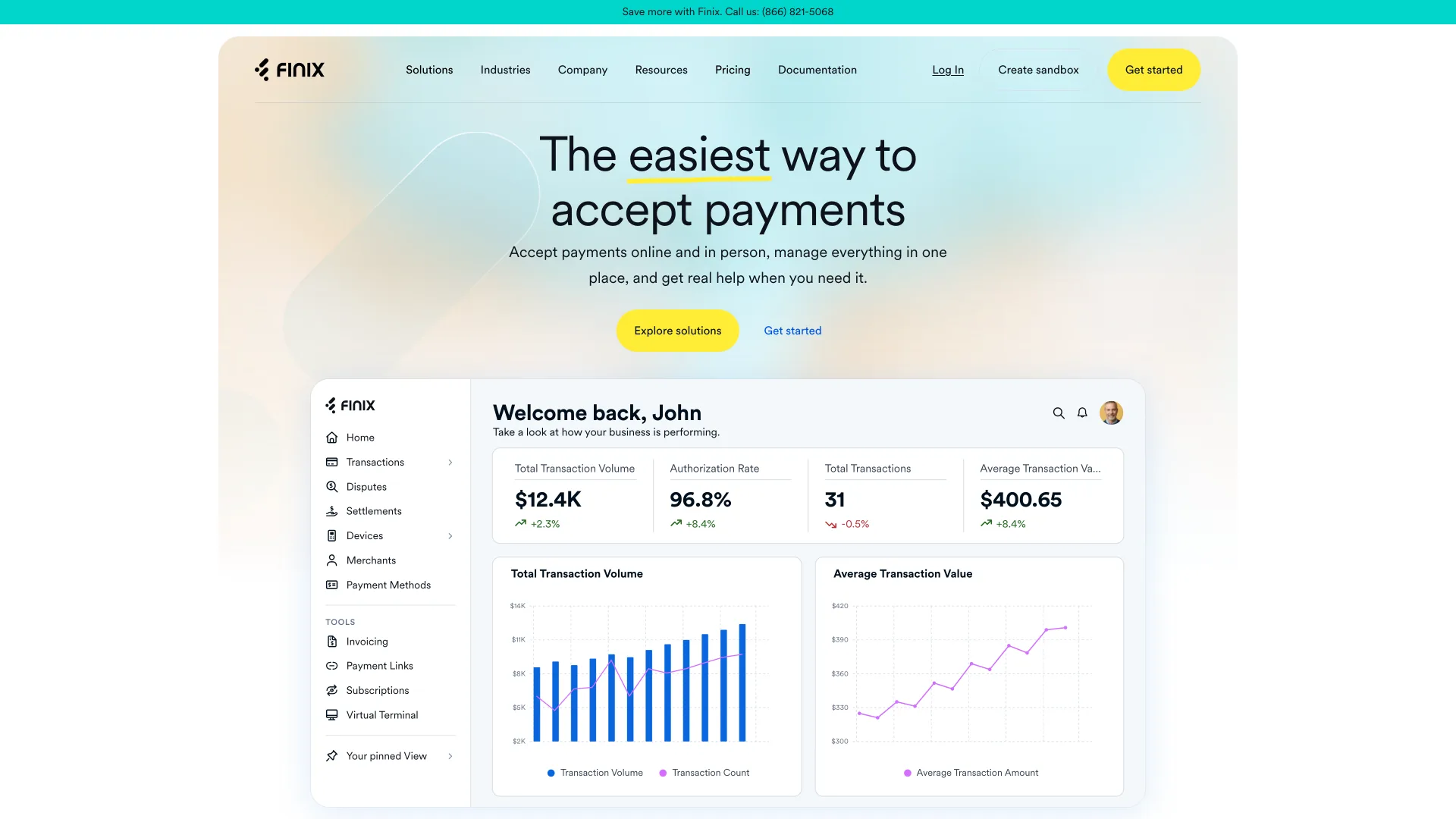
What it does well: Visa, Mastercard and Discover charges carry $0.15 on top of pass-through, the thinnest per-charge markup here, and ACH payouts are free at T+2 banking days or T+1 same day.
What it does not do: the $250 Monthly Membership Fee comes first, a dispute costs $30, and international cards add 1.5%. At this volume it lands within $3 of Helcim.
Pricing: $250/month · $0.15 per card charge + pass-through · international +1.5% · dispute $30 · subscription billing +0.40%.
When You Want Someone Else to Handle Sales Tax
Every processor above leaves you as the seller, so sales tax, VAT and GST registrations stay yours. A merchant of record such as Paddle, Lemon Squeezy or Polar becomes the legal seller for a higher per-sale fee, and Stripe sells its own, Managed Payments. Their fees are in Best Merchant of Record Platforms.
Side by Side
| Processor | Pricing model | Online card rate | International cards | Dispute fee | Payout | Example month |
|---|---|---|---|---|---|---|
| Stripe | Flat | 2.9% + 30¢ | +1.5% | $15, +$15 if countered | 2 business days | $1,818.05 |
| PayPal Braintree | Flat | 2.89% + 29¢ | +1% | $15 | 2 to 5 business days | $1,795.80 |
| Square | Flat | 2.9% + 30¢ | +1.5% | $0 | Next business day | $1,743.05 |
| Airwallex | Flat | 2.8% + 30¢ | 4.30% + 30¢ | $15 | 1 business day | $1,769.05 |
| Authorize.net | Flat + $25/month | 2.9% + 30¢ | None listed | $0.00 listed | Via your provider | $1,746.00 |
| Hyperswitch | Open source router | Your processors' | Your processors' | Your processors' | Your processors' | $0 license |
| Adyen | Interchange++ | IC++ + 0.60% + $0.13 | Pass-through | Not published | Configurable | $1,223.70 to $1,798.00 |
| Helcim | Interchange-plus | IC + 0.50% + 25¢ | Pass-through (Visa +1.45% + 3.6¢) | $15 if lost | Next business morning | $1,369.70 to $1,944.00 |
| Finix | IC+ + $250/month | IC + $0.15 | +1.5% | $30 | T+2, free | $1,371.75 to $1,946.05 |
How to Choose Without Migrating Twice
- Pull last month's card mix. Stripe records each charge's card brand, funding type and country. Regulated debit is cheap under interchange-plus (Visa's rate is 0.05% + $0.21, plus a 1¢ fraud-prevention adjustment); small-bank debit costs 1.60% to 1.65% + $0.15 online, and premium rewards cards cost more.
- Rerun the script with your numbers. A smaller
AVGmakes the fixed fee matter more, which favors Finix's 15¢ and Adyen's 13¢ over Stripe's 30¢. - Compare your pass-through to the break-evens. Below 2.54% of a charge, Helcim and Finix both beat Stripe; below 2.85%, Adyen does. Ask each for its network fees too.
- Get fixed costs in writing. Adyen's minimum invoice and Finix's $250 membership decide small accounts.
- Plan the saved-card move. Stripe exports card data only to a PCI DSS Level 1 processor and excludes cards saved through Link, so check the new processor qualifies before signing.
Which One Should You Actually Use?
Under $50,000 a month and happy with the API: Stay on Stripe, and counter only the disputes you can win, since each loss after responding costs another $15.
Growing, with no appetite for minimums: Helcim, interchange-plus with no monthly fee and volume discounts that apply on their own.
Large volume and engineers to spare: Adyen, once sales names the minimum invoice.
PayPal and Venmo next to cards: PayPal Braintree, as long as most customers still pay by card.
Afraid of migrating twice: Hyperswitch in front of Stripe, routing a slice of traffic to a second processor until the numbers hold.
Conclusion
Flat rates have converged on roughly 2.9% + 30¢, so trading Stripe for another flat-rate processor saves 1 to 4 percent of the fee bill. The real choice is flat versus interchange-plus, and it turns on a number you already have: your card mix. Pull it before you renew anything.
Related DevToolLab Tools
- Credit Card Validator - catch a mistyped card number before it becomes a declined authorization a gateway still bills.
- Webhook Signature Verifier - check a Stripe or other HMAC-signed payment webhook while porting handlers to a new processor.
- PayPal Fee Calculator - see what PayPal's checkout rate takes from one sale before you add the PayPal button.
- Margin Calculator - work out what a 3.71% processing cost does to the margin on a $49 plan.
Related Guides
- Best Merchant of Record Platforms in 2026 - Paddle, Lemon Squeezy, Polar and Stripe Managed Payments, for when sales tax is the real problem.
- Best Usage-Based Billing Platforms 2026 - the metering and invoicing layer on top of whichever processor you pick.
- What Is a Webhook? - how a processor reports charges and disputes back to your app.
- x402 Protocol Explained - how AI agents pay for APIs without a card at all.