
Before you hand a general AI agent a job, you want two answers: what the task will cost, and where your files end up while it works. Credit billing and someone else's cloud make both harder.
Manus is the agent most people try first. On October 8, 2026, its parent company Butterfly Effect said it had raised more than $500 million, led by Boyu Capital and IDG Capital, as TechCrunch reported. That was months after Chinese regulators forced Meta to abandon its $2 billion acquisition. We tried to price one recurring task across Manus and seven alternatives. Only one hosted vendor publishes enough to do it.
Why Developers Are Looking Past Manus
Manus is a hosted agent that plans a task, works in a sandboxed virtual computer with internet access, and returns a finished report, website, deck or video. Manus 2.0, announced September 28, 2026, added the Cascade agent harness, rentable Cloud Computers and event-triggered Automations.
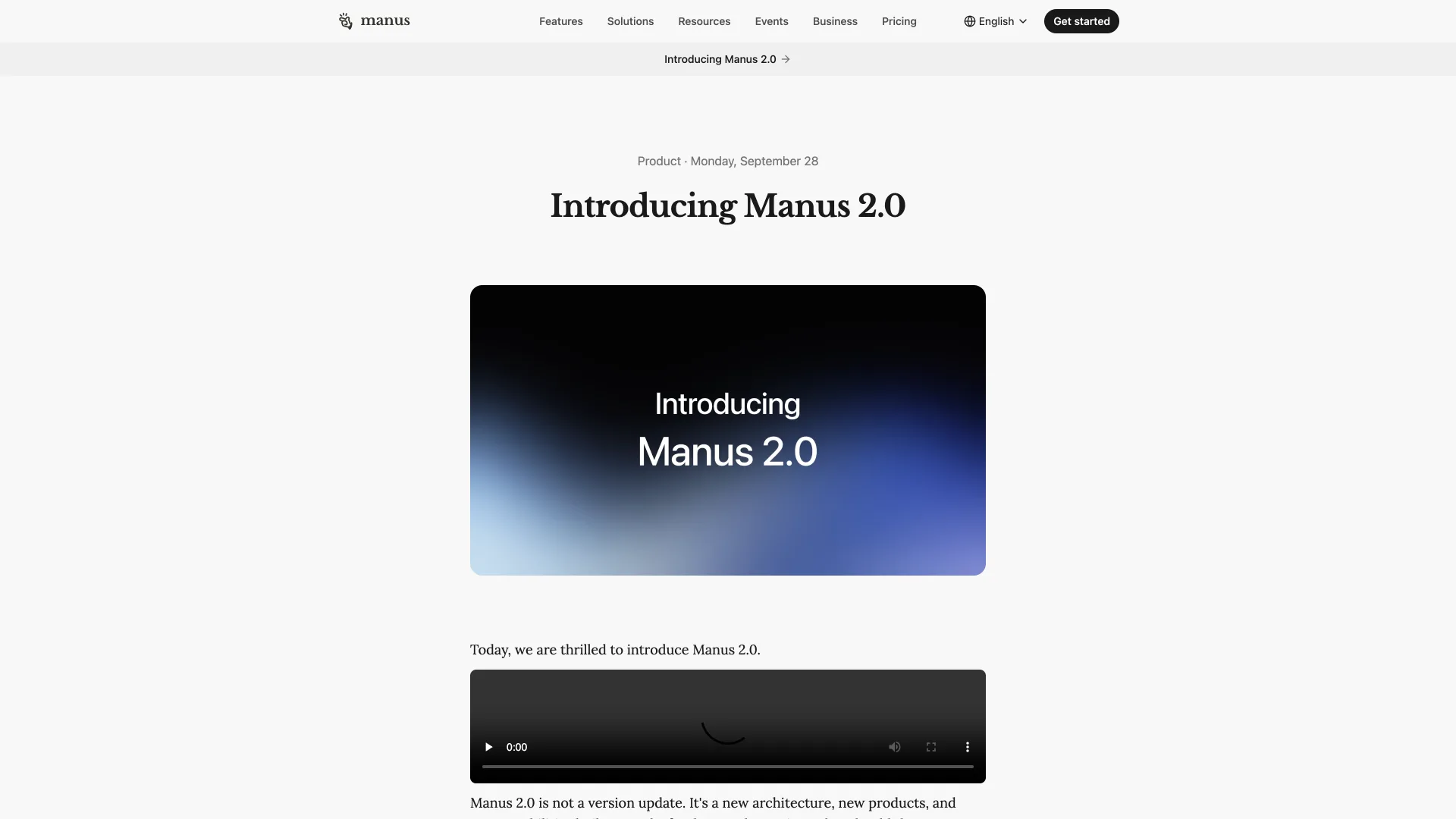
Three things push developers elsewhere, and ownership comes first. Meta announced the acquisition in December 2025 and Chinese authorities ordered it unwound in April 2026. Then on August 23 and 24, 2026 (Singapore time), after a two-week backup window, Manus deleted data some users had created since December 29, 2025, citing "regulatory requirements in specific jurisdictions." For a US team, a foreign regulator decided what happened to customers' work.
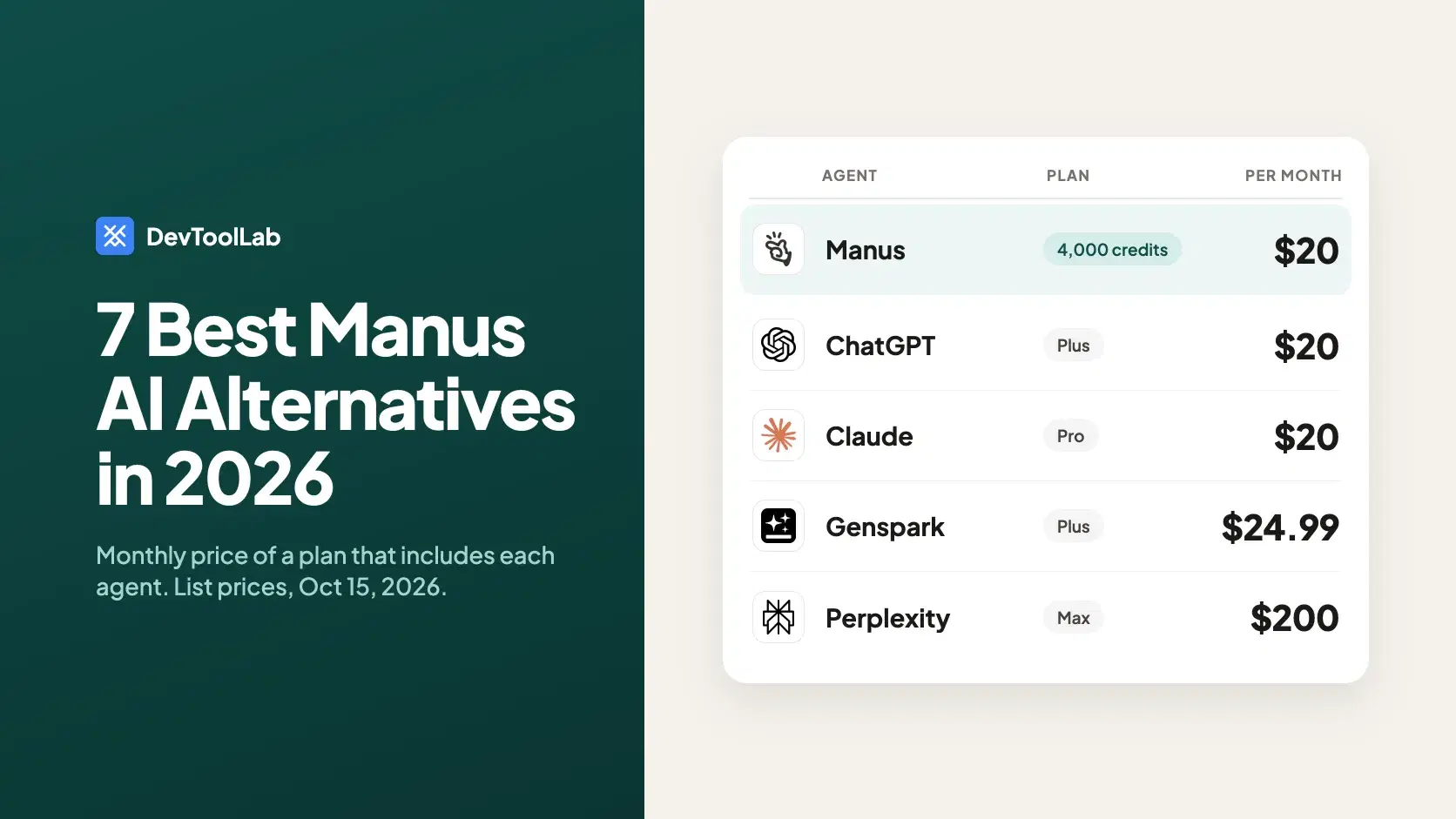
The meter is the second problem. Manus charges $20 a month for 4,000 credits, $40 for 8,000 and $200 for 40,000, plus 300 daily credits usable only on Manus 2.0 Lite, per its pricing page on October 15, 2026. That is a flat $5 per 1,000 credits. Per-task cost is vaguer: Manus says it "depends on the complexity of the task" and cannot estimate a task before it starts. The credits page shows just three sample tasks (200 to 900 credits), so you learn the price afterward.
Model choice arrived late. Bring-your-own-key came only with Manus Flex on September 29, 2026, and even under Flex, infrastructure still burns credits.
What a Credit Buys at Each Vendor
Our worked example is a weekly competitive landscape report with pricing and feature comparisons, four runs a month. The prompt comes from Perplexity's credits page, the only one here with typical credit ranges by task type.
| Vendor, entry paid plan | Price | Credits included | Credits per $1 | Published cost per task |
|---|---|---|---|---|
| Manus | $20/month | 4,000 + 300/day (Lite only) | 200 | Three samples only |
| Genspark Plus | $24.99/month | 10,000 | 400 | No |
| Perplexity Max | $200/month | 10,000 | 100 | Yes, by task type |
| Kortix Team | $40/seat/month | 2,500 (compute and managed models) | 62.5 | Hours, not tasks |
Perplexity's credits page, last modified October 13, 2026, puts a "Multi-step research report" like ours at 350 to 950 credits. At 100 credits per dollar, that is $3.50 to $9.50 a run, or $14 to $38 a month. Genspark sells the most credits per dollar but never says what a typical task costs.
How Active the Open-Source Options Are
Stars say little about maintenance, so this script asks GitHub for each self-hosted option's license, latest release and 30-day commit count.
Python# How alive is each open-source Manus alternative? GitHub's own numbers, no token needed. # usage: python3 agent_repos.py import base64, json, re, urllib.error, urllib.request from datetime import datetime, timedelta, timezone REPOS = ["bytedance/deer-flow", "FoundationAgents/OpenManus", "kortix-ai/suna"] SINCE = (datetime.now(timezone.utc) - timedelta(days=30)).strftime("%Y-%m-%dT%H:%M:%SZ") def get(path): req = urllib.request.Request(f"https://api.github.com/{path}", headers={"Accept": "application/vnd.github+json", "User-Agent": "agent-repos"}) with urllib.request.urlopen(req, timeout=30) as r: return json.loads(r.read()), r.headers.get("Link", "") def commits_last_30_days(name): # One commit per page, so the "last" page number in the Link header is the count. body, link = get(f"repos/{name}/commits?since={SINCE}&per_page=1") m = re.search(r'[?&]page=(\d+)>; rel="last"', link) return int(m.group(1)) if m else len(body) print(f"{'repo':28} {'stars':>7} {'license':22} {'latest release':24} {'commits/30d':>11}") for name in REPOS: repo, _ = get(f"repos/{name}") lic, _ = get(f"repos/{name}/license") license_name = base64.b64decode(lic["content"]).decode().strip().splitlines()[0].strip("# ") try: rel, _ = get(f"repos/{name}/releases/latest") # newest non-prerelease latest = f"{rel['tag_name']} ({rel['published_at'][:10]})" except urllib.error.HTTPError: latest = "none" print(f"{name:28} {repo['stargazers_count']:>7,} {license_name[:22]:22} {latest:24} {commits_last_30_days(name):>11,}")
textrepo stars license latest release commits/30d bytedance/deer-flow 83,882 MIT License v2.1.0 (2026-09-24) 873 FoundationAgents/OpenManus 58,661 MIT License v0.3.0 (2025-04-10) 0 kortix-ai/suna 20,276 Elastic License 2.0 v0.13.57 (2026-10-14) 2,909
DeerFlow shipped v2.1.0 on September 24, 2026, and Kortix released v0.13.57 a day before our run. OpenManus is the outlier: zero commits to its default branch in 30 days, and no release since v0.3.0 in April 2025.
ChatGPT Work: The Agent Already in Your Plus Plan
ChatGPT Work is OpenAI's agent for long, multi-step jobs, launched July 9, 2026 to replace the retired agent mode. It works across connected apps and files and produces documents, spreadsheets, decks and Sites. Scheduled Tasks run it on a schedule or trigger.
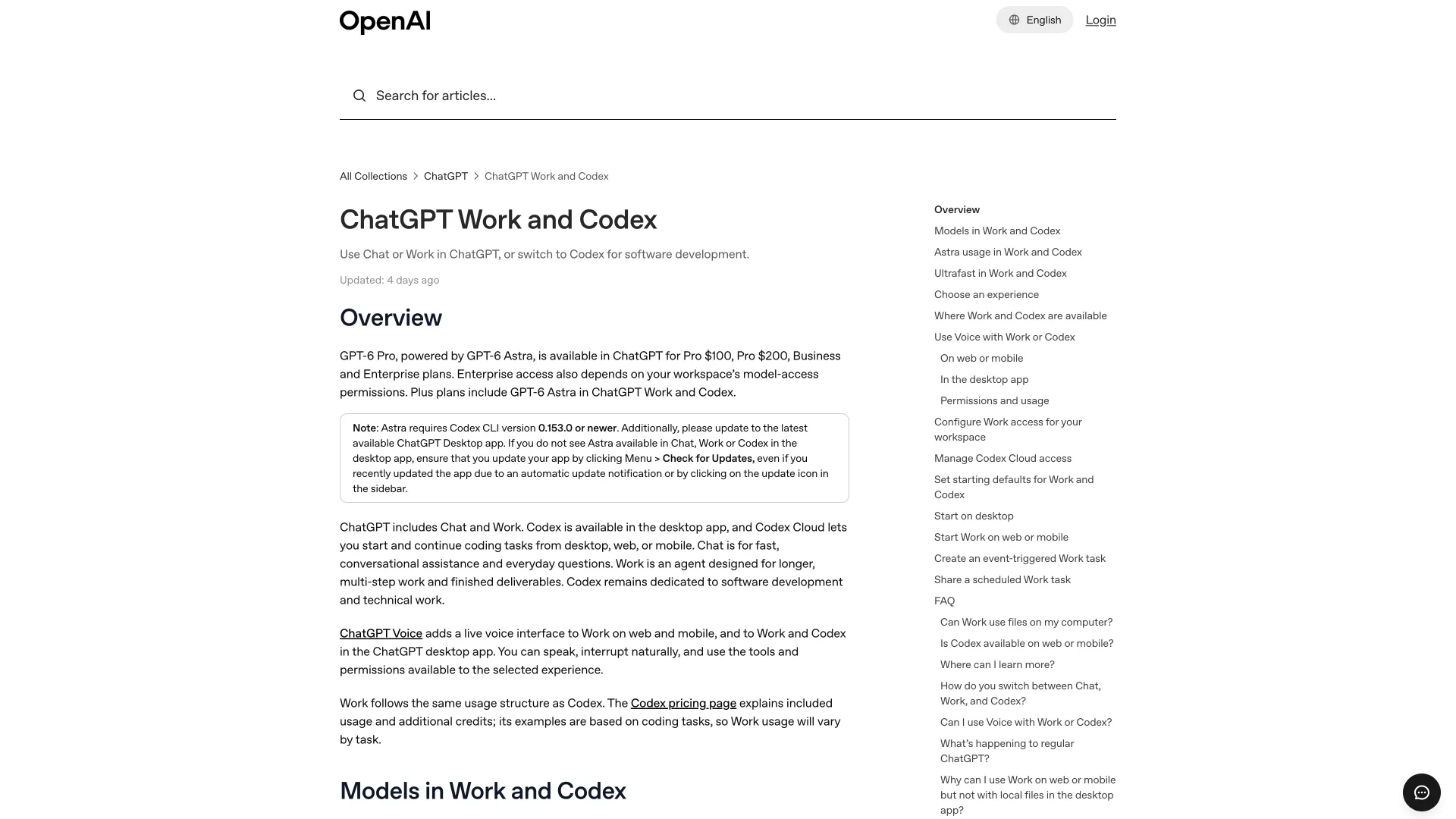
On ChatGPT Plus at $20 a month, Work costs nothing extra, and Plus includes GPT-6 Astra in Work. It runs in the cloud on web and mobile. The desktop app can use local files with your permission.
There is no published per-task allowance. OpenAI says only that "Work usage will vary by task," and longer sessions need Pro, from $100 a month. Free and the $8 Go plan get it in the desktop app only. It runs only OpenAI models.
Pricing: Plus $20/month · Pro from $100/month · License: proprietary.
Claude: Cowork Folded Into the Chat App
Claude from Anthropic absorbed its Cowork agent on September 16, 2026, so quick questions and multi-hour handoffs share one conversation: schedule the report and come back to a document and slides.
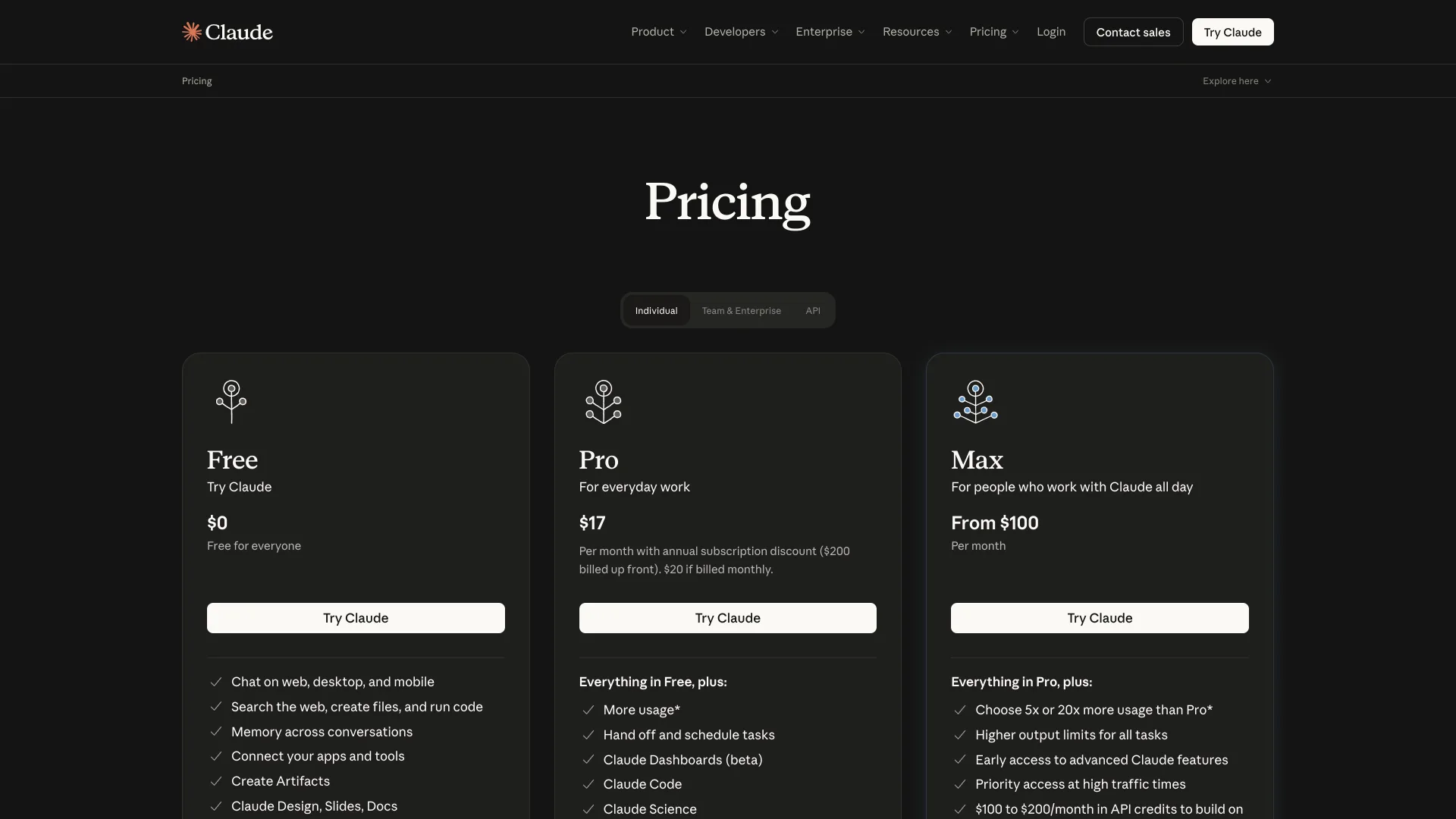
You get no meter here. Pro is $20 a month ($17 billed annually) and Max starts at $100 for 5x or 20x Pro's usage, but the pricing page never says how much agent work either covers. The merge reached Pro and Max first; Team and Free follow.
The upside: nothing is set up twice. Your existing connectors, skills and projects carry into agent work. By default Claude asks before taking an action, and Slides download as PowerPoint or PDF.
Pricing: Pro $20/month · Max from $100/month · License: proprietary.
DeerFlow: ByteDance's MIT-Licensed Super Agent
DeerFlow is ByteDance's open-source "super agent harness" that orchestrates sub-agents, memory and sandboxes through skills. Version 2.0, a ground-up rewrite, topped GitHub Trending on February 28, 2026.
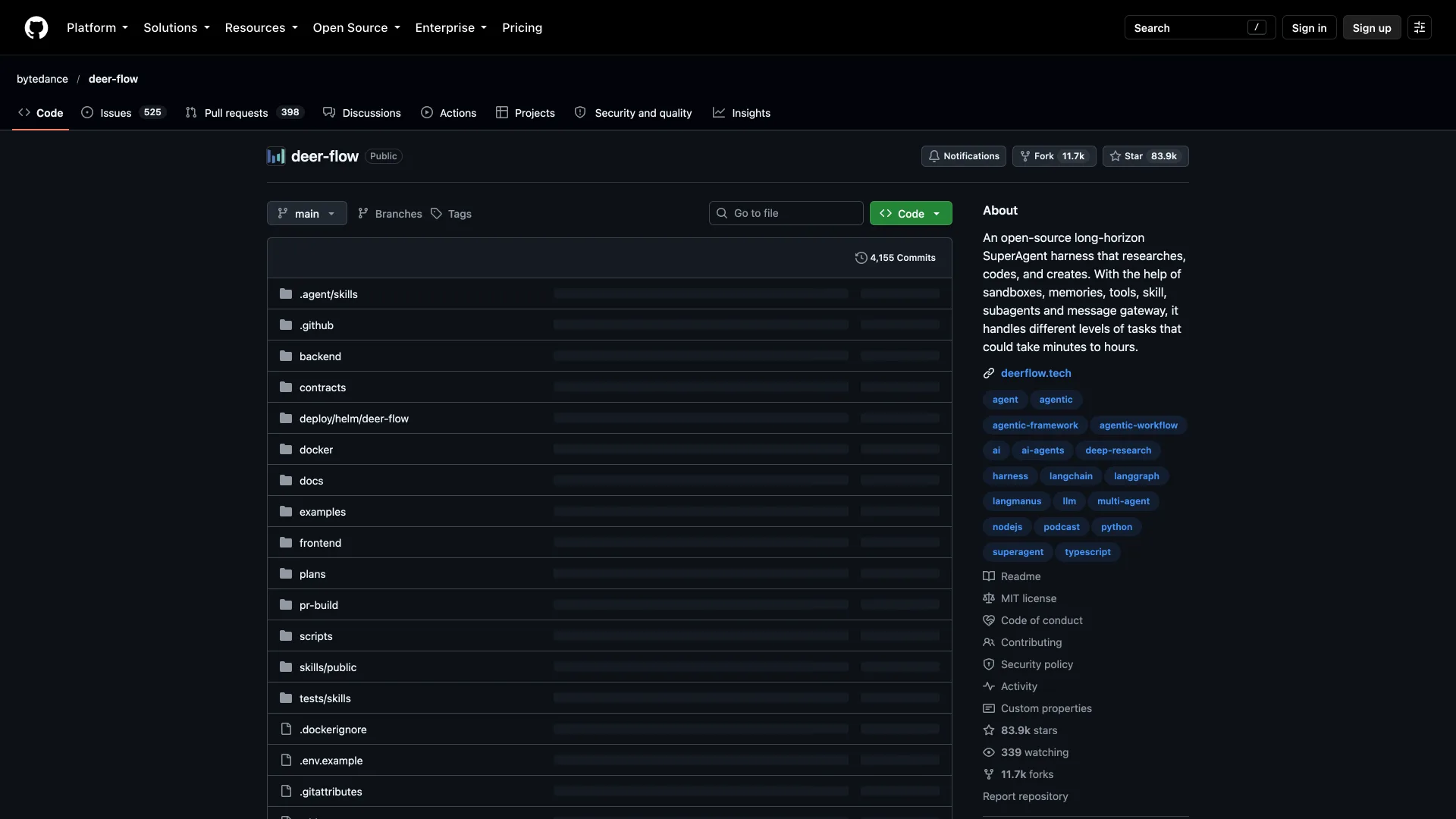
No self-hosted option here matches Manus more closely, and it is MIT licensed. The model config takes any OpenAI-compatible endpoint, including OpenRouter or a local vLLM server on localhost:8000, so prompts and files never have to leave your network.
It is not light, though. The README sizes Docker development at 4 vCPU, 8 GB of RAM and 25 GB of SSD and prefers Linux for servers. It also warns that gateway admin access equals code execution. The suggested models are Doubao, DeepSeek and Kimi; plan to swap in your own.
License and stats: MIT · 83.9k stars as of October 15, 2026.
Perplexity Computer: Credits With a Price List
Perplexity Computer runs multi-step work in an isolated cloud sandbox. It pulls context from connectors like Gmail, GitHub and Slack and works on schedules or triggers.
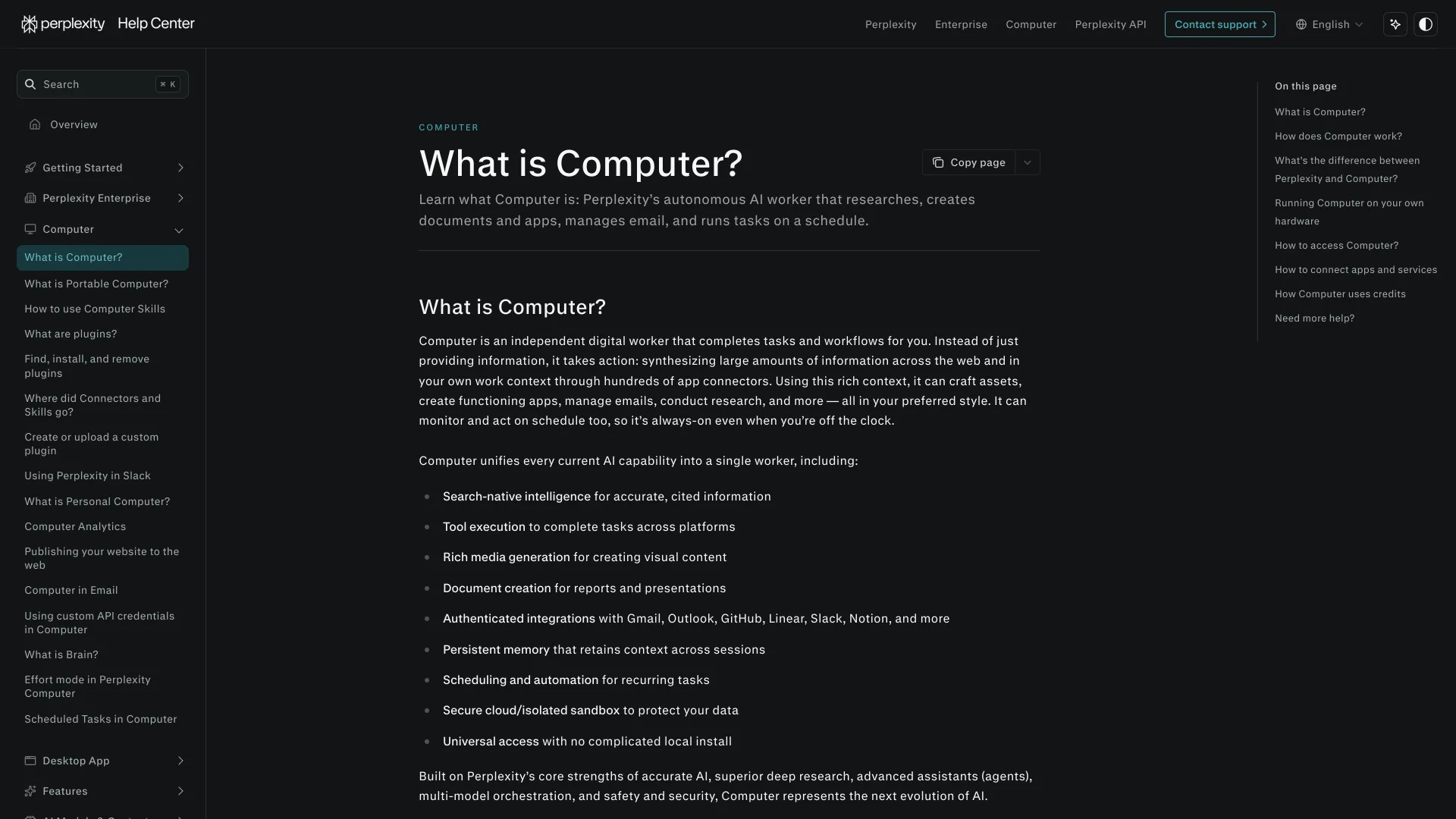
This one tells you roughly what a job costs up front. Published ranges run from 15 to 70 credits for a quick fact to 2,400 to 9,800 for a data dashboard and 15,000 or more for a full app build. Max accounts get a monthly spending cap, $200 by default and up to $5,000, and when credits run out, tasks pause instead of failing.
Volume is where it gets expensive. Max is $200 a month or $2,000 a year for 10,000 credits that do not roll over. Pro gets no monthly credits, just a weekly allowance still rolling out (Light effort until you buy credits) and a one-time 4,000-credit bonus.
Pricing: Max $200/month · Pro includes weekly Computer usage, then purchased credits · License: proprietary.
OpenManus: The Namesake Clone
The MetaGPT team built OpenManus as a Manus clone that needs no invite code. The first prototype took three hours.
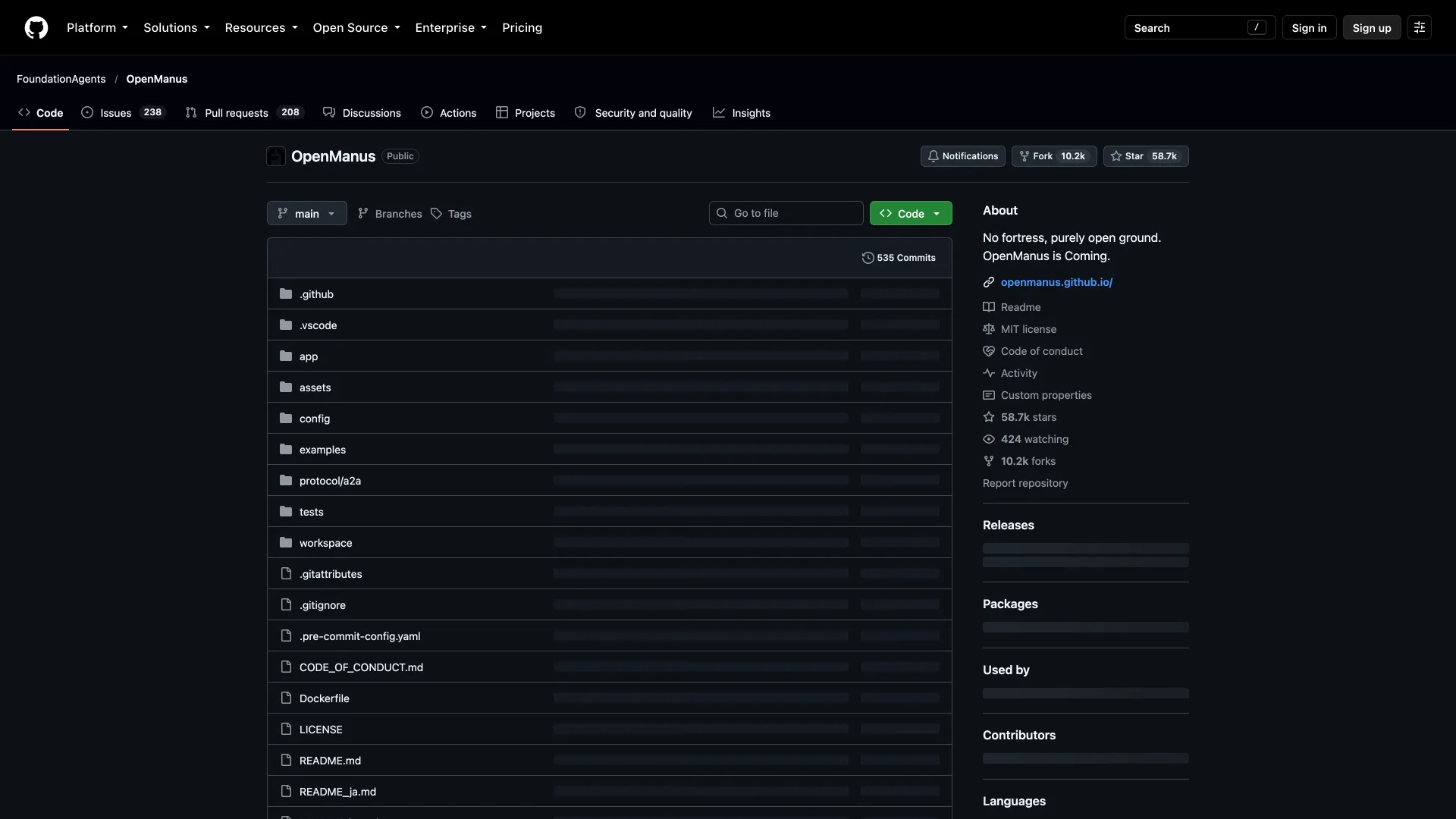
The code is small enough to read in an afternoon. Copy config/config.example.toml, point base_url at any OpenAI-compatible API, and run python main.py. Browser control comes from Browser Use CLI 3.0 as an MCP server, keyless in local mode. That is also the limit: you type tasks into a terminal, the README documents no scheduler or multi-user setup, and the multi-agent run_flow.py mode is labeled unstable. Fork it as a reference, not a team tool.
License and stats: MIT · 58.7k stars as of October 15, 2026.
Genspark: The Cheapest Credit, With Caveats
Genspark is a hosted workspace built around a Super Agent, with AI Slides, Sheets, Docs and an AI Drive.
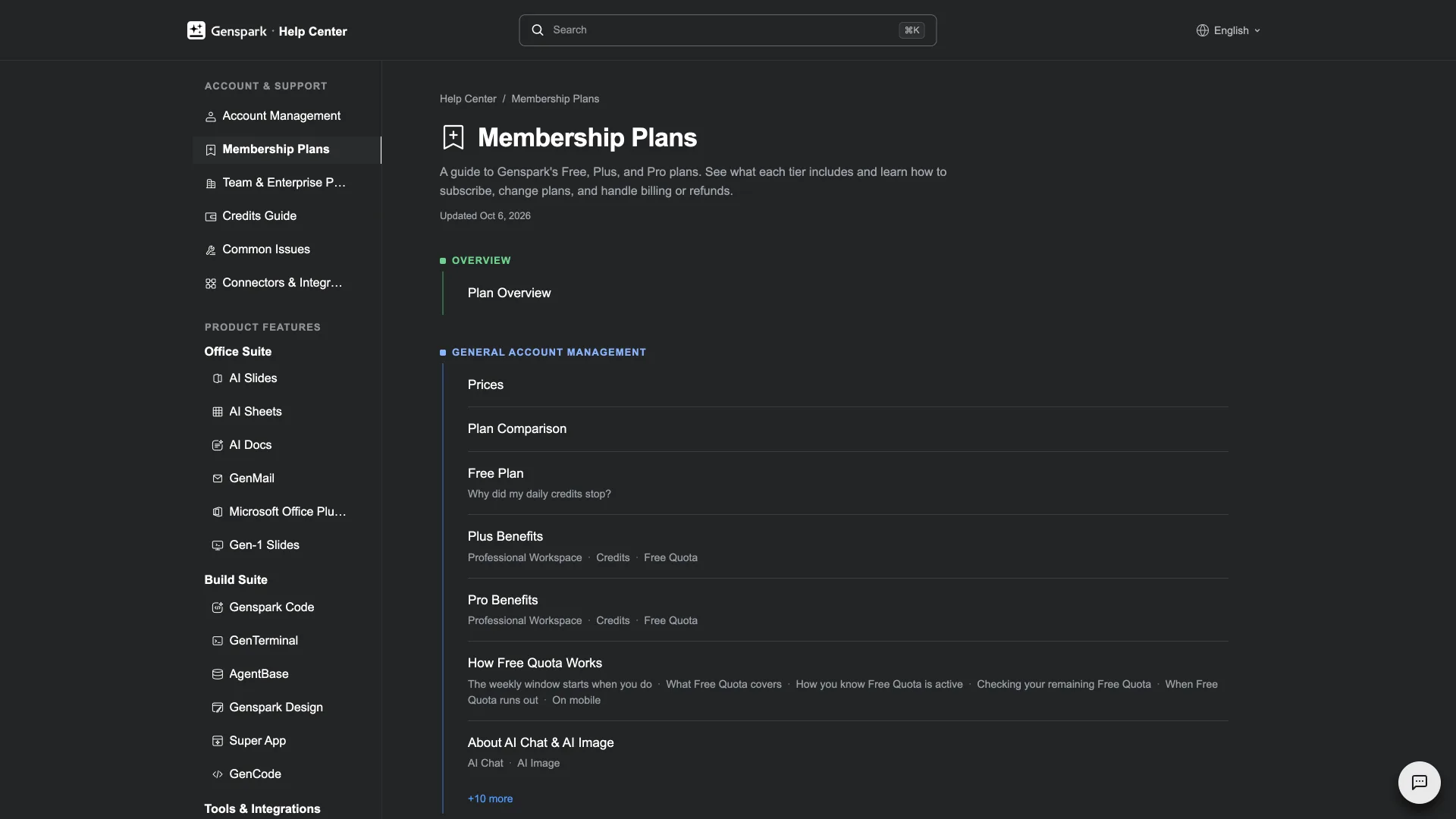
Genspark won't tell you what a task costs. Its credits guide, updated October 14, 2026, does say failed agent retries are charged and an output flagged after generation is still billed. Free accounts get 100 credits a day, but only up to a lifetime limit.
The draw is volume. Plus is $24.99 a month for 10,000 credits and 50 GB of storage. Core-model chat is free on paid plans, and a weekly Free Quota covers Standard-mode agent work.
Pricing: Plus $24.99/month · Pro $249.99/month · Team $35/seat/month · License: proprietary.
Kortix: Agents Configured in a Git Repo
Kortix, whose GitHub repository is still named suna, calls itself "the open-source AI Operating System." Agents, skills, memory and connectors live in one git repository, each session gets a sandbox on its own branch, and changes land through a change request a person approves.
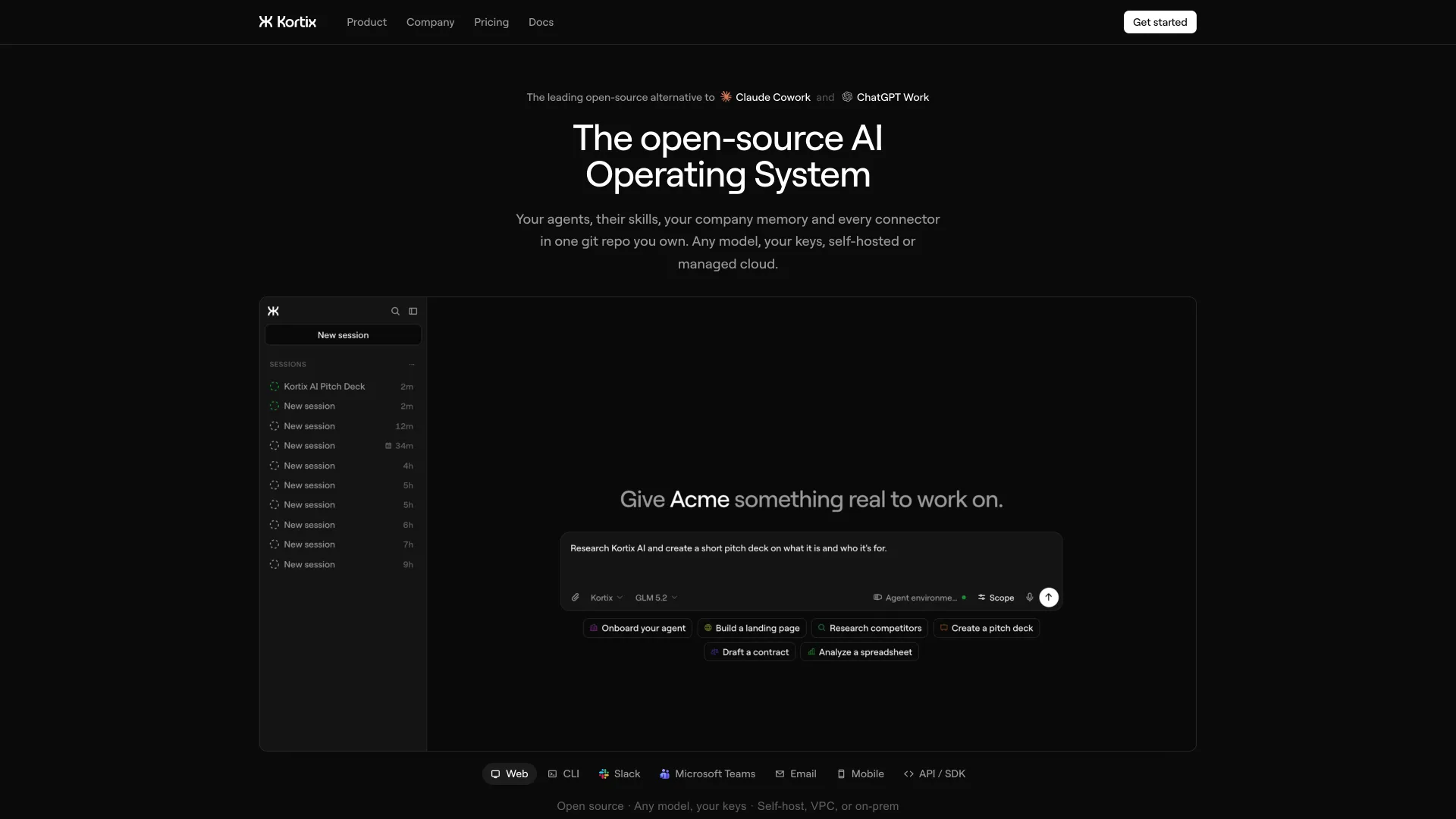
It is built for governance. Approval gates, per-tool rules and an audit trail suit teams that review agent work like code, and it takes your own API keys. Managed Team seats are $40 for 2,500 pooled credits, which Kortix equates to about 125 Agent Computer hours.
Despite the tagline, it has no OSI open-source license. The Elastic License 2.0 allows self-hosting and modification but bars offering Kortix to others as a managed service.
Pricing: Self-host free · Cloud Free with 200 credits · Team $40/seat/month · License: Elastic License 2.0.
Side by Side
| Tool | Runs where | Entry paid price | Metering | Self-host | License |
|---|---|---|---|---|---|
| Manus | Manus cloud | $20/month | Credits, three sample task costs | No | Proprietary |
| ChatGPT Work | OpenAI cloud, desktop app | $20/month (Plus) | Plan limits | No | Proprietary |
| Claude | Anthropic cloud, desktop app | $20/month (Pro) | Plan limits | No | Proprietary |
| Perplexity Computer | Perplexity cloud, or your NVIDIA GPU (Portable Computer) | $200/month (Max) | Credits, 100 per $1 | Portable Computer | Proprietary |
| Genspark | Genspark cloud | $24.99/month | Credits, per-task cost unpublished | No | Proprietary |
| DeerFlow | Your Docker host | $0 + model tokens | Your provider bill | Yes | MIT |
| OpenManus | Your machine | $0 + model tokens | Your provider bill | Yes | MIT |
| Kortix | Your infra or Kortix cloud | $0 self-host, $40/seat cloud | Sandbox credits + your tokens | Yes | Elastic License 2.0 |
How to Choose Without Migrating Twice
- Start with what you already pay for. On ChatGPT Plus or Claude Pro, schedule the weekly report there first, since it costs nothing extra.
- Run the same prompt on every trial you have, then read each meter. One real run beats any credits-per-dollar table, ours included.
- Decide where the data may live. If a contract or your SOC 2 scope keeps data in your cloud, only the self-hosted three and Perplexity's Portable Computer qualify. The shortest path there is DeerFlow on an 8 vCPU, 16 GB VM in
us-east-1. - Price self-hosting in tokens: multiply one finished run's input and output tokens by your provider's rates. The loop is free; the model is not.
- Read the license before you build on it. MIT lets you resell a hosted version. Elastic License 2.0 does not.
Which One Should You Actually Use?
Already paying for ChatGPT Plus or Claude Pro: use the agent you have; both schedule the weekly report at no added cost.
You want the price of a task in writing: Perplexity Computer, the only hosted option here that publishes cost ranges and caps monthly spend.
Data cannot leave your network: DeerFlow. MIT licensed, Docker-based and happy with a local vLLM model.
A team that reviews agent work like code: Kortix, if the Elastic License 2.0 fits your plans.
Staying on Manus: turn on Flex with an OpenRouter, Fireworks or Modal key so a provider you already audit bills the inference.
Conclusion
Agents moved into the chat apps this year: ChatGPT Work replaced agent mode in July, and Cowork folded into Claude in September. Manus answered with 2.0, Flex and half a billion dollars. Before renewing any credit plan, run your most common task once and ask what it cost. If the vendor cannot say, the meter works for them.
Related DevToolLab Tools
- LLM Token Cost Calculator - turn one DeerFlow run's tokens into a monthly provider bill.
- Docker Compose Validator - catch errors in a DeerFlow compose file before
make docker-start. - MCP Server Config Generator - write the JSON for MCP servers an open-source agent calls.
- Cron Expression Generator - schedule a recurring agent task, like a report every Monday at 8:00 AM ET.
Related Guides
- What Is an Agent Harness? - the loop that Manus Cascade and DeerFlow each implement.
- Best AI Browser Automation Tools - the browser layer these agents drive.
- Best Background Coding Agents - Devin, Codex cloud and Jules, when the task is code.
- Best Bolt.new Alternatives - app builders that overlap with Manus's website builder.