
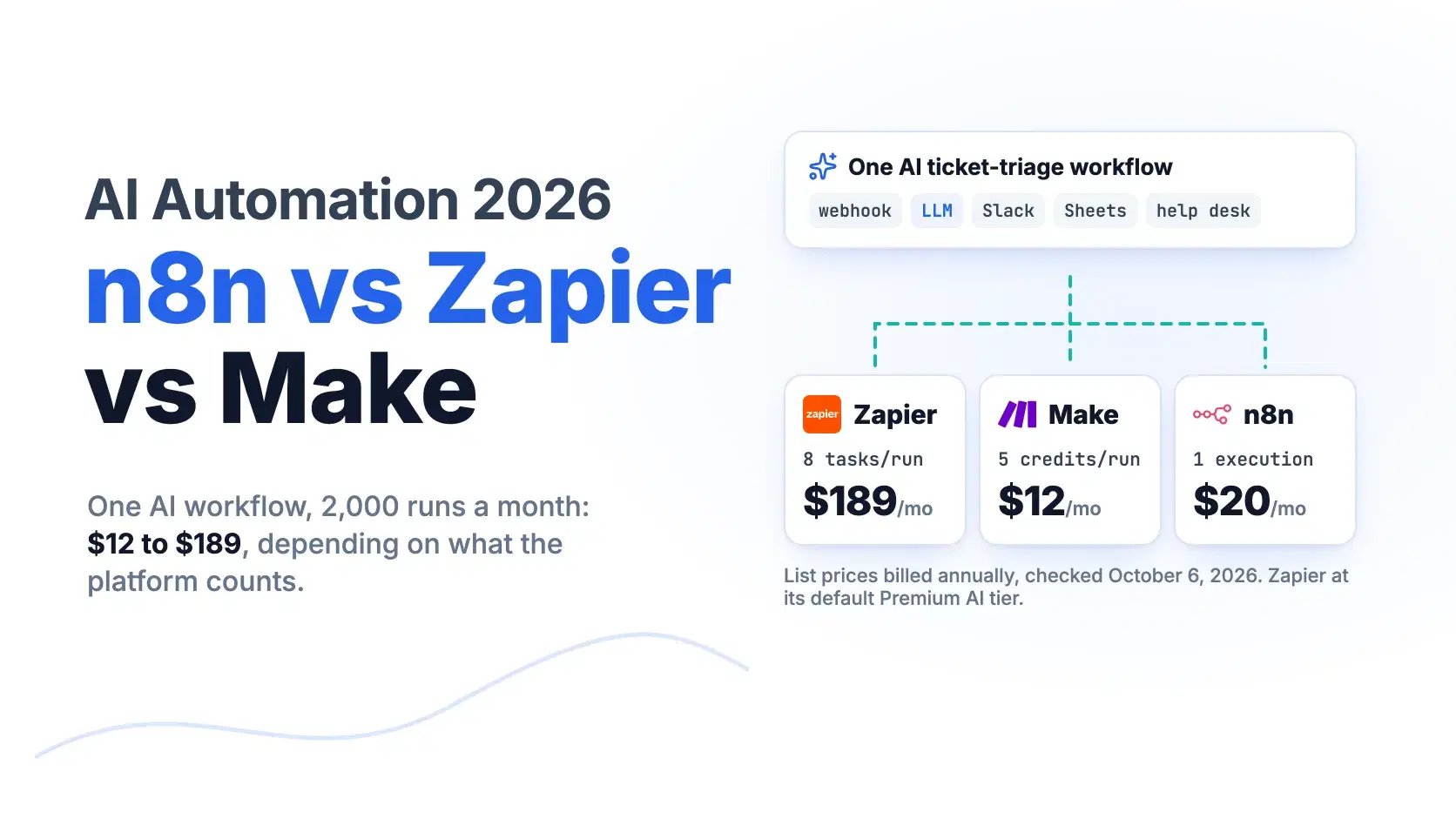
Zapier, Make and n8n now all sell AI agents, MCP and an LLM step, so the feature lists have converged. What has not converged is the meter: one platform counts each step, one counts each module run, and one counts each whole workflow, and that choice decides your bill.
The stakes went up this year. On May 12, 2026, SAP invested in n8n at a $5.2 billion valuation, more than double its October 2025 Series C price, while Zapier made Premium the default tier for new AI steps, which bills every AI call as 5 tasks. We priced one AI ticket-triage workflow on all three platforms, and at 2,000 runs a month the bill ranges from $16 to $189.
How Each Platform Meters an AI Workflow
Zapier bills tasks: every successful action step is one task, while triggers, Filter and Paths steps, Formatter and failed steps are free, according to Zapier's task usage help page checked October 6, 2026. AI by Zapier steps are multiplied by model tier, 1x for Standard, 3x for Advanced and 5x for Premium, the default for new steps on paid plans; a bring-your-own-key step costs 1x. A Zapier MCP tool call costs 2 tasks, and Zapier Agents draw on a separate activity quota.
Make bills credits: each module run is one credit, and the trigger counts too, because it runs once per check. An OpenAI or Anthropic module on your own key also costs 1 credit, and you pay the provider for tokens; Make's built-in AI Provider bills by tokens instead.
n8n bills executions: one run of a workflow from start to finish, with unlimited steps. On the self-hosted Community Edition nothing is metered at all.
What One AI Ticket-Triage Workflow Costs
The worked example is a support inbox at a US SaaS company. A webhook fires for each new ticket, an LLM classifies it and drafts a reply, then the workflow posts to Slack, logs a row in Google Sheets and saves the draft in the help desk: one trigger, one AI step and three actions. This script prices it at list rates, billed annually, as each pricing page showed on October 7, 2026:
ts// Monthly list price of one AI workflow on Zapier, Make and n8n Cloud, billed annually, in USD. // Tiers from each vendor's pricing page, checked October 7, 2026. type Tier = { units: number; usd: number; plan: string } const tiers = (plan: string, rows: [number, number][]): Tier[] => rows.map(([units, usd]) => ({ units, usd, plan })) const zapier = tiers("Professional", [[750, 19.99], [1_500, 39], [2_000, 49], [5_000, 89], [10_000, 129], [20_000, 189], [50_000, 289], [100_000, 489], [200_000, 769]]) const make = tiers("Make Plan", [[5_000, 9], [10_000, 16], [20_000, 29], [40_000, 53], [80_000, 91], [150_000, 153.45]]) const n8n = [...tiers("Starter", [[2_500, 20]]), ...tiers("Pro", [[10_000, 50], [50_000, 120]])] // Webhook trigger -> AI classify and draft -> Slack -> Google Sheets -> help desk draft reply const actions = 3 const platforms: [string, Tier[], number][] = [ ["Zapier, AI step on default Premium tier", zapier, 5 + actions], // AI step = 5 tasks, trigger is free ["Zapier, AI step on your own API key", zapier, 1 + actions], // AI step = 1 task ["Make, every module including the trigger", make, 1 + 1 + actions], // 1 credit per module run ["n8n Cloud, whole run", n8n, 1], // 1 execution per run, any number of steps ] for (const runs of [2_000, 20_000]) { console.log(`${runs.toLocaleString("en-US")} runs a month`) for (const [name, list, perRun] of platforms) { const need = runs * perRun const t = list.find((x) => x.units >= need)! console.log(` ${name.padEnd(42)} ${need.toLocaleString("en-US").padStart(8)} billed units $${t.usd} (${t.plan} ${t.units.toLocaleString("en-US")})`) } }
text2,000 runs a month Zapier, AI step on default Premium tier 16,000 billed units $189 (Professional 20,000) Zapier, AI step on your own API key 8,000 billed units $129 (Professional 10,000) Make, every module including the trigger 10,000 billed units $16 (Make Plan 10,000) n8n Cloud, whole run 2,000 billed units $20 (Starter 2,500) 20,000 runs a month Zapier, AI step on default Premium tier 160,000 billed units $769 (Professional 200,000) Zapier, AI step on your own API key 80,000 billed units $489 (Professional 100,000) Make, every module including the trigger 100,000 billed units $153.45 (Make Plan 150,000) n8n Cloud, whole run 20,000 billed units $120 (Pro 50,000)
Make wins small, n8n wins at volume, and Zapier's default AI tier alone adds $60 a month to the small case. Two caveats keep this honest: Zapier's Premium step includes the model, while the bring-your-own-key rows on all three platforms also pay an LLM provider for tokens, and Make lands exactly on its 10,000-credit cap, so one more Slack message per ticket moves it to the $29 tier.
Zapier: The Widest Catalog, Billed per Step
Zapier connects 9,000-plus apps and now bundles Zaps, Tables, Forms, Agents and an MCP server that exposes those apps to AI clients.
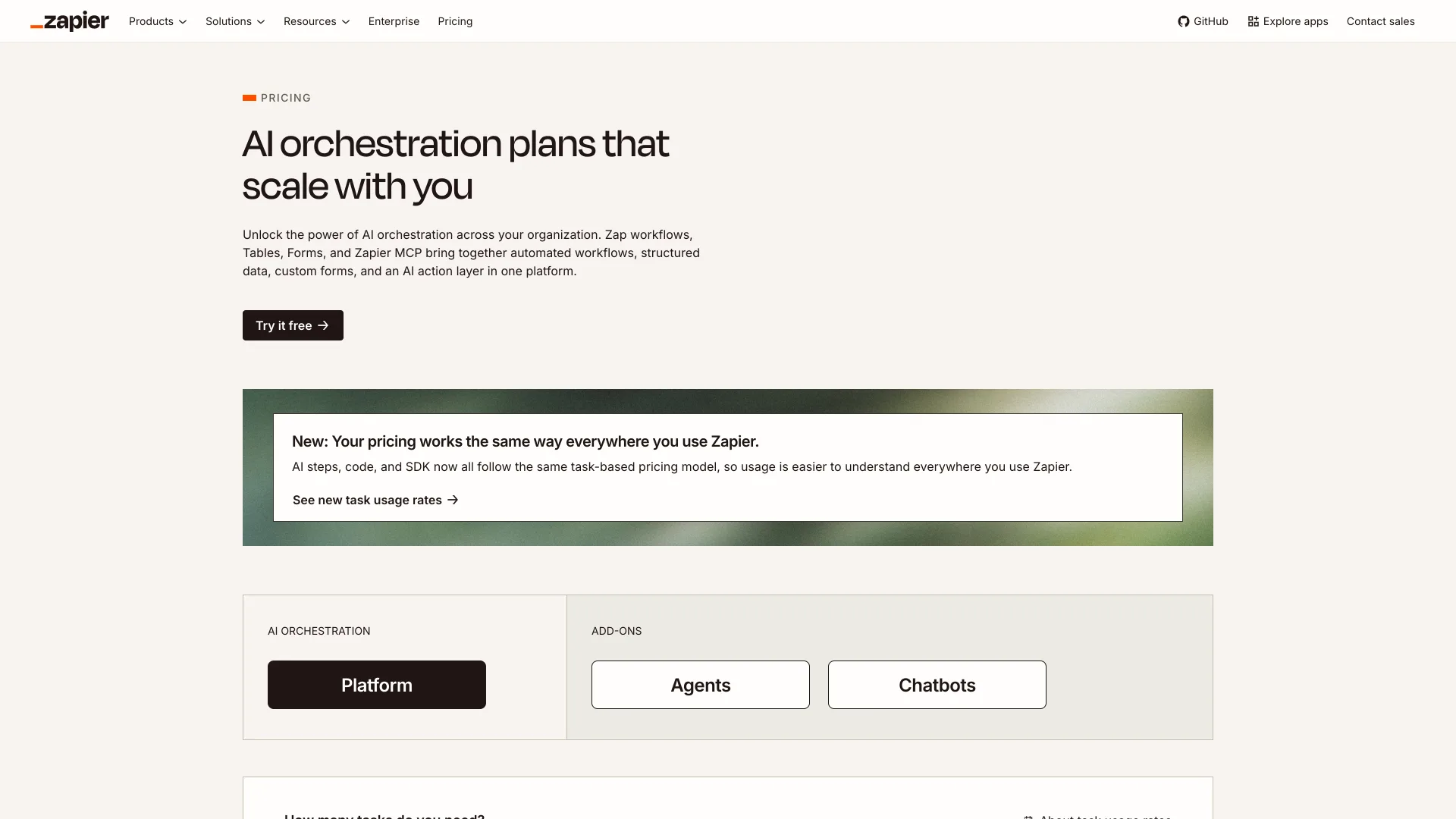
It is the fastest path from an idea to a working automation for a non-developer, and free triggers and filters mean a well-built Zap only pays for steps that do work. The costs stack up in the other direction: every action is billed, the Premium AI tier quintuples each AI call, the Free plan stops at 100 tasks and two-step Zaps, and there is no self-hosted option.
Pricing: Free 100 tasks/month · Professional from $19.99/month for 750 tasks, $129 for 10,000 · Team from $69 · billed annually; Zapier says yearly billing saves 33 percent.
Make: Credits per Module, Cheapest at Low Volume
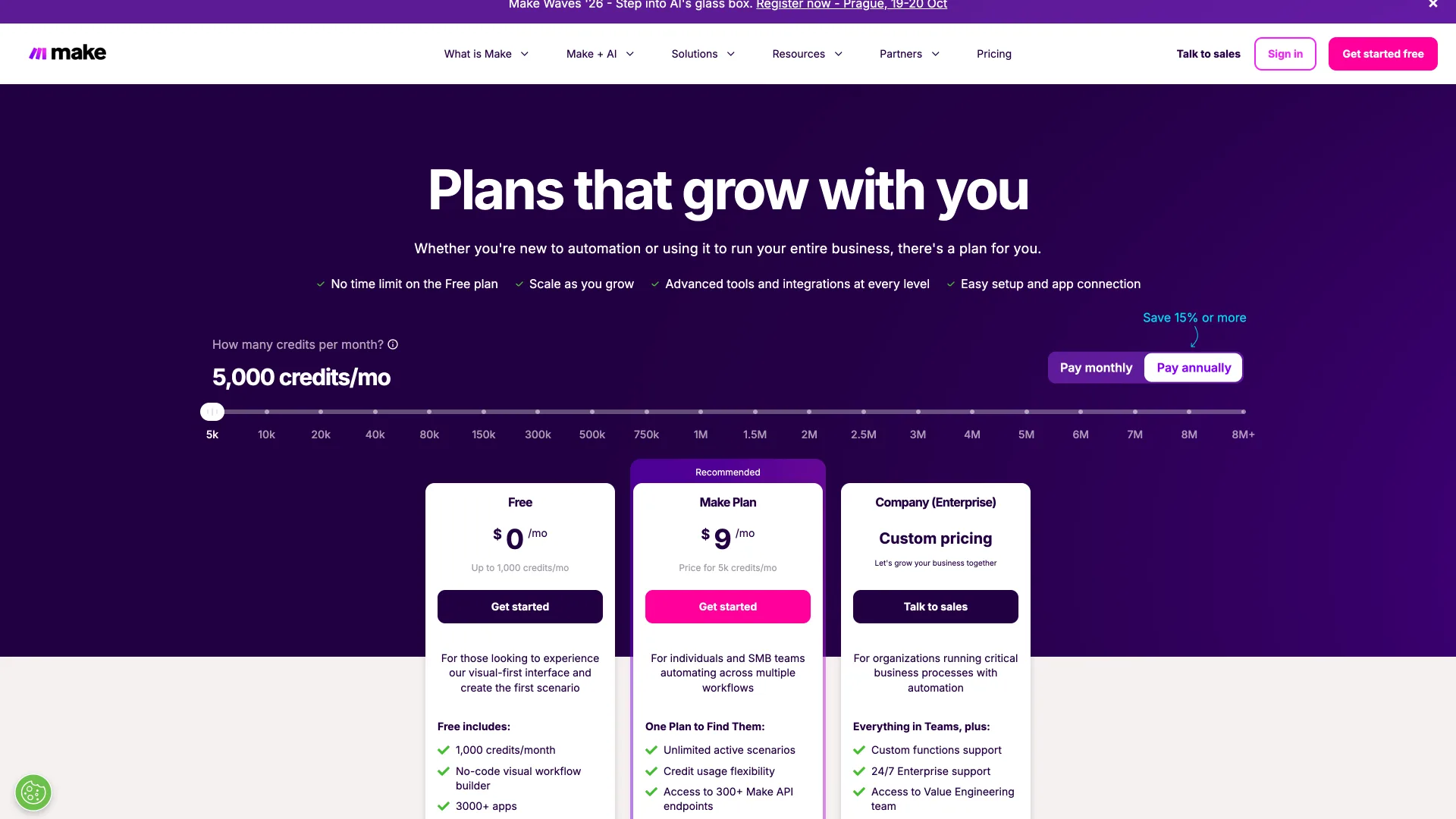
Make offers 3,000-plus apps in a visual canvas and, as of October 7, 2026, one paid plan, the Make Plan, in place of its old Core, Pro and Teams tiers. Maia, its assistant, builds scenarios and AI agents from a conversation. Make AI Agents are in beta, and an MCP server exposes scenarios to AI clients.
Make is the cheapest of the three for small workflows. The catch is the trigger: because each check is an operation, a scenario polling every 15 minutes spends about 2,880 credits a month before it finds any data, so use instant webhooks where you can. Make has no self-hosted edition.
Pricing: Free 1,000 credits/month with a 15-minute minimum interval · Make Plan $9/month for 5,000 credits, $16 for 10,000, $29 for 20,000 · billed annually; monthly billing is $18.82 for 10,000 credits.
n8n: One Execution per Run, Free to Self-Host
n8n is the developer's pick: its GitHub repository has 206,754 stars, n8n 2.0 shipped on December 8, 2025, and 2.42.3 is the current stable release. It raised a $180 million Series C at a $2.5 billion valuation on October 9, 2025, and SAP is embedding it in Joule Studio.
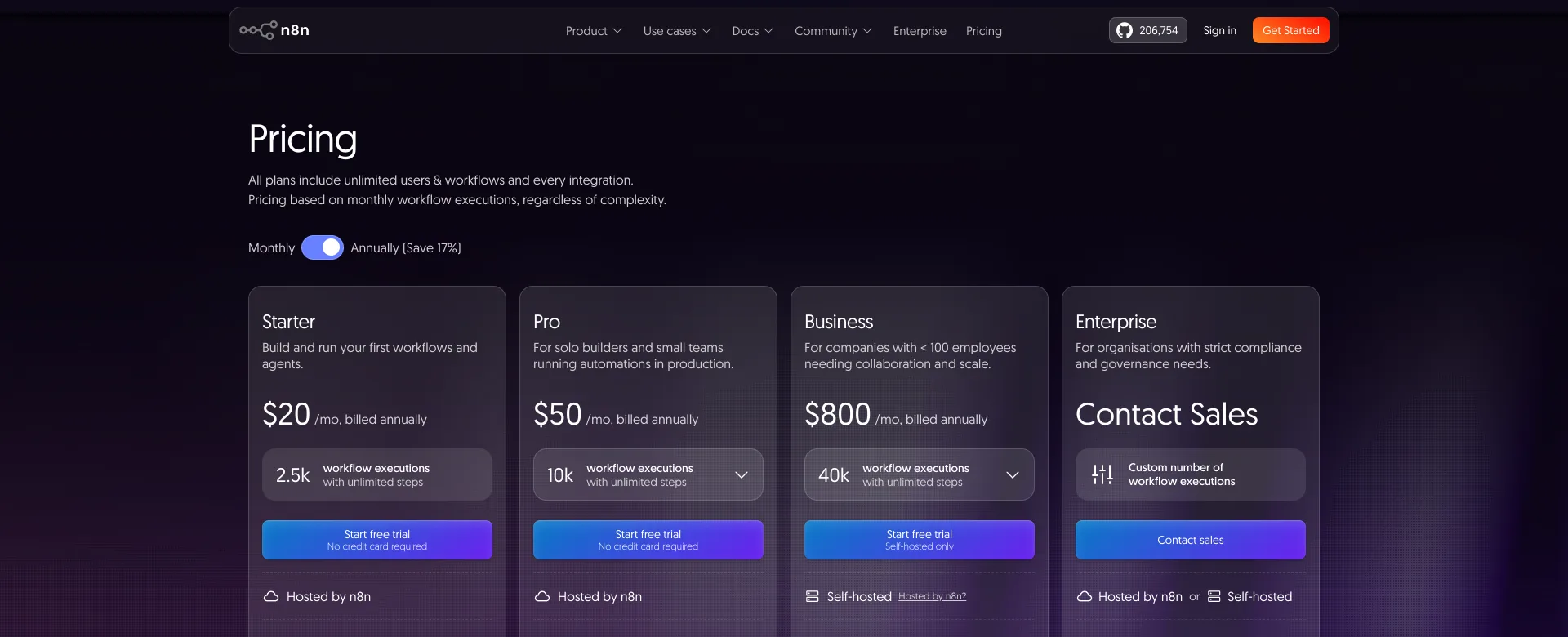
Per-execution billing means a 12-step agent costs the same as a 2-step one. n8n ships an AI Agent node, an MCP server trigger and client, human approval for tool calls and JavaScript or Python code steps, and even Starter includes agents, MCP and AI nodes. The license is the Sustainable Use License, which is fair-code rather than OSI-approved open source, the GitHub project lists 400-plus integrations against Zapier's 9,000, and the Business plan, at $800 a month, is self-hosted only.
Pricing: Starter $20/month for 2,500 executions · Pro $50 for 10,000 or $120 for 50,000 · billed annually; monthly billing is $24 and $60 · Community Edition free to self-host.
Open-Source Options: Activepieces, Windmill and Node-RED
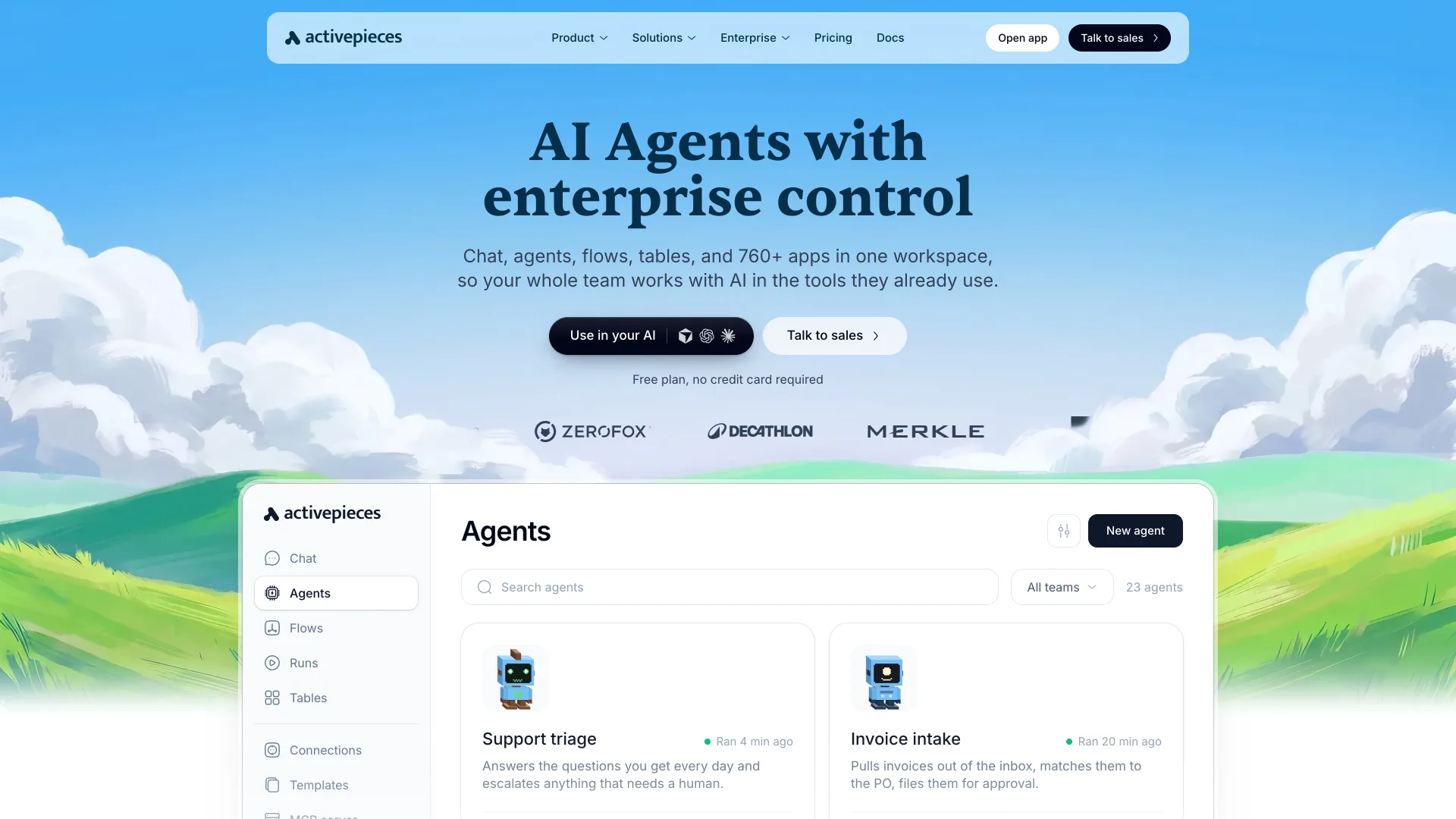
Activepieces is the closest open-source match to Zapier: its Community Edition is MIT licensed, version 0.92.1 shipped on September 30, 2026, the repository has 24,920 stars, and it lists 760-plus apps and about 400 MCP servers.
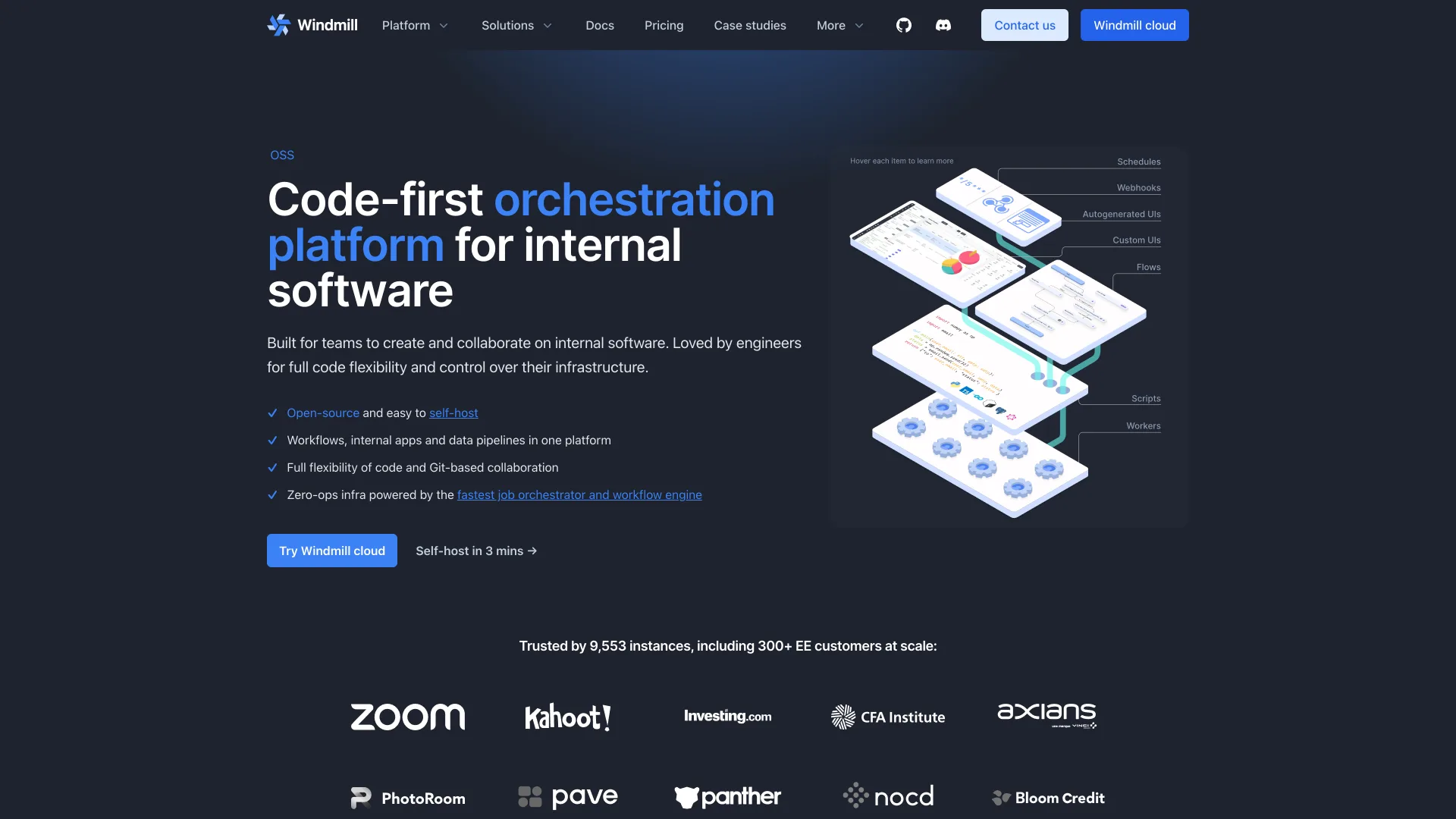
Windmill is code-first: it turns scripts into webhooks, workflows and internal UIs, is open source under AGPLv3, and released v1.825.0 on October 6, 2026. Node-RED, the OpenJS Foundation's Apache 2.0 low-code tool for event-driven flows, is at 5.0.7 with 23,717 stars. All three run on your own server for the cost of the server.
Where OpenClaw Fits
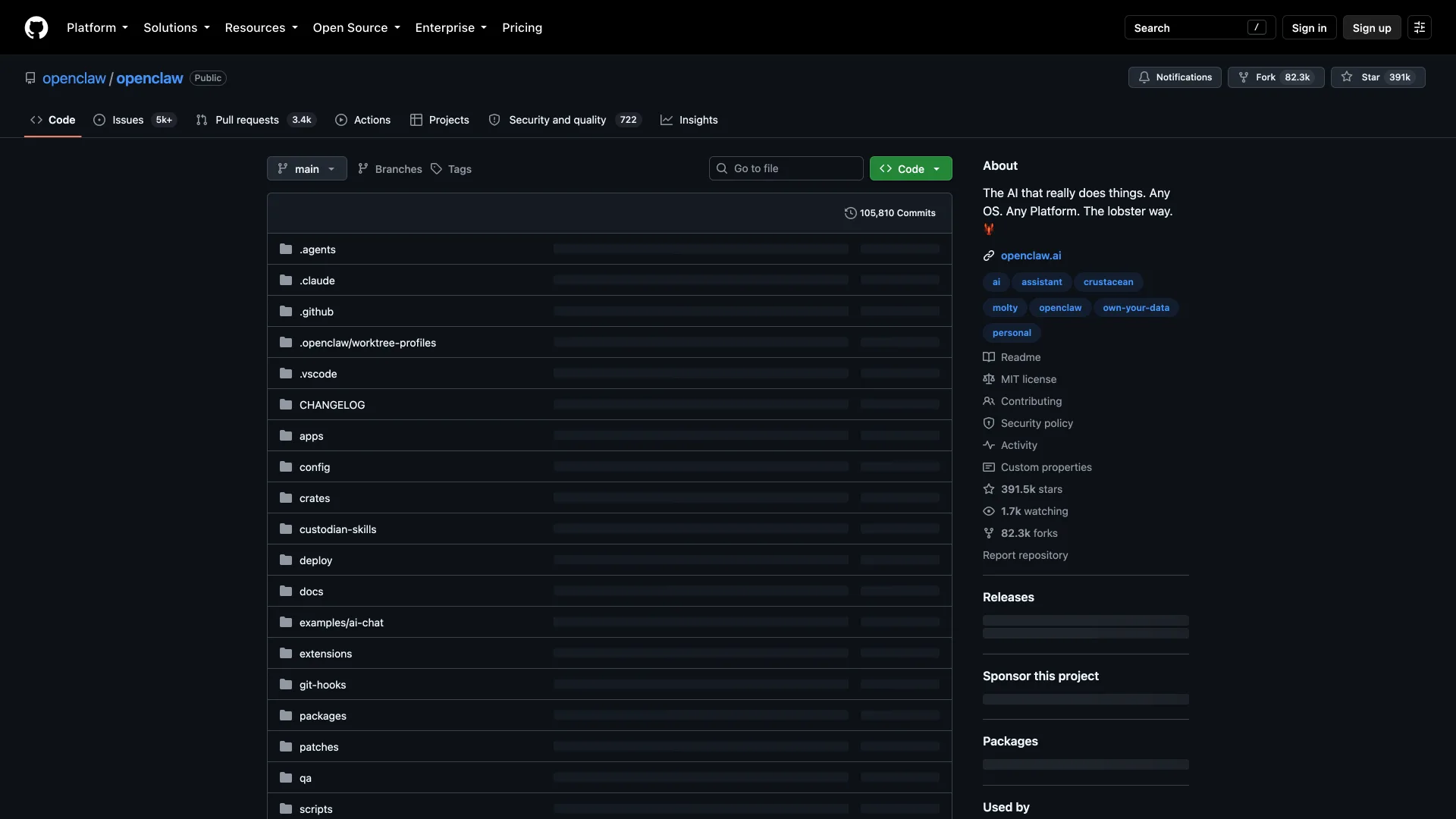
Autocomplete pairs "n8n vs Zapier" with OpenClaw, and it is a different shape of tool. OpenClaw is an MIT-licensed AI assistant with 391,490 GitHub stars that runs on your own computer and answers in Slack, WhatsApp, iMessage and more than 20 other channels.
An agent decides its steps at run time; a workflow fixes them in advance. Keep repeatable, auditable processes like ticket triage in a workflow, and give an assistant like OpenClaw the open-ended requests.
Side by Side
| Platform | Billing unit | AI features | Self-host | License | Entry paid plan | 2,000 runs | 20,000 runs |
|---|---|---|---|---|---|---|---|
| Zapier | Task per action step | Agents, MCP | No | Proprietary | $19.99/mo, 750 tasks | $129 to $189 | $489 to $769 |
| Make | Credit per module run | AI Agents (beta), Maia | No | Proprietary | $9/mo, 5,000 credits | $16 | $153.45 |
| n8n | Execution per run | AI Agent node, MCP | Yes | Sustainable Use License | $20/mo, 2,500 executions | $20 | $120 |
| Activepieces | Self-hosted, unmetered | Agents, MCP | Yes | MIT (Community) | Server only | Server only | Server only |
| Windmill | Self-hosted, unmetered | Not compared | Yes | AGPLv3 | Server only | Server only | Server only |
| Node-RED | Self-hosted, unmetered | Not compared | Yes | Apache 2.0 | Server only | Server only | Server only |
Prices are list, billed annually, for the workflow above; Zapier shows the bring-your-own-key and default Premium AI tiers.
How to Choose Without Migrating Twice
- Count billed units, not runs. Write down the steps of your three busiest workflows and multiply by each platform's rule above.
- Set the AI step's tier deliberately. On Zapier, Standard or your own key costs a fifth of the Premium default.
- Price the next tier, not the current one. Make jumps from $16 to $29 past 10,000 credits, and n8n Pro from $50 to $120 past 10,000 executions.
- Decide on self-hosting early. If customer data must stay in your own
us-east-1account for SOC 2 or HIPAA reasons, only n8n and the open-source tools qualify.
Which One Should You Actually Use?
Non-developers connecting SaaS apps fast: Zapier, with AI steps on Standard or your own key.
Small, step-heavy workflows on a budget: the Make Plan at $16 for 10,000 credits, with webhook triggers.
Developers building AI agents with code: n8n Cloud at $20 to $120, or the free Community Edition on your own server.
OSI open source required: Activepieces under MIT or Node-RED under Apache 2.0; Windmill if your team writes scripts.
Open-ended personal requests: OpenClaw next to a workflow tool, not instead of one.
Conclusion
The AI features are close to a draw in 2026; the meter is not. A five-step AI workflow costs 8 units on Zapier, 5 on Make and 1 on n8n, which is why the same triage flow runs $16 to $189 a month. Before you pick, count the steps in your busiest workflow and multiply.
Related DevToolLab Tools
- Webhook Receiver - capture the exact payload your help desk sends before you map it into a trigger.
- JSONPath Tester - test the path expressions you use to pull fields out of an LLM's JSON reply.
- Cron Expression Parser - check a schedule trigger in plain English before it burns credits on empty polls.
- cURL to Code Converter - turn an API's cURL example into code for an n8n Code step or a Make HTTP module.
Related Guides
- Best Workflow Orchestration Tools - Temporal, Inngest and Trigger.dev for durable workflows written in code.
- Best AI Agent Frameworks - the libraries to reach for when a visual builder is not enough.
- What Is a Webhook? - how the instant triggers that keep Make and Zapier bills down actually work.
- Best MCP Servers - the servers that expose apps to the AI clients these platforms now plug into.