
A workflow built in OpenAI's Agent Builder is four things from one vendor: the canvas you drew it on, the runtime that executed it, the OpenAI-hosted tools it called, and the ChatKit widget that put it in front of customers. Exporting it as code carries over only some of that.
OpenAI's deprecations page lists Agent Builder's shutdown for November 30, 2026, ten days from now, along with the Evals dashboard and the /v1/prompts endpoint. OpenAI's migration guide offers two exits, the Agents SDK and ChatGPT Workspace Agents, and says the export "does not convert your workflow graph or guarantee that every behavior transfers unchanged."
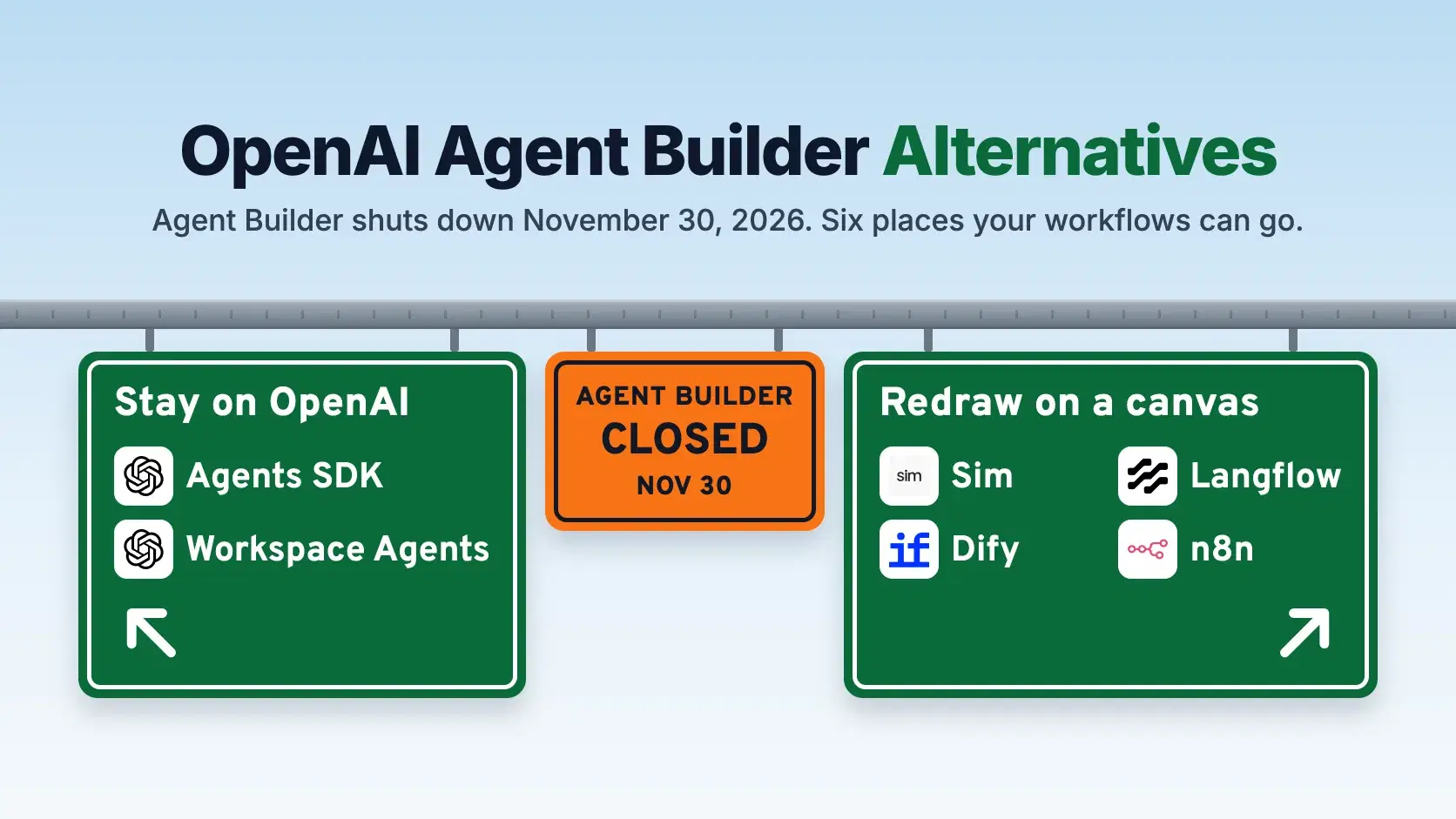
The short answer: a chat on your own website belongs on the Agents SDK export plus your own ChatKit server. An internal tool on ChatGPT Business is the least work as a Workspace Agent. For a canvas again, Langflow maps every node under an MIT license, Sim comes closest among hosted canvases, Dify adds a flat-priced cloud, and n8n has a free third-party converter.
What Shuts Down on November 30, and What Keeps Running
Agent Builder launched with AgentKit at OpenAI DevDay on October 6, 2025, so it will have lasted about 14 months. What goes away is the canvas and the published workflow objects, the wf_ IDs a hosted ChatKit integration points at; OpenAI's ChatKit docs say those keep working only "during the Agent Builder transition window." Everything underneath stays: the Responses API, models, vector stores, the Agents SDK and ChatKit. Trace graders from the Evaluate tab go with the Evals platform, for which OpenAI points to Promptfoo.
Export now (Code, then Agents SDK, TypeScript or Python) while you still have access.
Every section below follows one workflow: a support router on an online store's help center. A Jailbreak and PII guardrail screens each message, and a classifier sends it to an orders agent that checks order status over MCP or a product agent that searches a help-center vector store. A human approval node gates refunds, and ChatKit shows it on the help page, about 8,000 chat messages a month.
What Your Export Still Depends On
Before picking a destination, find out what the exported code still calls on OpenAI's side. This standard-library script lists those dependencies in a Python or TypeScript export; I ran it on Python 3.9.6 and 3.13.0.
Pythonimport re, sys from pathlib import Path CHECKS = { "vector stores (re-ingest files if you leave OpenAI)": r'"(vs_[A-Za-z0-9_]+)"', "hosted MCP servers (OpenAI calls them for you)": r'server_url["\']?\s*[:=]\s*["\']([^"\']+)', "OpenAI connectors (swap for native integrations)": r'connector_id["\']?\s*[:=]\s*["\']([^"\']+)', "hosted tools": r'\b(WebSearchTool|FileSearchTool|CodeInterpreterTool|ImageGenerationTool|webSearchTool|fileSearchTool|codeInterpreterTool)\b', "guardrail checks": r'"name":\s*"([^"]+)"', "models": r'model["\']?\s*[:=]\s*["\'](gpt-[^"\']+|o\d[^"\']*)', } STUB = r'TODO: (?:Unimplemented|Implement)' STORE = r'store["\']?\s*[:=]\s*(?:True|true)' for path in sys.argv[1:]: src = Path(path).read_text() print(f"== {Path(path).name}") for label, pattern in CHECKS.items(): found = sorted(set(re.findall(pattern, src))) if found: print(f" {label}: {', '.join(found)}") stubs = len(re.findall(STUB, src)) if stubs: print(f" unimplemented stubs: {stubs} (write these before you deploy)") print(f" responses stored at OpenAI (store=True): {len(re.findall(STORE, src))}")
Here it is against the two sample exports in MigrateFlows, an MIT-licensed project whose author wrote them in Agent Builder's export format (samples, not anyone's data). support_router.py is our worked example:
Bash$ python3 audit_export.py support_router.py refund_approval.ts == support_router.py vector stores (re-ingest files if you leave OpenAI): vs_example_help_center hosted MCP servers (OpenAI calls them for you): https://orders.example.com/mcp hosted tools: FileSearchTool, WebSearchTool guardrail checks: Contains PII, Jailbreak models: gpt-4.1, gpt-4.1-mini, gpt-5 responses stored at OpenAI (store=True): 3 == refund_approval.ts models: gpt-4.1, gpt-4.1-mini unimplemented stubs: 2 (write these before you deploy) responses stored at OpenAI (store=True): 2
The vector store line decides most migrations. The Agents SDK keeps querying vs_example_help_center, and n8n can too, through the built-in File Search on its OpenAI Chat Model node. Sim, Langflow and Dify need the documents re-uploaded into their own knowledge bases.
The stubs line matters too. Per the MigrateFlows notes, function tools come out without code, and the refund sample's approval step is a placeholder that returns true. Agent Builder's approval node asked the person in the chat; a bare run_workflow() has no chat to ask in, so every alternative rebuilds that step.
Where Each Agent Builder Node Lands
Mapped from each vendor's docs as of November 20, 2026:
| Agent Builder node | Agents SDK | Sim | Langflow | Dify | n8n |
|---|---|---|---|---|---|
| Agent | Agent | Agent block | Agent component | Agent node | AI Agent node |
| Classifier plus If/else | Plain if | Router, Condition | Smart Router, If-Else | Question Classifier, IF/ELSE | If, Switch |
| File search | Same vector store | Knowledge base | Vector store components | Knowledge Retrieval | OpenAI File Search, same store |
| Guardrails | openai-guardrails | Guardrails block, no jailbreak check | Guardrails component | Content Moderation setting | Guardrails node |
| MCP | HostedMCPTool | MCP tools, remote only | MCP client | MCP servers as agent tools | MCP Client tool |
| While | Loop in code | Loop block | Loop component | Loop node | If with a loop back |
| Human approval | needs_approval | Human block | Human Input component | Human Input node | Wait with a form |
| ChatKit embed | Self-hosted ChatKit | Chat deployment | langflow-chat widget | Chat bubble widget | Chat Trigger |
OpenAI Agents SDK: Keep the Code, Host It Yourself
The OpenAI Agents SDK is what the export already is, so this path changes the least. openai-agents 0.25.0 for Python shipped November 18, 2026 under the MIT license, and @openai/agents 0.22.0 for TypeScript on November 12.
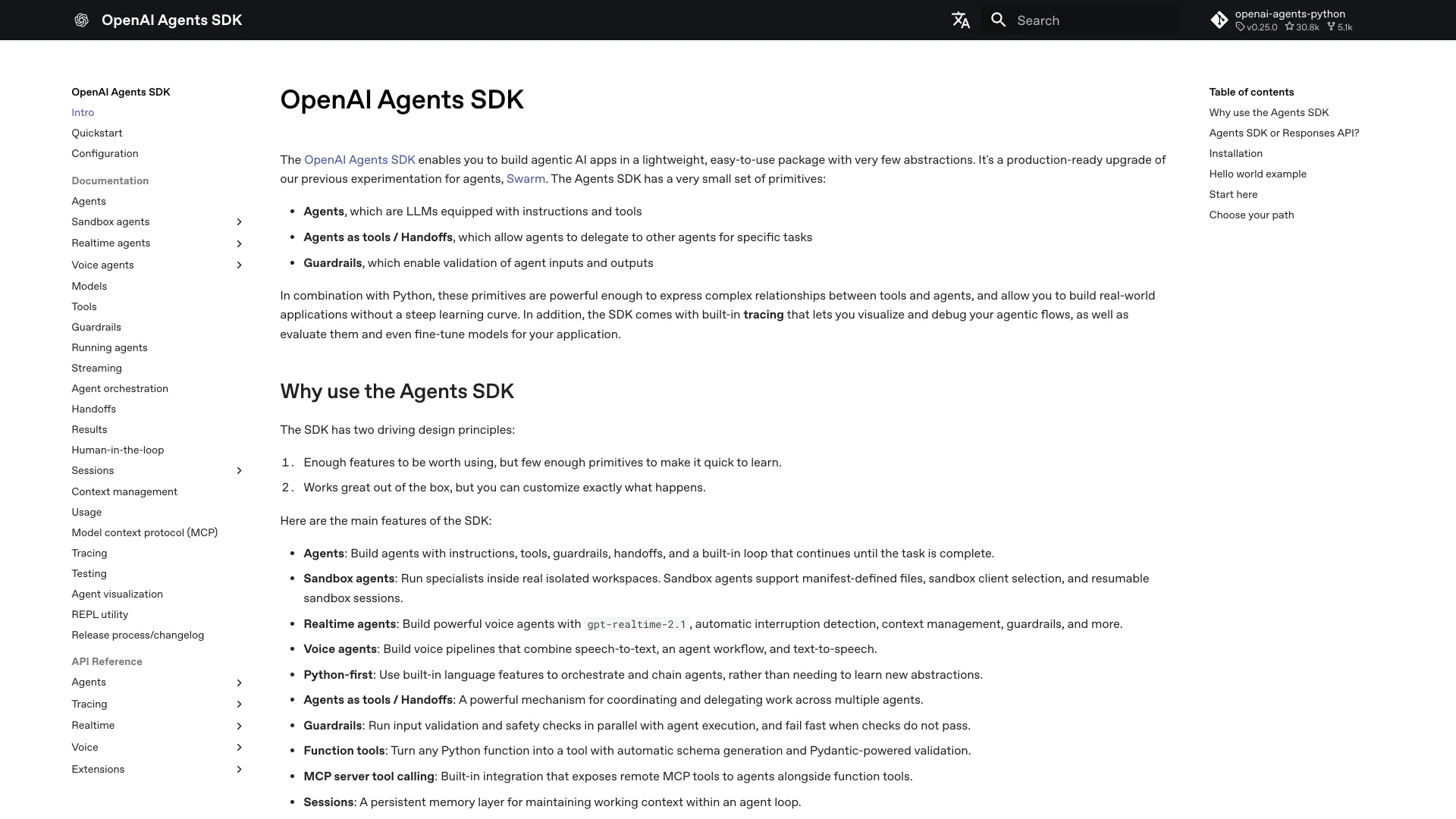
What it does well: the router's vector store, MCP call and guardrails keep working, because the exported code makes the same OpenAI calls. The approval becomes needs_approval=True on the refund tool, which pauses the run as an interruption you approve and resume from a saved RunState. The widget stays on ChatKit, pointed at your own endpoint built with the openai-chatkit Python server (1.6.5, Apache 2.0).
What it does not do: there is no canvas, and you now own deployment, authentication and thread storage. The in-memory ChatKit Store in the docs is for local development only.
Pricing: Free libraries · model tokens at OpenAI API rates · your own hosting.
ChatGPT Workspace Agents: The No-Code Exit, Inside ChatGPT
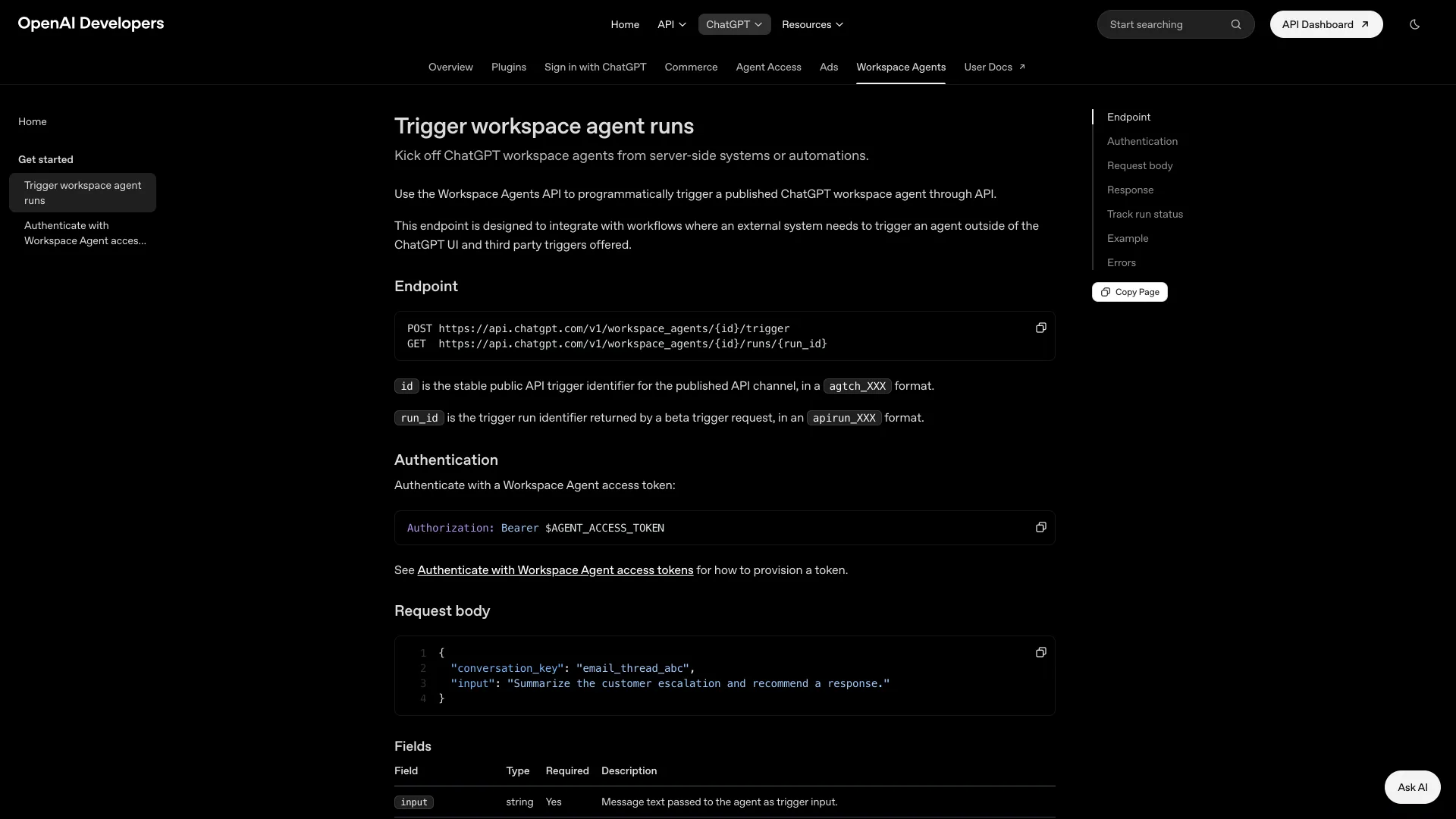
OpenAI's other path: paste the export into ChatGPT with the prompt "Please help me convert this workflow into an agent." Workspace agents became generally available in ChatGPT Business, Enterprise and Edu in May 2026, and they run in ChatGPT, in Slack, on a schedule or from an API trigger.
What it does well: nobody writes or hosts code, admins get usage views and access controls, and an internal refund-review queue fits it well.
What it does not do: live on your website. The trigger API returns a ChatGPT conversation link, and "the agent's response cannot currently be retrieved through the API." The guide also warns that "workflows with strong determinism at their core may not migrate faithfully," which describes a classifier-and-branch router.
Pricing: ChatGPT Business Standard seat $20/user/month billed annually, $25 monthly · agent runs billed in token-based credits since July 6, 2026, with Business usage included through the plan's Codex agentic usage pool.
Sim: The Closest Hosted Canvas
Sim is an Apache-2.0 agent canvas from a Y Combinator company that raised a $7 million Series A led by Standard Capital on November 12, 2025. It shipped v0.9.63 on November 19, 2026 and has 30,164 GitHub stars.
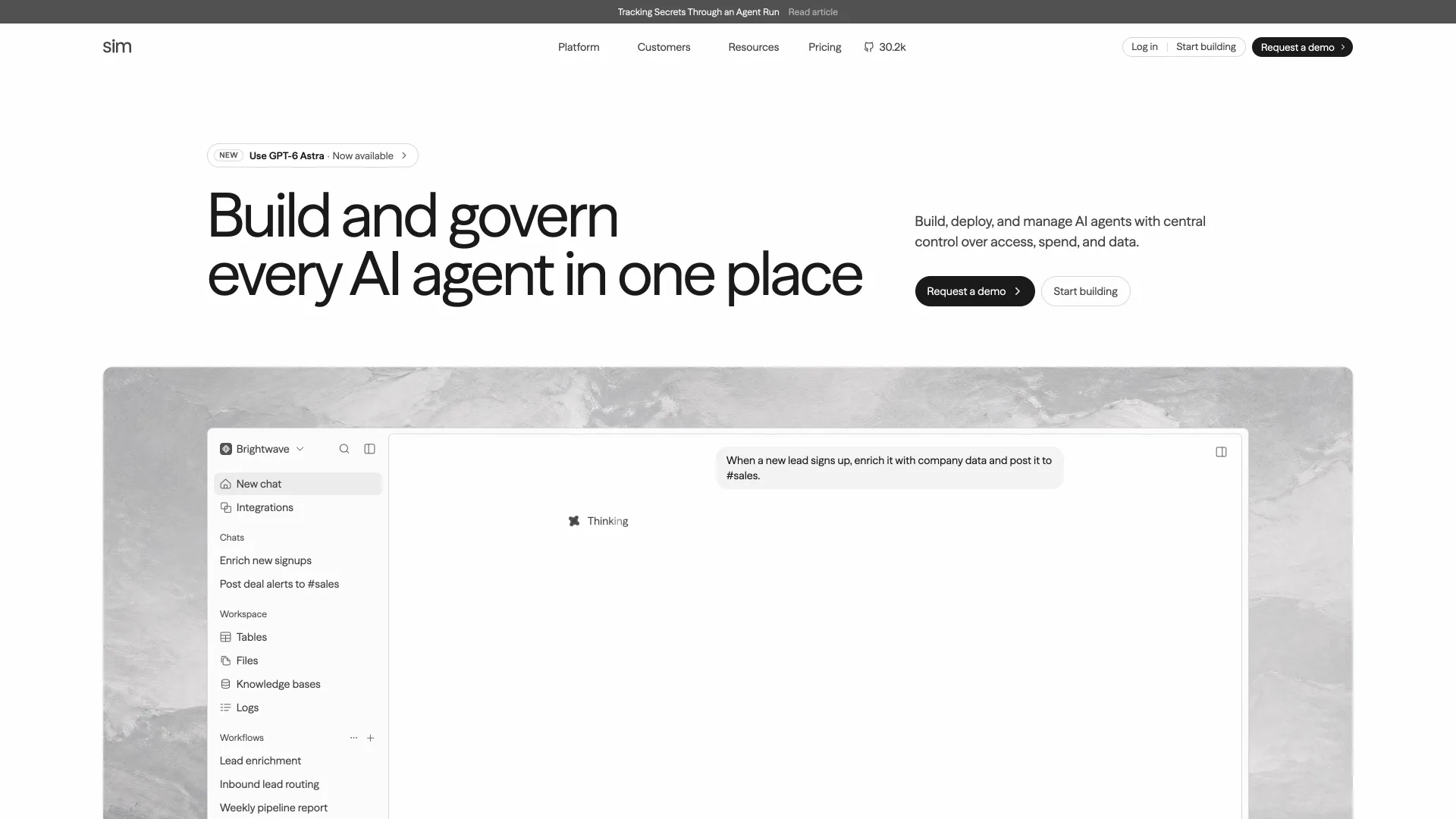
What it does well: the router redraws block for block. A Router block picks the path with a model, a Human block pauses refunds with no automatic timeout and can notify approvers in Slack, Gmail, Microsoft Teams, SMS or a webhook, and chat deployment embeds it on the help page.
What it does not do: its Guardrails block checks valid JSON, regex, hallucination and PII but not jailbreaks, and its MCP client takes remote servers only. Each chat message is a fresh run, so 8,000 messages cost 8,000 base credits ($40) before model costs.
Pricing: Free $0 with 1,000 one-time credits · Pro $25/user/month with 6,000 credits/month · Max $100 · 1 credit = $0.005 · no usage charge on your own keys · self-host free.
Langflow: Every Node Has a Match, Self-Hosted Only
Langflow is MIT licensed with 156,784 stars, shipped v1.13.3 on November 17, 2026, and maps the whole router onto built-in components.
What it does well: its Guardrails component checks PII, credentials, jailbreaks, offensive content, malicious code and prompt injection, covering the router's whole guardrail. Smart Router routes like the classifier, Human Input resumes from a checkpoint without re-running earlier steps, and a langflow-chat snippet embeds any flow that has Chat Input and Chat Output components.
What it does not do: hosted Langflow is gone. DataStax, which IBM agreed to buy in February 2025, removed it from Astra on April 9, 2026, so you self-host or run Langflow Desktop, and re-ingest the help-center documents.
Pricing: Free · your own servers.
Dify: Chatflow and a Chat Bubble, With License Strings
Dify, from LangGenius, raised a $30 million Series Pre-A on March 9, 2026, shipped 1.20.0 on November 18, and has 161,533 stars.
What it does well: a Chatflow rebuilds the router from Question Classifier, IF/ELSE, Knowledge Retrieval and Agent nodes, and Dify agents call MCP servers as tools. The Human Input node sends its form in the web app or by email, with a timeout strategy, and a chat bubble widget replaces ChatKit.
What it does not do: guardrails are an app-level Content Moderation setting (OpenAI Moderation, keywords or your own endpoint), not a node with a jailbreak check. The modified Apache 2.0 license requires a commercial license to run a multi-tenant service or remove the Dify logo from its frontend.
Pricing: Sandbox free with 200 message credits · Professional $59/workspace/month ($590 a year) · Team $159 · your own API key once credits run out.
n8n: A Free Converter Does the First Pass
n8n is a workflow automation engine with AI Agent nodes, 211,452 stars and release 2.48.6 on November 19, 2026. A free third-party tool, MigrateFlows, converts an Agent Builder export into an n8n workflow in the browser.
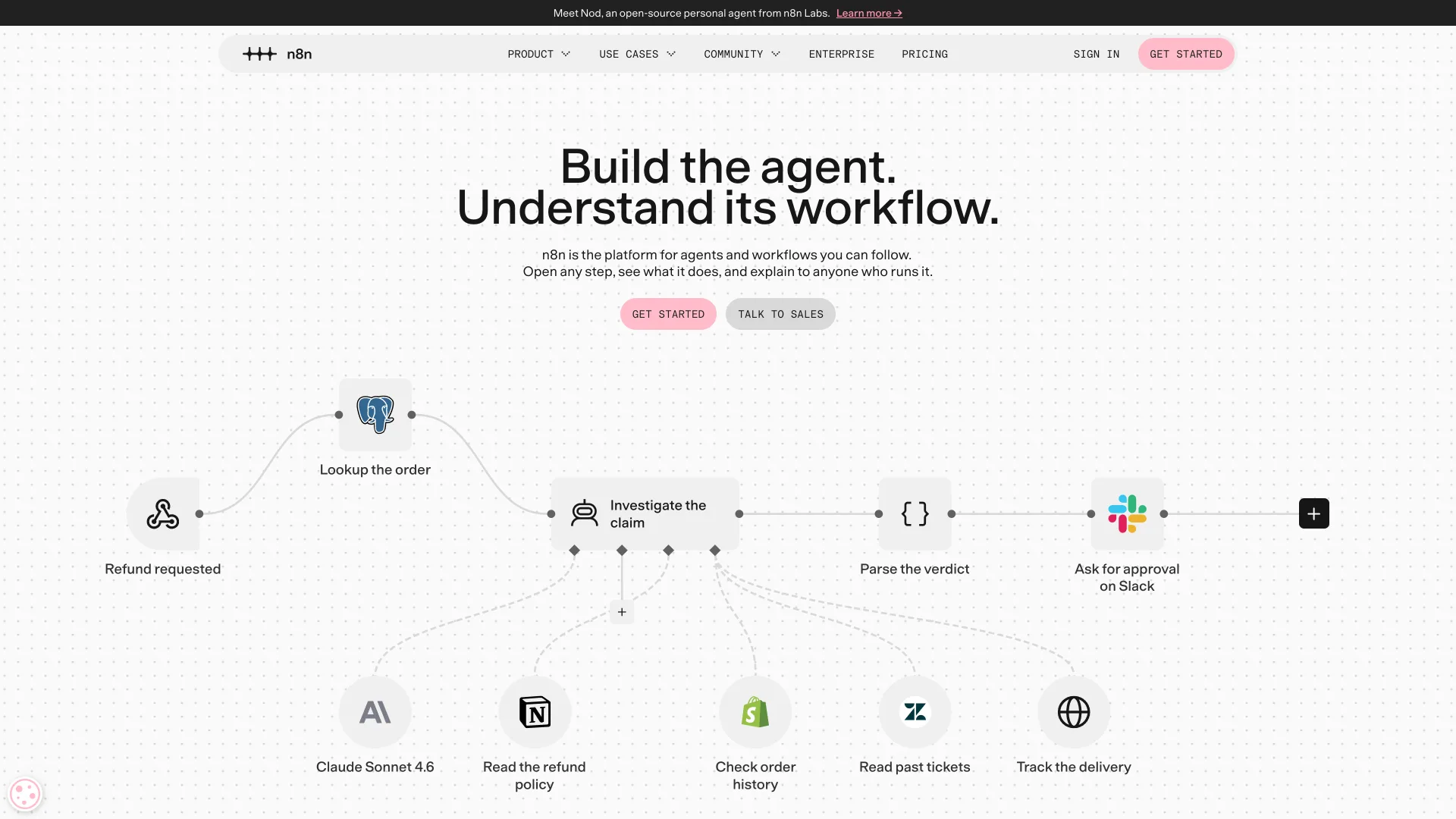
What it does well: MigrateFlows maps agents to AI Agent nodes, MCP servers to MCP Client tools, guardrails to the Guardrails node and approvals to a Wait node with a form, while file search stays on OpenAI's built-in tool, so the vector store keeps working. Its author reports 196 real exports converted and validated; I could not check that.
What it does not do: every chat message is an execution, so 8,000 messages need the Pro tier's 10,000. Moderation and hallucination guardrails have no n8n equivalent, cloud plans bill in euros, and the Sustainable Use License limits n8n to your own internal business purposes.
Pricing: Starter €20/month billed annually for 2,500 executions (about $22 at the ECB's November 19 rate) · Pro €50 (about $55) for 10,000 · Community Edition self-hosted free.
Side by Side
| Tool | Rebuild | Website chat | Keeps vector store | Self-host | License | Entry price |
|---|---|---|---|---|---|---|
| Agents SDK | Export runs | Self-hosted ChatKit | Yes | Required | MIT | $0 + API usage |
| Workspace Agents | Paste export | No | Not documented | No | Proprietary | $20/seat/month |
| Sim | Redraw | Chat deployment | No | Yes | Apache 2.0 | $0, Pro $25/user |
| Langflow | Redraw | Chat widget | No | Only option | MIT | $0 |
| Dify | Redraw | Chat bubble | No | Yes | Modified Apache 2.0 | $0, Pro $59/month |
| n8n | Converter | Chat Trigger | Yes | Yes | Sustainable Use | €20 (about $22)/month |
How to Choose Without Migrating Twice
Work through these in order:
- Export every workflow before November 30. Commit both the Python and TypeScript versions next to your app code.
- Run the audit script on each export. Vector stores and hosted tools point toward the Agents SDK or n8n; a workflow without them moves anywhere.
- Decide where the chat lives. A public website rules out Workspace Agents; an internal tool makes it the easiest choice.
- Fill every stub before anything goes live. Write the function tools, rebuild each approval, and test the refund path approved and rejected.
- Replay 20 real conversations through the new version. Pull them from your traces while the old workflow still runs, and compare answers seperately for each branch.
Which One Should You Actually Use?
The chat runs on your own website: the Agents SDK export plus a self-hosted ChatKit server, the only path that keeps the vector store, MCP calls and widget.
An internal tool, on ChatGPT Business already: Workspace Agents, after testing its deterministic branches.
You want the canvas back and can run servers: Langflow, for full node parity under MIT.
You want a hosted canvas: Sim for the closest match to Agent Builder's blocks, Dify if a flat monthly fee matters more than a jailbreak check.
Your team already runs n8n: MigrateFlows first, then fix what its report lists.
Conclusion
Agent Builder's shutdown removes the canvas and the hosted runtime, not the pieces your workflow calls. That is why the cheapest exit is the least visual one: the exported code still talks to the same vector stores and MCP servers. Moving to another canvas means re-uploading documents and rebuilding approvals by hand. Run the audit script on teh export first; the lines it prints are the migration work.
Related DevToolLab Tools
- PII Redactor - test support messages against the PII rules your Guardrails node enforced.
- JSON to Pydantic - turn a classifier's output into the Pydantic model the Python export uses as
output_type. - JSON to Zod - the same job for the TypeScript export's Zod schemas.
- MCP Server Config Generator - rebuild MCP connection settings for the new tool from the exported
server_url.
Related Guides
- Best Flowise alternatives - another forced migration, with self-hosting details for Langflow, Dify and Sim.
- n8n alternatives for AI workflows - one AI workflow priced on n8n, Dify, Zapier and others.
- OpenAI Agents API explained - OpenAI's managed agent harness, if you want OpenAI to host more than the models.
- Best AI agent frameworks - LangGraph, CrewAI, Pydantic AI and the vendor SDKs, for teams leaving canvases behind.