
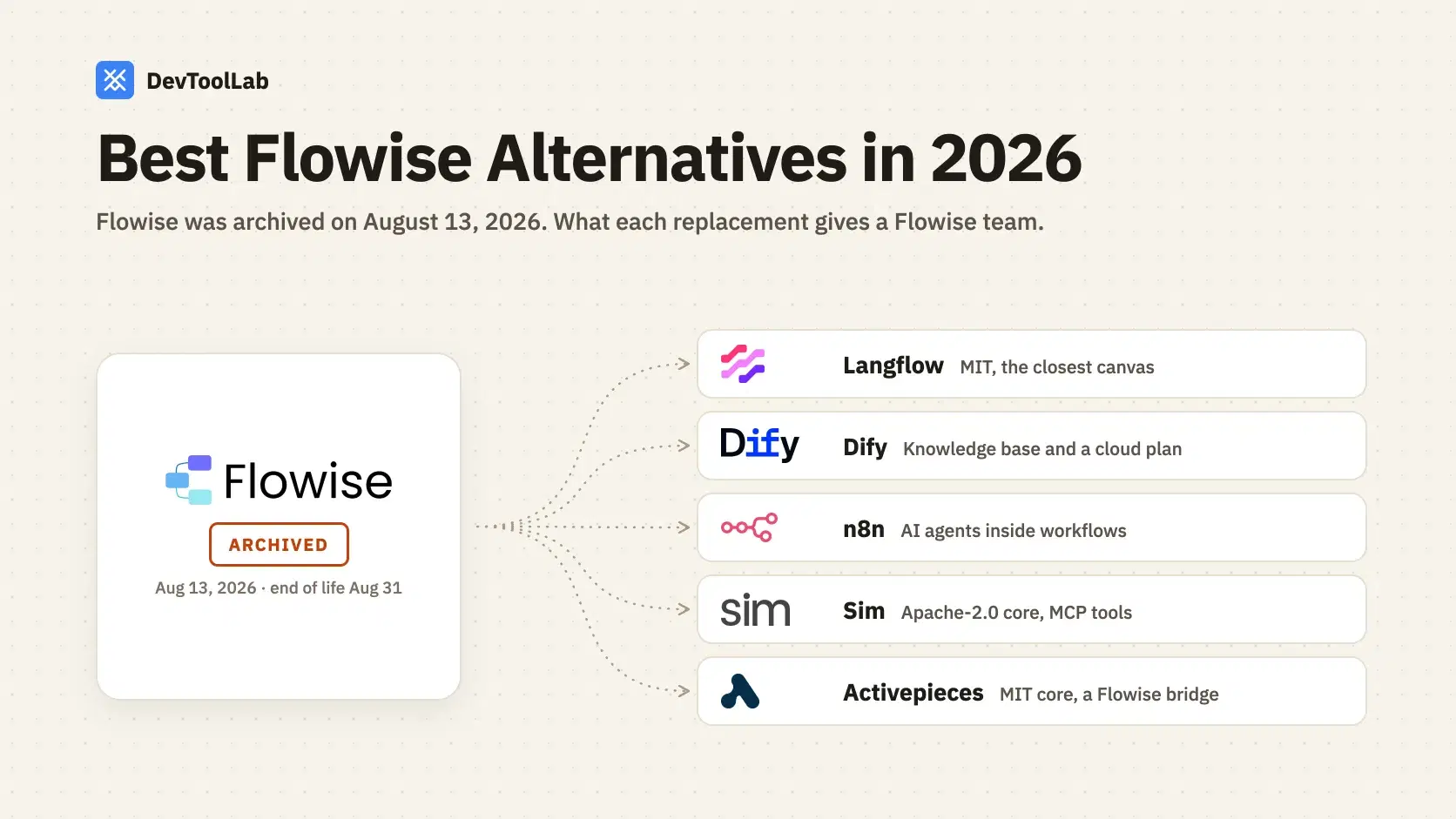
A visual LLM builder starts as a quick way to ship one chatbot and ends up as infrastructure: the chatflows, the vector store, the API keys and the chat bubble on the help center all live inside it. When that builder stops shipping fixes, every one of those pieces needs a new home.
That is now true of Flowise. Flowise froze development on July 29, 2026, archived its 55,506-star repository on August 13 and reached end of life on August 31, a year after Workday acquired it. On September 10, 2026, the Flowise repository published six High and Critical security advisories for 3.1.4 and earlier with no patched version. We checked seven replacements on what they give a Flowise team: license, what self-hosting takes, a knowledge base, MCP and a chat embed. Apart from one fork, none of them runs a Flowise chatflow as is.
What Happened to Flowise
Flowise's sunset notice gives the reason plainly: "developers are increasingly relying on new coding agents such as Claude Code/OpenClaw to handle complex tasks. The typical rigid workflow low code approach quickly hits the limit when it comes to complexity." Its only migration advice is to fork: "the Apache 2.0 licensed code is yours to keep building on."
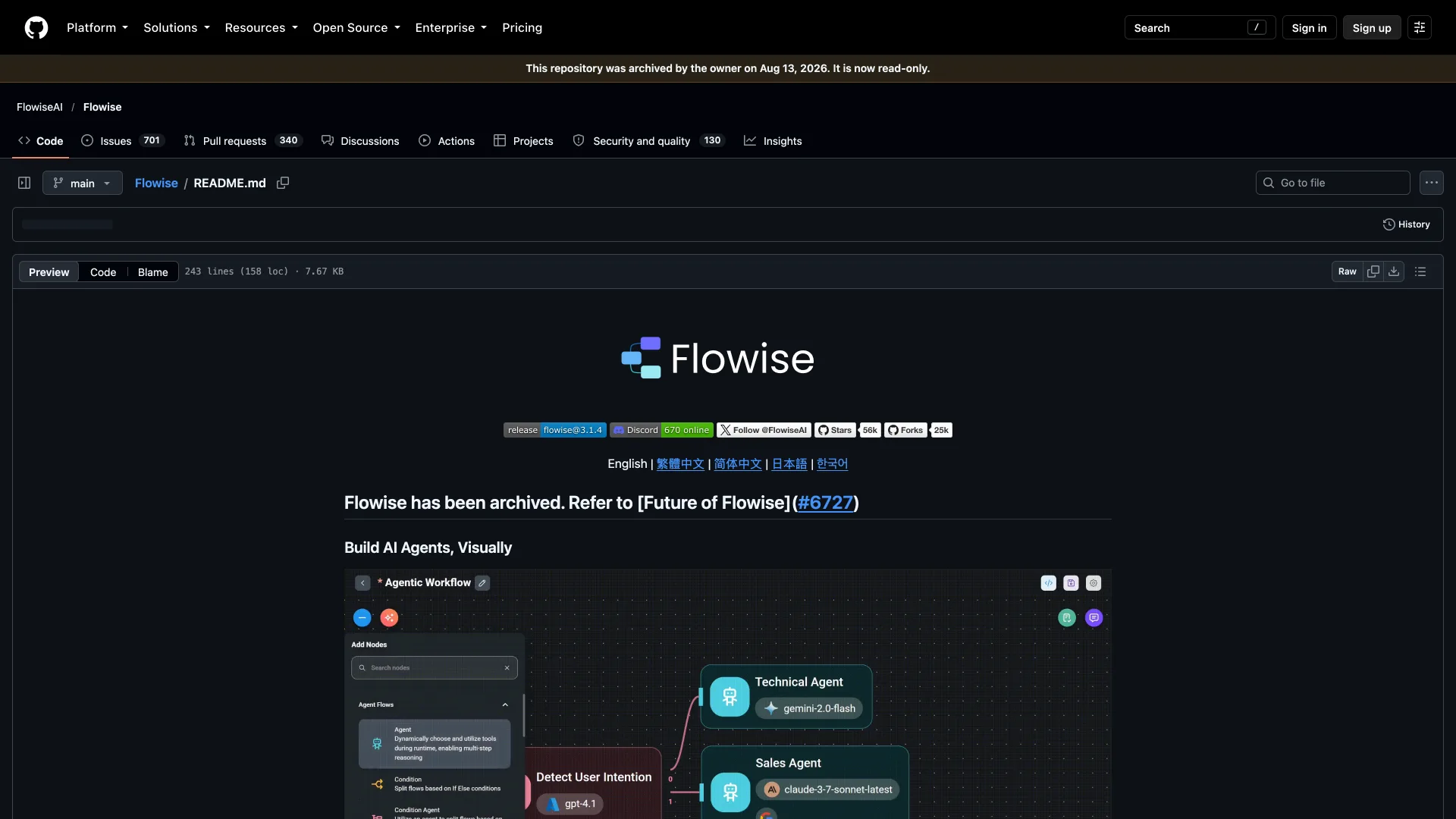
Three details matter if you still run it. The last release, flowise@3.1.4, shipped July 29, 2026, and the promised deprecation flags on npm and Docker Hub were never applied, so nothing warns a new install. The license is not pure Apache 2.0: packages/server/src/enterprise sits under a commercial license. And the Flowise Cloud sign-in at cloud.flowiseai.com no longer resolves as of October 16, 2026, while the homepage still lists paid plans.
What Moving Off Flowise Actually Involves
A Flowise export is a { nodes, edges } JSON graph with passwords, files and credential IDs stripped out. Langflow, Dify, Sim and the rest import only their own formats, so moving means rebuilding the flow, re-entering keys and re-ingesting documents into the new knowledge base.
The worked example here is a typical Flowise job: a support bot that answers from a 200-page product PDF and sits on a US software company's help center as a chat bubble. Each section below says what that bot needs on the new tool. Three bridges cut the work: Keelflow runs your existing flows unchanged, MigrateFlows, an MIT project created October 13, 2026, converts Flowise JSON into n8n workflows, and Activepieces can call a running Flowise chatflow while you rebuild.
What Self-Hosting Each One Takes
Self-hosting is why most teams picked Flowise, so the script reads each replacement's main image size live from Docker Hub and GitHub's container registry, next to the container count in its official compose file or install script.
js// What self-hosting each Flowise replacement asks you to pull and run. // Image sizes are read live from Docker Hub and GHCR (linux/amd64, compressed). // Container counts come from each project's official compose file or install script. const stacks = [ { name: "Flowise 3.1.4", containers: 1, images: [["hub", "flowiseai/flowise", "3.1.4"]] }, { name: "Keelflow 3.2.1", containers: 1, images: [["ghcr", "perruer/keelflow", "3.2.1"]] }, { name: "Langflow 1.12.6", containers: 2, images: [["hub", "langflowai/langflow", "1.12.6"]] }, // + postgres { name: "Dify 1.17.1", containers: 16, // 7 core + 8 dependencies + 1 one-time init images: [["hub", "langgenius/dify-api", "1.17.1"], ["hub", "langgenius/dify-web", "1.17.1"]] }, { name: "n8n 2.43.6", containers: 1, images: [["hub", "n8nio/n8n", "2.43.6"]] }, // docker run on SQLite; the recommended compose runs 6 { name: "Activepieces 0.92.3", containers: 4, images: [["hub", "activepieces/activepieces", "0.92.3"]] }, // app, worker, postgres, redis { name: "Sim 0.9.23", containers: 6, images: [["ghcr", "simstudioai/simstudio", "v0.9.23"]] }, // + realtime, migrations, cron, redis, db ] async function hubSize(repo, tag) { const r = await (await fetch(`https://hub.docker.com/v2/repositories/${repo}/tags/${tag}`)).json() return r.images.find((i) => i.os === "linux" && i.architecture === "amd64").size } async function ghcrSize(repo, tag) { const { token } = await (await fetch(`https://ghcr.io/token?scope=repository:${repo}:pull`)).json() const get = async (ref, accept) => (await fetch(`https://ghcr.io/v2/${repo}/manifests/${ref}`, { headers: { Authorization: `Bearer ${token}`, Accept: accept } })).json() const index = await get(tag, "application/vnd.oci.image.index.v1+json,application/vnd.docker.distribution.manifest.list.v2+json") const amd64 = index.manifests.find((m) => m.platform?.os === "linux" && m.platform?.architecture === "amd64") const manifest = await get(amd64.digest, "application/vnd.oci.image.manifest.v1+json,application/vnd.docker.distribution.manifest.v2+json") return manifest.layers.reduce((sum, l) => sum + l.size, 0) } const mb = (b) => (b / 1e6).toLocaleString("en-US", { maximumFractionDigits: 0 }) + " MB" console.log("Stack".padEnd(22) + "Containers".padEnd(12) + "Main images (amd64, compressed)") for (const s of stacks) { const sizes = [] for (const [reg, repo, tag] of s.images) { const bytes = reg === "hub" ? await hubSize(repo, tag) : await ghcrSize(repo, tag) sizes.push(`${repo.split("/")[1]} ${mb(bytes)}`) } console.log(s.name.padEnd(22) + String(s.containers).padEnd(12) + sizes.join(" + ")) }
Real output, October 16, 2026:
textStack Containers Main images (amd64, compressed) Flowise 3.1.4 1 flowise 1,548 MB Keelflow 3.2.1 1 keelflow 857 MB Langflow 1.12.6 2 langflow 801 MB Dify 1.17.1 16 dify-api 922 MB + dify-web 201 MB n8n 2.43.6 1 n8n 273 MB Activepieces 0.92.3 4 activepieces 472 MB Sim 0.9.23 6 simstudio 1,035 MB
n8n is the lightest start at one 273 MB docker run container on SQLite (its recommended compose runs six), and Dify is the heaviest at 16 containers, including Weaviate, a code sandbox and a plugin daemon. Flowise's own last image is the largest single download here: 3.1.4 added a 555 MB chown layer when it stopped running as root.
Keelflow: The Drop-In Fork
Keelflow "starts from Flowise 3.1.4" with "every file under the Apache-2.0 license," and released v3.2.1 on September 25, 2026.
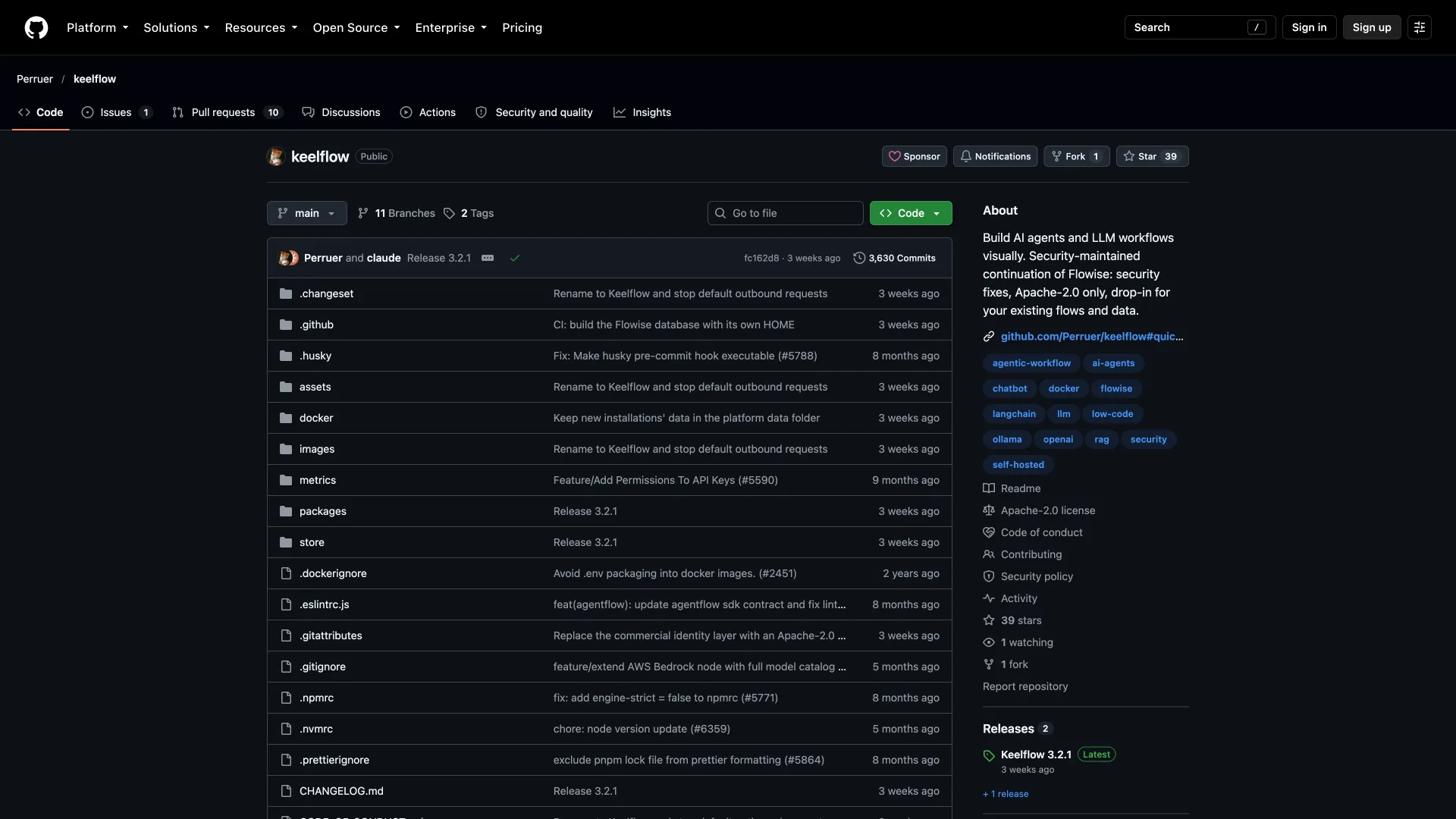
What it does well: no rebuild. You replace the image flowiseai/flowise with ghcr.io/perruer/keelflow, keep your FLOWISE_* variables and a volume at /home/node/.flowise (3.1.3 and older used /root/.flowise), and the support bot, its credentials and its document store carry over.
What it does not do: multi-user, SSO, invitations and roles from Flowise Enterprise are gone, and the project has 39 stars and one maintainer working "in my free time." Its security fixes are self-reported, so treat it as time to plan a move, not the destination.
License and version: Apache-2.0, v3.2.1 · self-hosted only.
Langflow: The Closest Canvas, Now IBM's
Langflow is the nearest thing to Flowise's node canvas, MIT licensed with 155,726 stars, and shipped v1.12.6 on October 13, 2026. IBM announced it would acquire DataStax, Langflow's developer, on February 25, 2025.
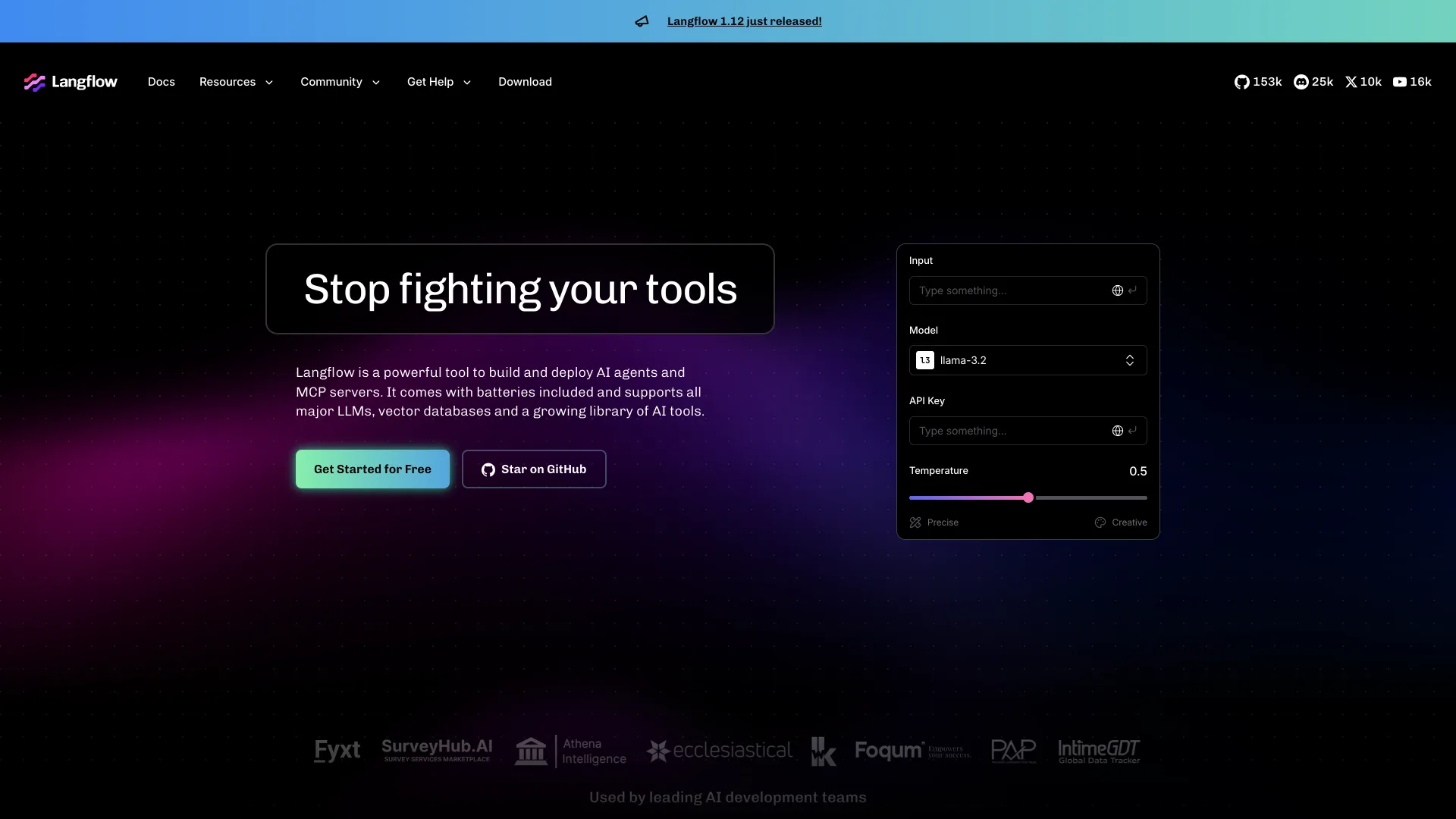
What it does well: the support bot maps cleanly onto vector store components or a built-in knowledge base, and Share > Embed into site adds the chat widget to the help center. Langflow is both an MCP client and an MCP server over streamable HTTP, and custom components are plain Python classes. Self-hosting is two containers, Langflow and Postgres.
What it does not do: hosted Langflow is gone. DataStax removed it from Astra on April 9, 2026, so it is self-host or IBM support by quote, and there is no Flowise importer.
License and version: MIT, v1.12.6 · self-hosted, IBM support by quote.
Dify: A Full Platform, With License Strings
Dify, from LangGenius, has 158,610 stars and released 1.17.1 on September 10, 2026, under "a modified version of the Apache License 2.0."
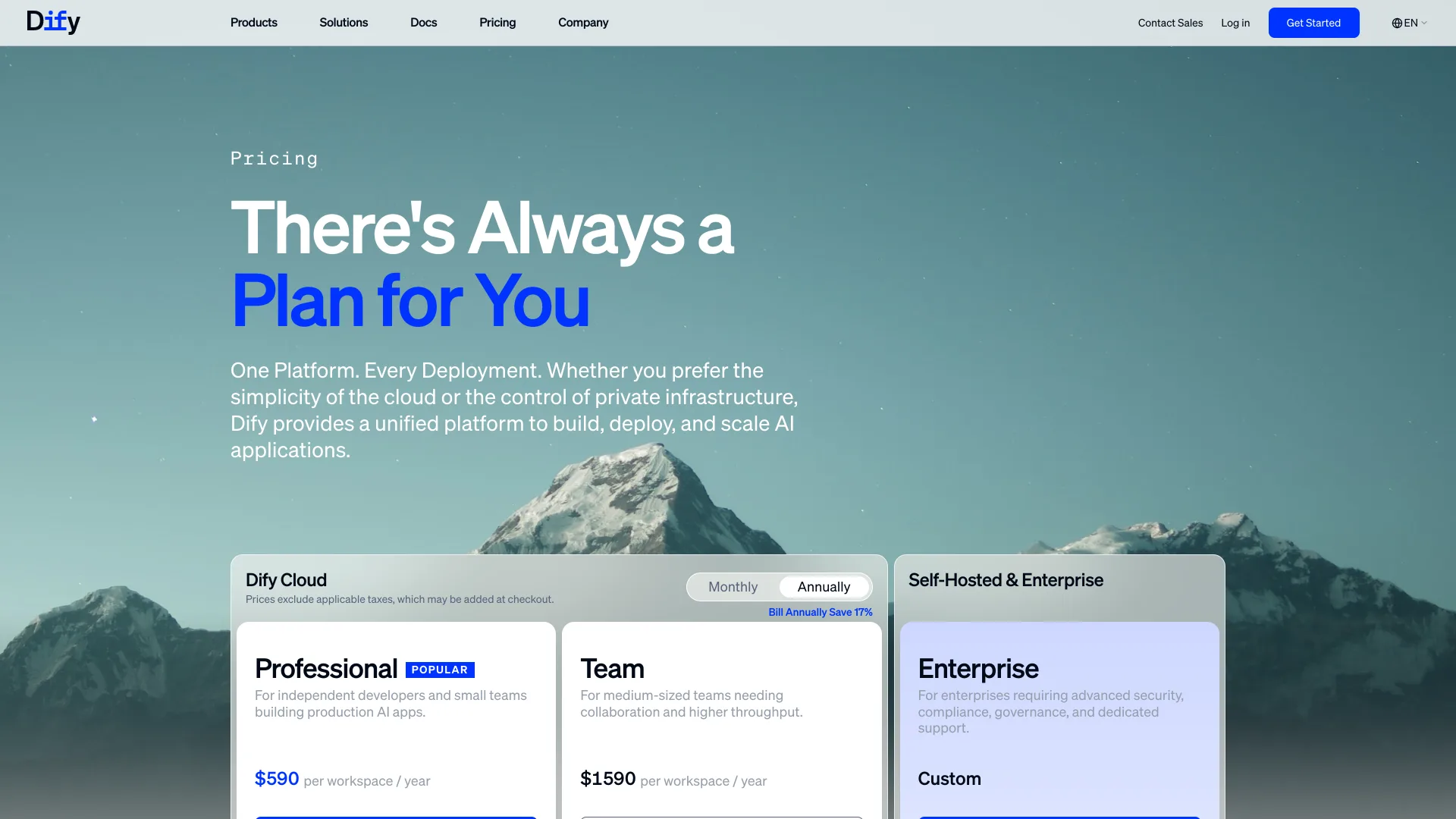
What it does well: knowledge bases with a document pipeline, agent and workflow apps, a Python or JavaScript code node, MCP as client (HTTP servers only) and as a per-app server, and a chat bubble or iframe embed. Its cloud plans are billed per workspace rather than per seat.
What it does not do: the license bars running a multi-tenant service without written permission and removing the logo from the frontend. Self-hosting needs 16 containers, 2 cores and 4 GiB of RAM, and existing installs on the bundled Weaviate need a staged manual upgrade before 1.17.1.
Pricing: Self-hosted free · Cloud Professional $59/month or $590/year (5,000 message credits, 3 members) · Team $159/month.
n8n: Agents Inside a Workflow Engine
n8n is a workflow automation tool with 207,582 stars that grew AI Agent nodes; it released 2.43.6 on October 15, 2026, and was valued at $5.2 billion in SAP's May 2026 investment.
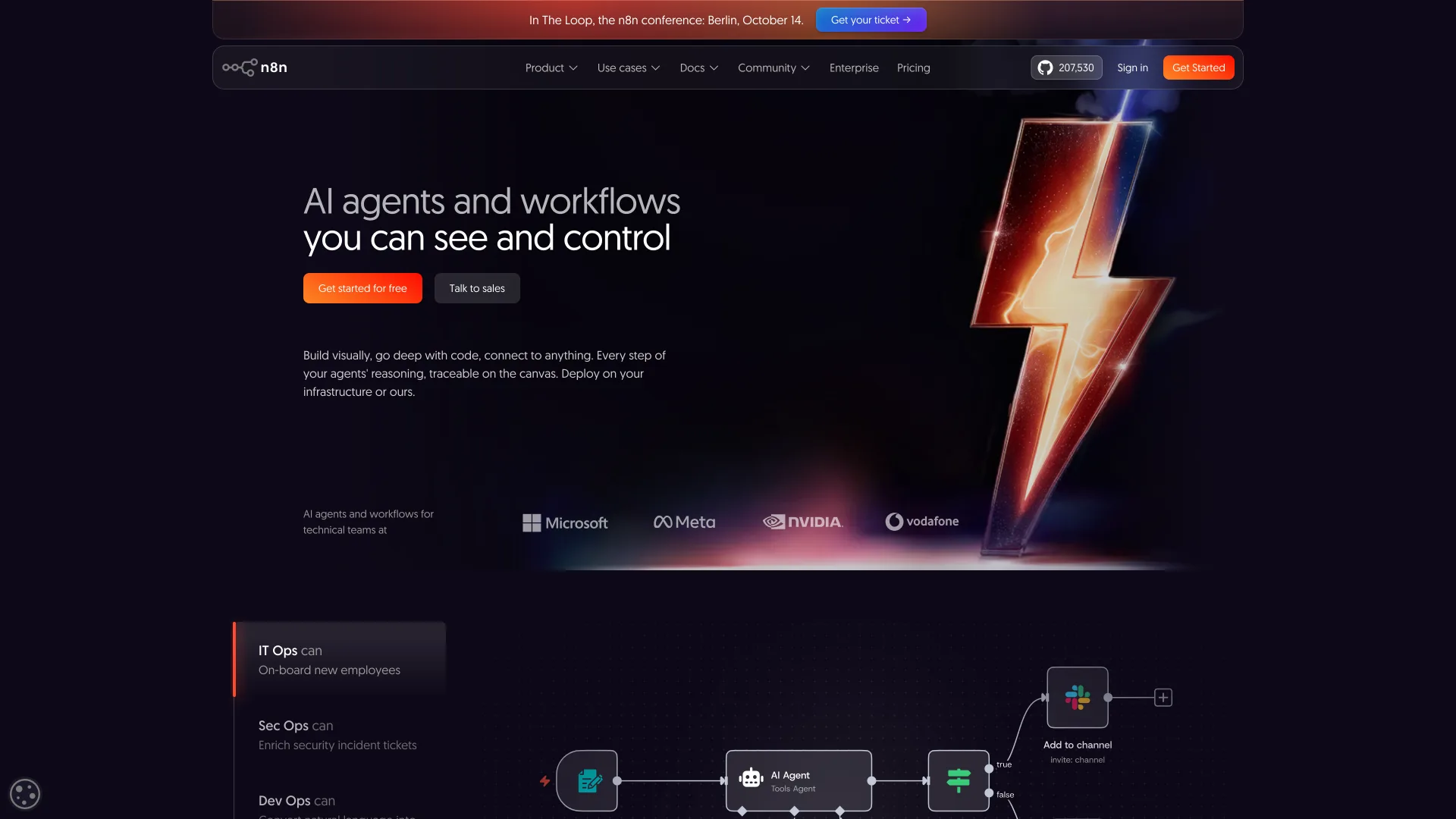
What it does well: the support bot becomes a Chat Trigger, an AI Agent node and one of 12 vector store nodes, embedded with the @n8n/chat widget, and the rest of n8n's integrations sit next to it. MCP works both ways, and MigrateFlows converts Flowise JSON straight into n8n workflows.
What it does not do: the Sustainable Use License limits use to "your own internal business purposes," so letting customers build or edit workflows needs another license. Every chat message is one execution, which matters on Cloud plans metered by executions.
License and version: Sustainable Use License, v2.43.6 · Community Edition free to self-host · Cloud from 2,500 executions a month.
Sim: Agent Blocks on an Apache-2.0 Core
Sim, a Y Combinator Spring 2025 company that raised a $7 million Series A led by Standard Capital on November 12, 2025, shipped v0.9.23 on October 15, 2026, and has 29,831 stars.
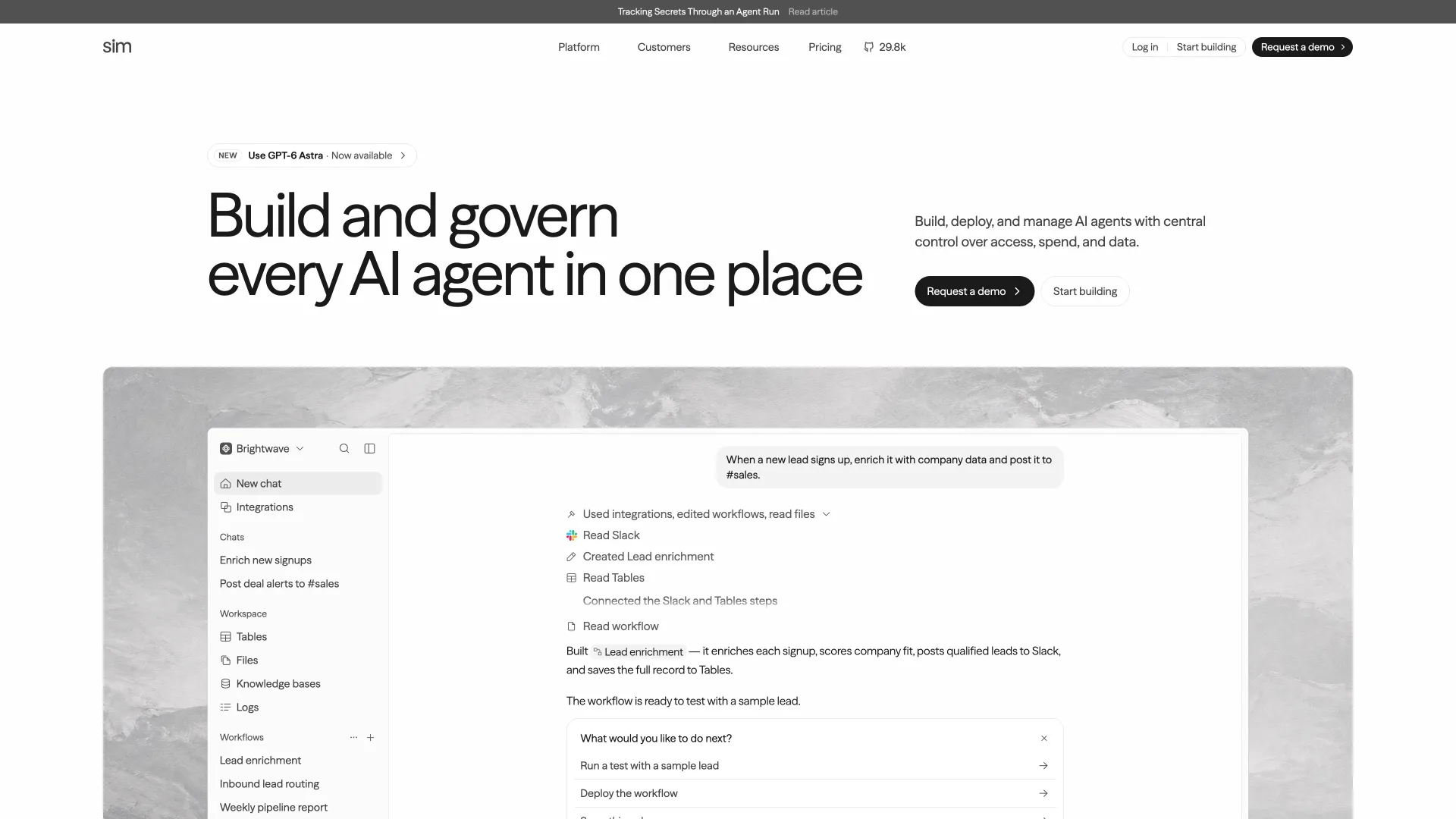
What it does well: a canvas of Agent blocks, a pgvector knowledge base, chat deployment with an iframe embed, and deployed workflows exposed as MCP tools. The core is Apache-2.0.
What it does not do: enterprise features under apps/sim/ee need a paid license in production, its MCP client accepts only remote servers, and the built-in Chat assistant needs a Sim-issued key even when self-hosted. The docs suggest 12 GiB of RAM for an evaluation install, and Python functions need an E2B or Daytona sandbox.
Pricing: Self-hosted core free · Cloud Pro $25/seat/month · Max $100/seat/month.
Activepieces: The Bridge While You Rebuild
Activepieces, a Y Combinator Summer 2022 company with 25,065 stars, released 0.92.3 on October 12, 2026, with an MIT core.
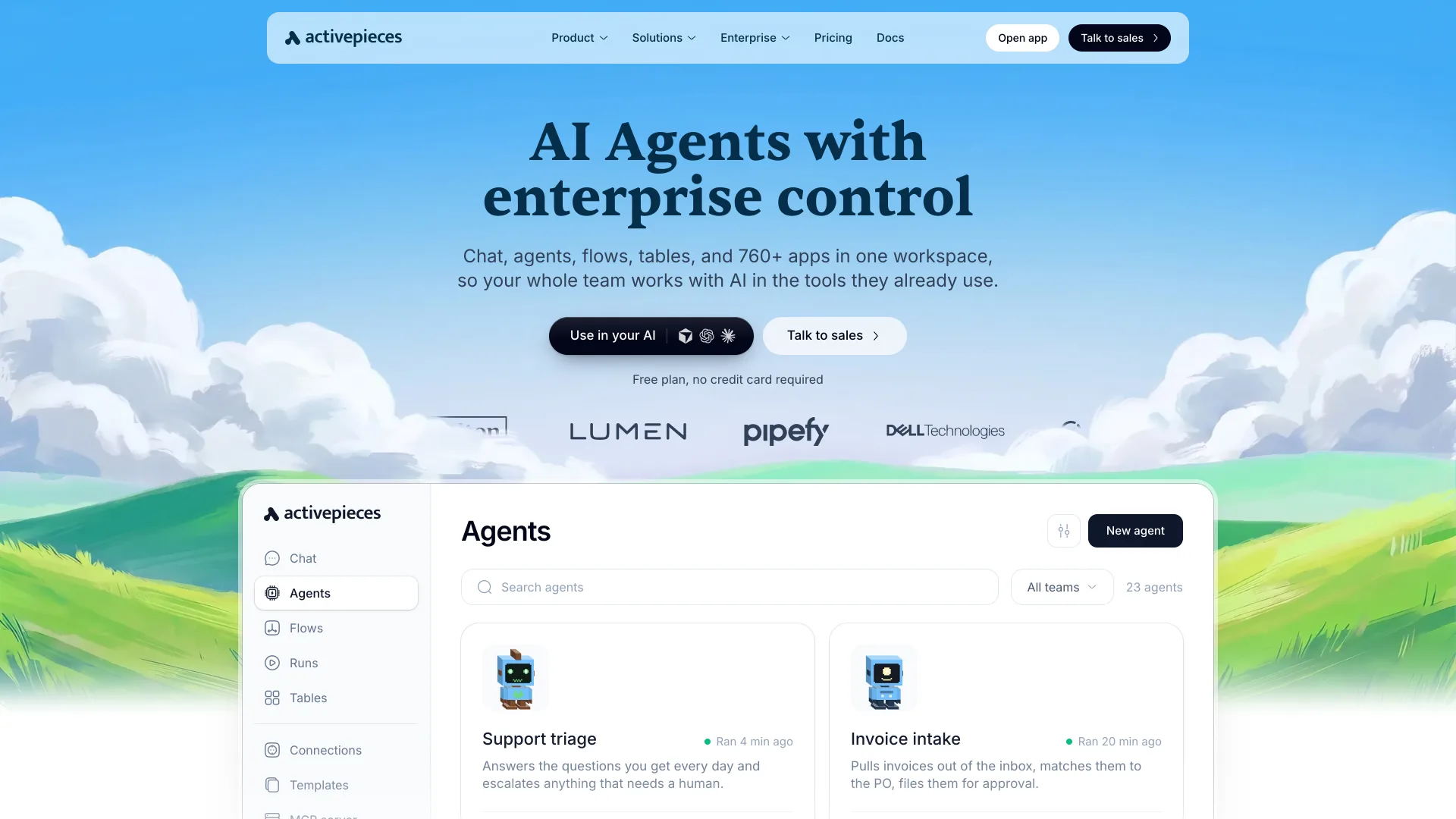
What it does well: it ships a Flowise piece whose "Make Prediction" action sends input to a running Flowise chatflow by ID, so new automations can call the old support bot during the migration. Agents can answer from uploaded files and call external MCP servers, and a built-in MCP server exposes your flows. Self-hosting is four containers on 2 vCPU and 4 GB of RAM.
What it does not do: its FAQ says the Community Edition is "the automation core on its own," and that paying adds "running Agents and Chat." Code steps run in a V8 isolate with no npm packages by default.
Pricing: Free (1,000 credits/month) · Plus $20/month flat (10,000 credits) · Team $200/month.
StackAI: Hosted, With Compliance Paperwork
StackAI is a closed-source hosted builder that raised a $16 million Series A on May 6, 2025.
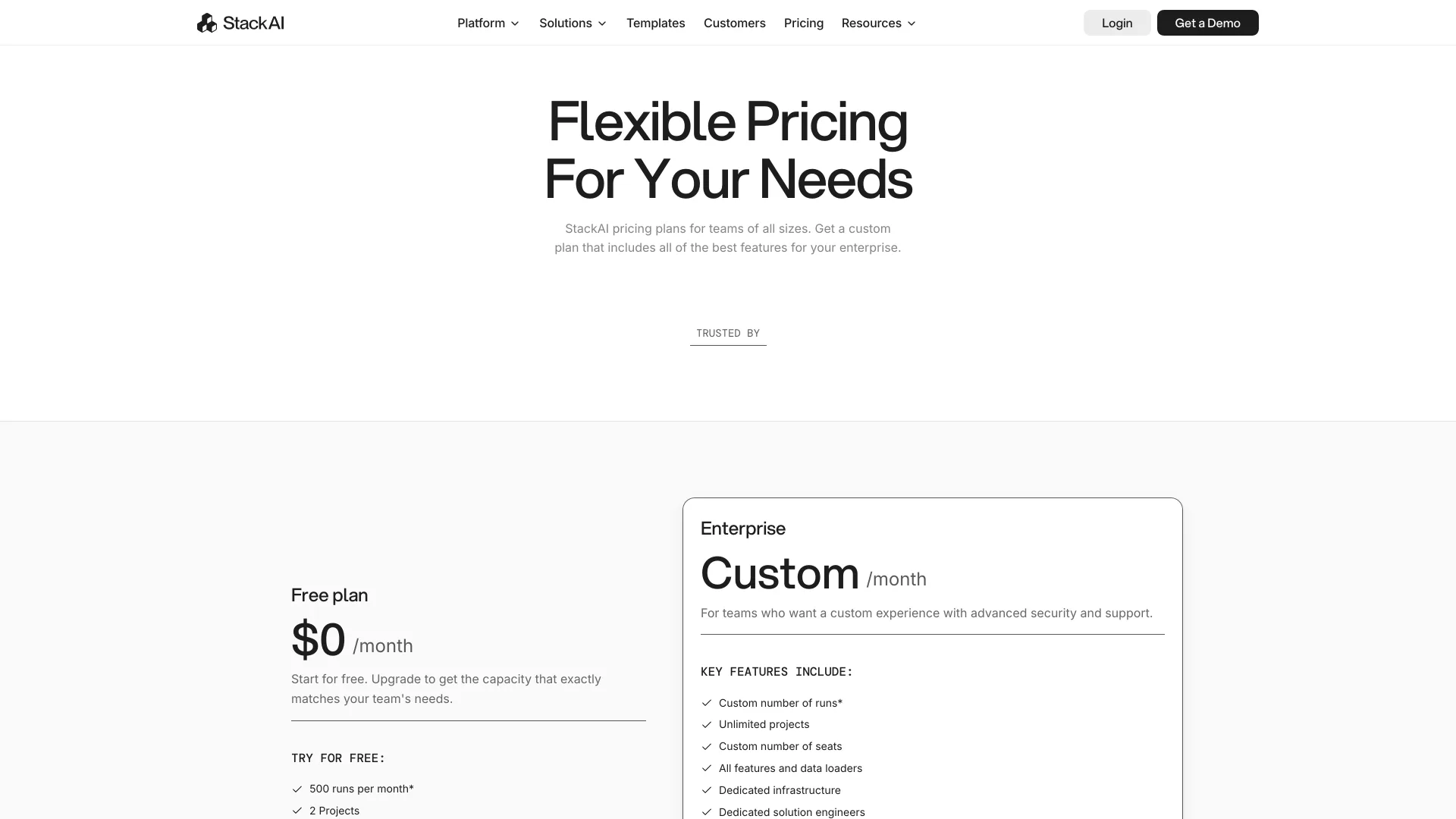
What it does well: it deploys one workflow as a chat, form, API, Slack or Microsoft Teams app, with a website chatbot embed. Its security page claims SOC 2 Type II and ISO 27001, and Enterprise adds on-prem or VPC deployment, SSO and a BAA for HIPAA work.
What it does not do: there is no paid plan between Free and Enterprise, and the Free plan's table checks "REST API" while dashing "API Access."
Pricing: Free (500 runs/month, 2 projects, 1 seat) · Enterprise custom.
Side by Side
| Tool | License | Self-host | Knowledge base | MCP | Chat embed | Hosted plan |
|---|---|---|---|---|---|---|
| Keelflow | Apache-2.0 | 1 container | Flowise's own | Flowise's own | Flowise's own | None |
| Langflow | MIT | 2 containers | Built in | Client and server | Yes | Removed April 2026 |
| Dify | Modified Apache 2.0 | 16 containers | Built in, pipeline | Client (HTTP) and server | Yes | Free, then $59/month |
| n8n | Sustainable Use | 1 to 6 containers | 12 vector store nodes | Client and server | Yes | Execution-metered |
| Sim | Apache-2.0 core | 6 containers | pgvector | Remote client, server | Yes | Free, then $25/seat |
| Activepieces | MIT core | 4 containers | From files | Client and server | Hosted chat page | Free, then $20/month |
| StackAI | Proprietary | Enterprise on-prem | Built in | Client and server | Yes | Free, then Enterprise |
How to Choose Without Migrating Twice
- Export everything now. Download each chatflow's JSON and the document store files while your instance still runs; credentials do not export, so list them separately.
- Close the gap first. If Flowise faces the internet, put it behind a VPN or an authenticating proxy before you plan the rebuild.
- Check the license against your business. Letting customers build their own flows needs a deal under n8n's license, and Dify needs written permission to run a workspace per customer.
- Rebuild one real flow end to end. Take the support bot, re-ingest its PDF, embed the widget on a staging page and compare answers before you move the rest.
Which One Should You Actually Use?
Need it running again this week: Keelflow, then plan the real move.
Want the closest Flowise canvas: Langflow, self-hosted, MIT.
Want RAG, agents and a per-workspace cloud plan: Dify, if its license fits.
AI is one part of wider automation: n8n, with MigrateFlows for the first pass.
Need compliance and a vendor to call: StackAI Enterprise.
Conclusion
Flowise did not break overnight; it just stopped getting fixes, and six unpatched advisories later that is a reason to move. Pick the replacement by license and what self-hosting takes, then rebuild one flow to prove it before you migrate the rest.
Related DevToolLab Tools
- Docker Compose Validator - check a replacement's compose file before the first
docker compose up. - Docker Compose to Docker Run - turn a compose service into a single
docker runfor a quick trial. - Text Chunker - preview how your support PDF splits into chunks before re-ingesting it.
- LLM Token Cost Calculator - estimate what the rebuilt bot's model calls cost per month.
Related Guides
- n8n Alternatives for AI Workflows in 2026 - Dify, Make, Zapier and others priced on one AI workflow.
- LangChain Alternatives in 2026: 7 Tested - the code-first route for teams leaving visual builders.
- Best AI Agent Frameworks in 2026 - the frameworks behind several of these canvases.
- Best Vector Databases in 2026: Tested & Ranked - where the support bot's embeddings can live next.