
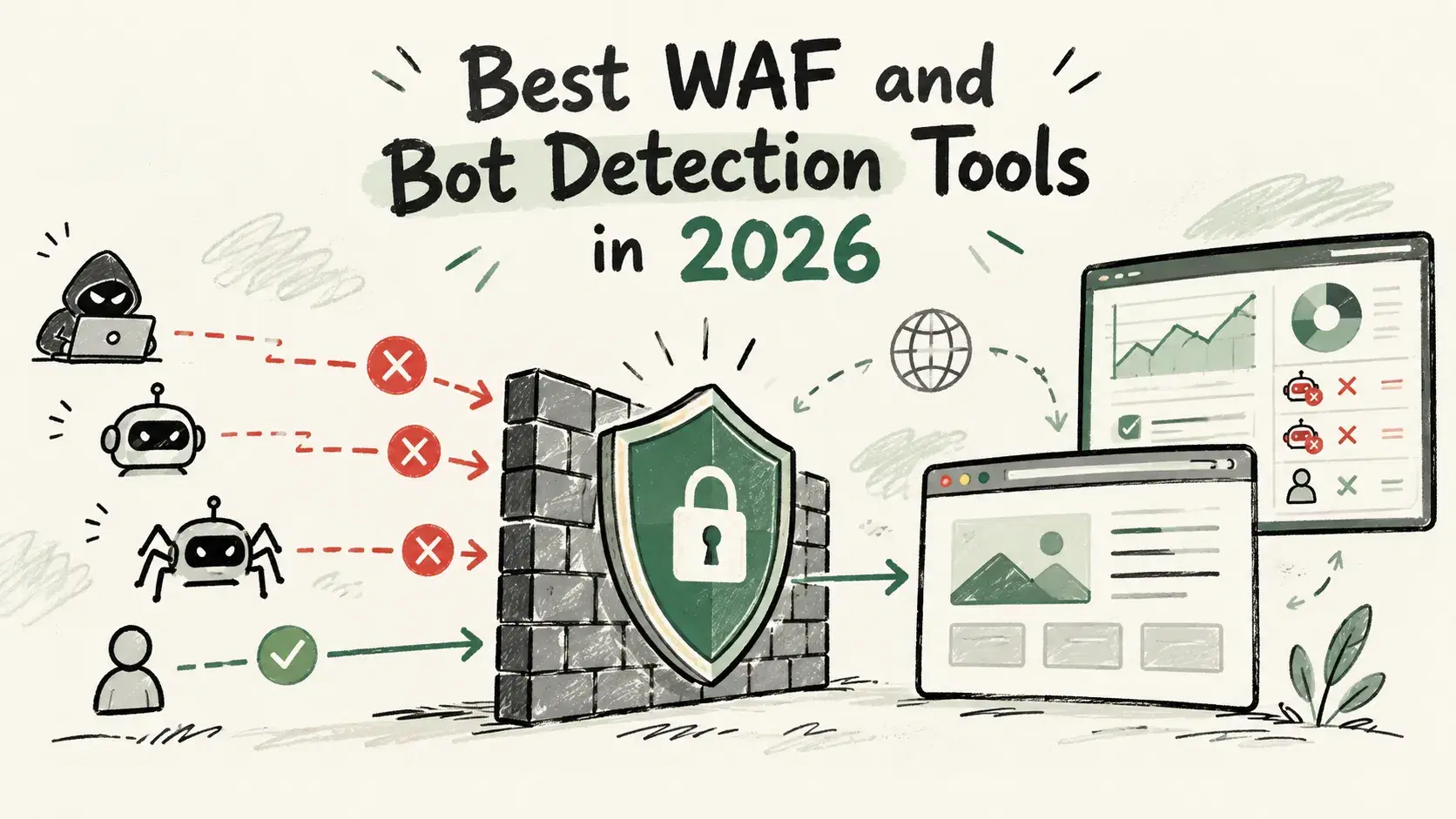
Every public API and checkout page now takes more traffic from automation than from people, and at the network layer the two are hard to tell apart: the same TLS handshake, the same Chrome user agent, sometimes the same residential IP a paying customer used yesterday.
Imperva's 2026 Bad Bot Report, published April 29, 2026, puts automated traffic at more than 53% of all web traffic in 2025, up from 51% the year before, the first time bots have outnumbered humans online. Financial services took the worst of it, at 24% of all bot attacks and 46% of account takeovers, and 27% of bot attacks industry-wide now target API endpoints directly instead of a login form.
What Teams Actually Run
Most teams do not go shopping for a bot-detection vendor; they inherit one. Cloudflare's Bot Fight Mode ships free on every plan, and its heavier Super Bot Fight Mode is bundled from the $20-a-month Pro plan up (checked September 26, 2026). That default-on distribution is a large part of why Cloudflare is the plurality choice for teams that never explicitly bought a bot product.
The dedicated vendors sell past that default: DataDome, HUMAN Security and Akamai each sell a purpose-built bot product, and none of the four, including Cloudflare above Business, publishes a self-serve price for it. Every one is a "talk to sales" line item.
What Happens When You Just Curl Their Own Sites
Every vendor here runs one benchmark on itself every day: its own marketing site. On September 26, 2026, I fetched five vendor pages with a plain HTTP client, no browser, no JavaScript.
BashUA="Mozilla/5.0 (Windows NT 10.0; Win64; x64) AppleWebKit/537.36 (KHTML, like Gecko) Chrome/128.0.0.0 Safari/537.36" for url in "https://www.cloudflare.com/" "https://www.datadome.co/" \ "https://www.humansecurity.com/" \ "https://www.akamai.com/products/app-and-api-protector" \ "https://www.fastly.com/products/bot-management"; do code=$(curl -s -o /dev/null -w "%{http_code}" --max-time 15 -A "$UA" "$url") echo "$url -> $code" done
texthttps://www.cloudflare.com/ -> 200 https://www.datadome.co/ -> 302 https://www.humansecurity.com/ -> 403 https://www.akamai.com/products/app-and-api-protector -> 403 https://www.fastly.com/products/bot-management -> 200
Cloudflare answered 200 and set its own __cf_bm cookie, the bot-management cookie it drops on every customer site. DataDome answered with a 302. Akamai came back 403 from its own errors.edgesuite.net infrastructure, the same edge the product runs on for paying customers. HUMAN let an earlier request through with just a tracking cookie, then returned 403 a few requests later in the same minute, consistent with behavior-based scoring rather than a static blocklist.
A real, if headless, Chrome session changed the outcome for two of the four. Akamai still would not render, returning the same denial in the browser itself.

HUMAN's Bot Defender page instead served an interactive challenge, "Before we continue... Press & Hold to confirm you are a human (and not a bot)."
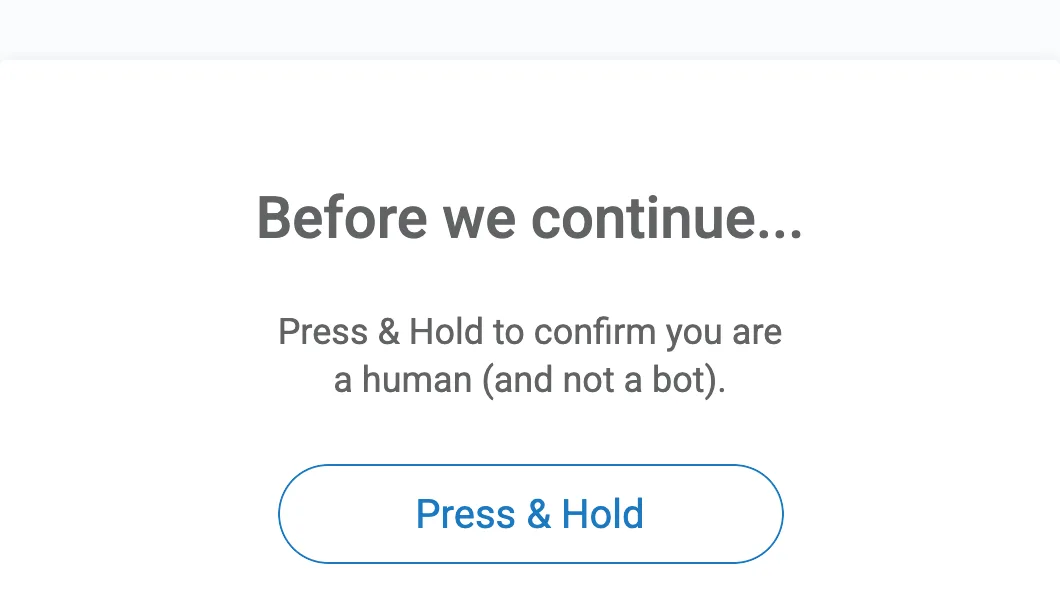
Neither site cared that the client was a real Chromium build, JavaScript-capable and rendering fonts normally. The decision came from something behavioral, and that is the entire pitch of every vendor here, demonstrated on their own infrastructure before a human opens a ticket.
Cloudflare Bot Management
Cloudflare folds bot detection into the same edge that already serves DNS, CDN and DDoS protection, so bot rules run on infrastructure most customers already pay for.
Its stack scores every request from 1 to 99, adds JA3/JA4 TLS fingerprinting, maintains a verified-bots list, and layers on machine learning trained across Cloudflare's whole network. Bot Fight Mode ships free on every plan as a coarser first layer.
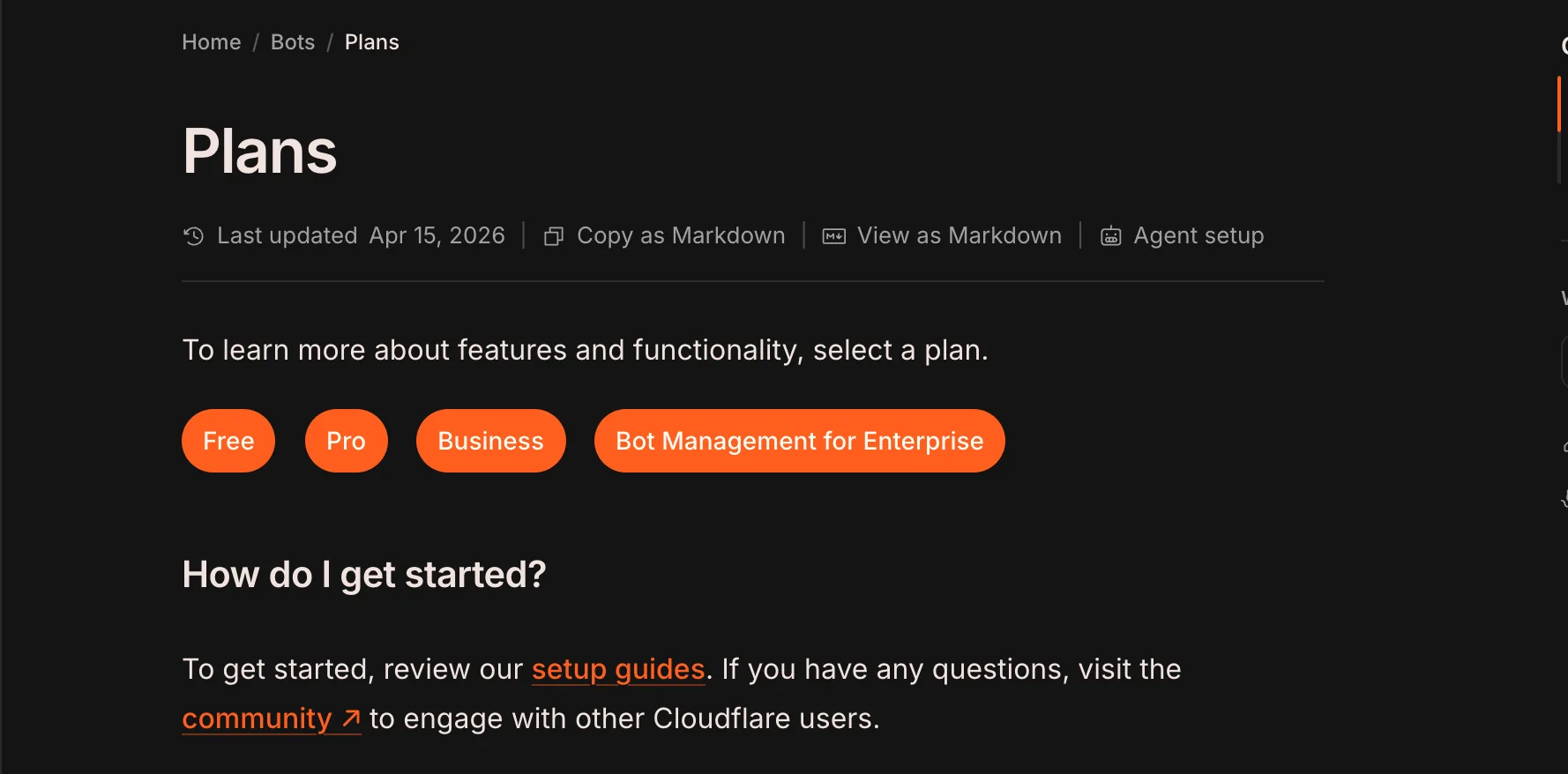
The gap is that the useful part is Enterprise-only. Cloudflare's docs say Bot Management for Enterprise, the tier with bot scores, fingerprinting and per-path rules, is "Added to Enterprise plans by your account team," meaning no public price, even though Free, Pro and Business below it are self-serve. A team on the $200-a-month Business plan gets only Super Bot Fight Mode, blunter than what Cloudflare demos to enterprise prospects.
Pricing: Free $0/month · Pro $20/month billed annually · Business $200/month billed annually · Bot Management for Enterprise custom, sales-assisted · License: proprietary, no self-host option.
DataDome
DataDome is a dedicated bot- and fraud-detection vendor that sells one product across web, mobile app and API traffic rather than bundling it into a CDN.
Its own site describes a two-pronged pipeline: server-side signals from the raw HTTP fingerprint combined with client-side behavioral signals from the browser and device, fed into retrained machine learning models that DataDome says decide on every request in under two milliseconds. Deployment is a reverse proxy module, a CDN integration, or an SDK inside a mobile app or API gateway, so it can front infrastructure not already on Cloudflare or Akamai.
What it does not do is publish a price: no self-serve signup, only a request-a-demo form. Fittingly, a plain request to its own homepage during this research returned a 302 rather than the page itself, the same behavior described above.
Pricing: custom quote only, consumption-based on request volume · License: proprietary, no self-host option.
HUMAN Security (Bot Defender)
HUMAN Security formed in July 2022 when White Ops merged with PerimeterX. The combined platform now sells three modules: Bot Defender for web and app traffic, Code Defender for third-party script protection, and Account Defender for credential-stuffing and account takeover.
HUMAN's own site claims its detection network verifies more than 30 trillion digital interactions a week across advertising, e-commerce, government and enterprise customers. Code Defender is the real differentiator: rather than only scoring traffic hitting your server, it watches what third-party scripts loaded into your pages do at runtime, a problem most other vendors here do not sell a fix for at all.
What it does not do is make the spec sheet easy to read: capturing its Bot Defender page in a real headless Chrome session produced the "Press & Hold" challenge shown earlier instead of the content, and pricing beyond "contact us" is nowhere on the site.
Pricing: custom annual contract, sales-led · License: proprietary, no self-host option.
Akamai (Bot Manager / App & API Protector)
Akamai runs one of the internet's oldest, largest CDNs, and sells bot detection two overlapping ways: a standalone Bot Manager, or a module inside App & API Protector, which also covers WAF rules, DDoS mitigation and API security in one contract.
The pitch for existing Akamai CDN or DDoS customers is simple: bot rules run on edge nodes already carrying the traffic, with per-path blocking, allow-listing and challenge rules on the same policy engine as the rest of the bundle.
What it does not do is make its two overlapping products easy to tell apart, or its own pages easy to read programmatically. Every attempt to load either product page here, plain HTTP client or headless browser alike, was rejected outright with a generic Access Denied, not even a challenge, so there is no way to check the spec sheet without a human at a real browser.
Pricing: custom enterprise contract, sales-led · License: proprietary, no self-host option.
CrowdSec
CrowdSec is the one entry here that is genuinely open source, and genuinely a WAF rather than a bot-scoring layer sitting in front of one.
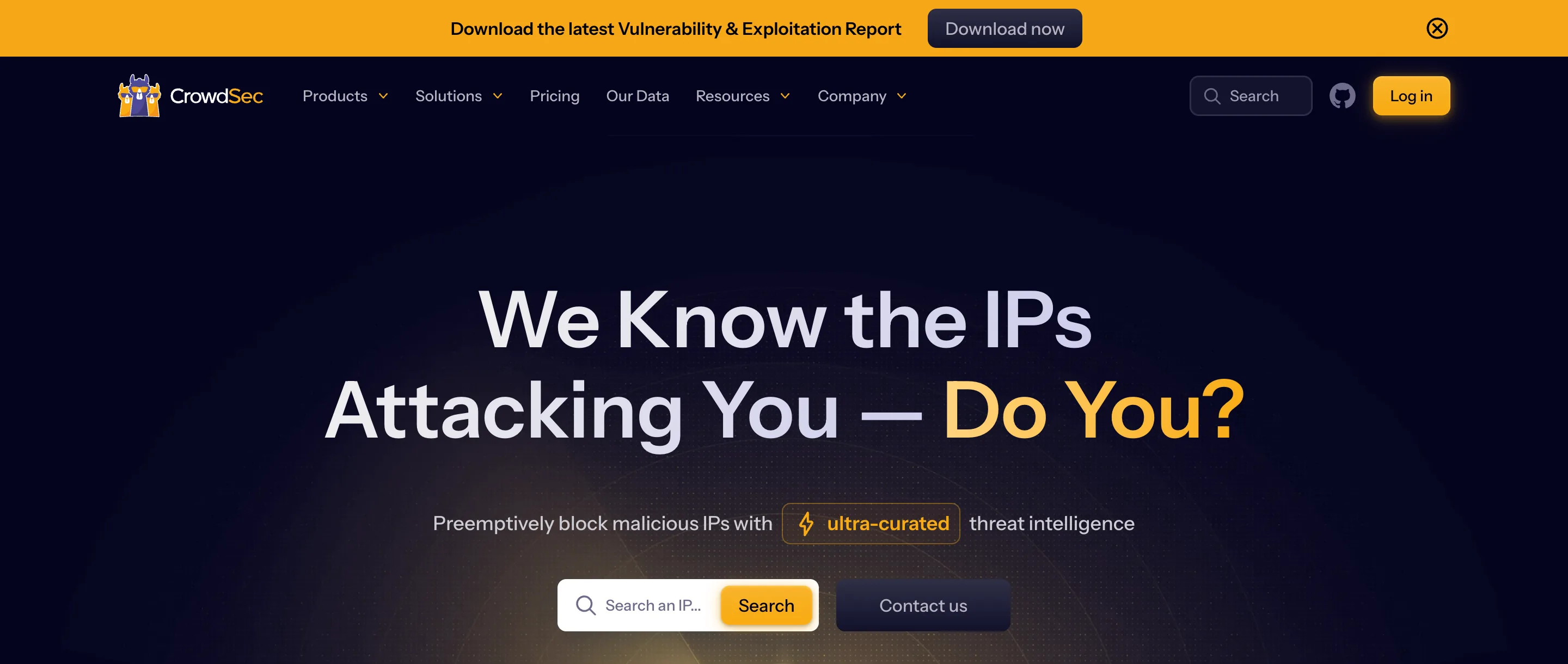
The core agent is MIT licensed, self-hosted, and currently at v1.8.1, released September 3, 2026, with roughly 14,967 GitHub stars as of this check. It correlates logs across a crowd of participating installs into shared IP-reputation blocklists, applied locally through bouncers for nginx, HAProxy, iptables and most reverse proxies. Its AppSec Component turns the same agent into an in-line WAF via the Coraza engine, with native OWASP Core Rule Set support, the same rule set ModSecurity and several commercial WAFs use against SQL injection and cross-site scripting. One customer quoted on its own pricing page says CrowdSec blocked 66,600,087 attempts against 11,091,631 for a Palo Alto appliance in the same period, zero false positives, a vendor-supplied figure rather than an independently audited one.
The engine and WAF are free under the Community plan, but fleet management is a paid Console Premium tier, priced "Pay as you Grow" per enrolled Security Engine, and CrowdSec sells threat-intelligence feeds separately from $1,900 a month, confirmed on its own pricing page. Self-hosting also means your team owns the on-call burden every SaaS vendor above sells you out of.
Pricing: free Community plan (self-hosted core engine and WAF) · Console Premium and threat-intel add-ons priced separately, from $1,900/month · Version: v1.8.1 (September 3, 2026) · License: MIT.
Side by Side
| Tool | Model | Entry price | Self-host | License |
|---|---|---|---|---|
| Cloudflare Bot Management | CDN-bundled, ML scoring | Free tier; full product Enterprise-only, custom | No | Proprietary |
| DataDome | Dedicated SaaS, request-based | Custom quote only | No | Proprietary |
| HUMAN Security | Dedicated SaaS, multi-module | Custom annual contract | No | Proprietary |
| Akamai | CDN-bundled or standalone | Custom quote only | No | Proprietary |
| CrowdSec | Self-hosted agent plus AppSec WAF | Free (Community); paid Console add-on | Yes | MIT |
How to Choose Without Migrating Twice
Check what you already pay for. On Cloudflare Business or above, price the Enterprise Bot Management add-on first. You already own the CDN plumbing it runs on.
Run the fingerprint check above against your own stack. Point the curl loop and a headless capture at your login and checkout pages. A bare client sailing through untouched means you are unprotected, or paying for a feature nobody turned on.
Separate the WAF question from the bot question. CrowdSec's AppSec Component is a genuine WAF, catching SQL injection and cross-site scripting via the OWASP Core Rule Set. The other four score behavior and identity instead, not a substitute unless CRS ships bundled, as it does through Cloudflare's Free Managed Ruleset.
Ask for the false-positive rate, not the catch rate. A challenged real customer is lost revenue, and none of these vendors publish that number unprompted; ask for it against your own traffic in a proof of concept.
Which One Should You Actually Use?
Already paying for Cloudflare Business or Enterprise: add Bot Management before signing with a second vendor.
E-commerce or ticketing site getting scraped or scalped: budget for a real sales conversation with DataDome or HUMAN, and insist on a proof of concept against your own traffic, not the vendor's demo numbers.
Running your own infrastructure, want a WAF you can read: start with CrowdSec's AppSec Component and the OWASP Core Rule Set. It is free, and the only option here that is not a black box.
Already inside an Akamai contract for CDN or DDoS protection: add Bot Manager or App & API Protector as a line item rather than layering a second vendor's JavaScript onto every page.
No budget, small team: CrowdSec Community plus Cloudflare's free Bot Fight Mode covers the basics with no contract.
Conclusion
The number that matters this year is not any vendor's catch rate, it is Imperva's 53%: automated traffic passed human traffic on the open web in 2025. Before renewing any of these contracts, ask for the false-positive rate on real, human-verified traffic rather than the catch rate on synthetic attack traffic. Vendors volunteer the second number; the first tells you whether your actual customers can still check out.
Related DevToolLab Tools
- Security Headers Checker - audit whether your origin sends the CSP, HSTS and frame-options headers a WAF vendor will ask about first.
- IP Blacklist Checker - check whether an IP a bot vendor flagged is on public DNSBLs before disputing a false positive.
- User Agent Parser - see what a user agent string decodes to, the first-pass signal every engine above layers other signals on top of.
- Rate Limit Header Analyzer - inspect the
X-RateLimitandRetry-Afterheaders a gateway sends back, the cheapest mitigation before buying anything above.
Related Guides
- Best API Gateways in 2026 - a WAF sits at the same edge as the gateway; covers Kong, Traefik, APISIX and the rest of that layer.
- Best Secret Scanning Tools in 2026 - a bot that finds a hardcoded key never had to fight your WAF at all.
- 9 Supply Chain Security Tools in 2026 - HUMAN's Code Defender covers the same third-party-script risk from the dependency side.
- Best SOC 2 Compliance Automation Platforms in 2026 - bot and WAF logs are standard audit evidence these platforms collect automatically.