
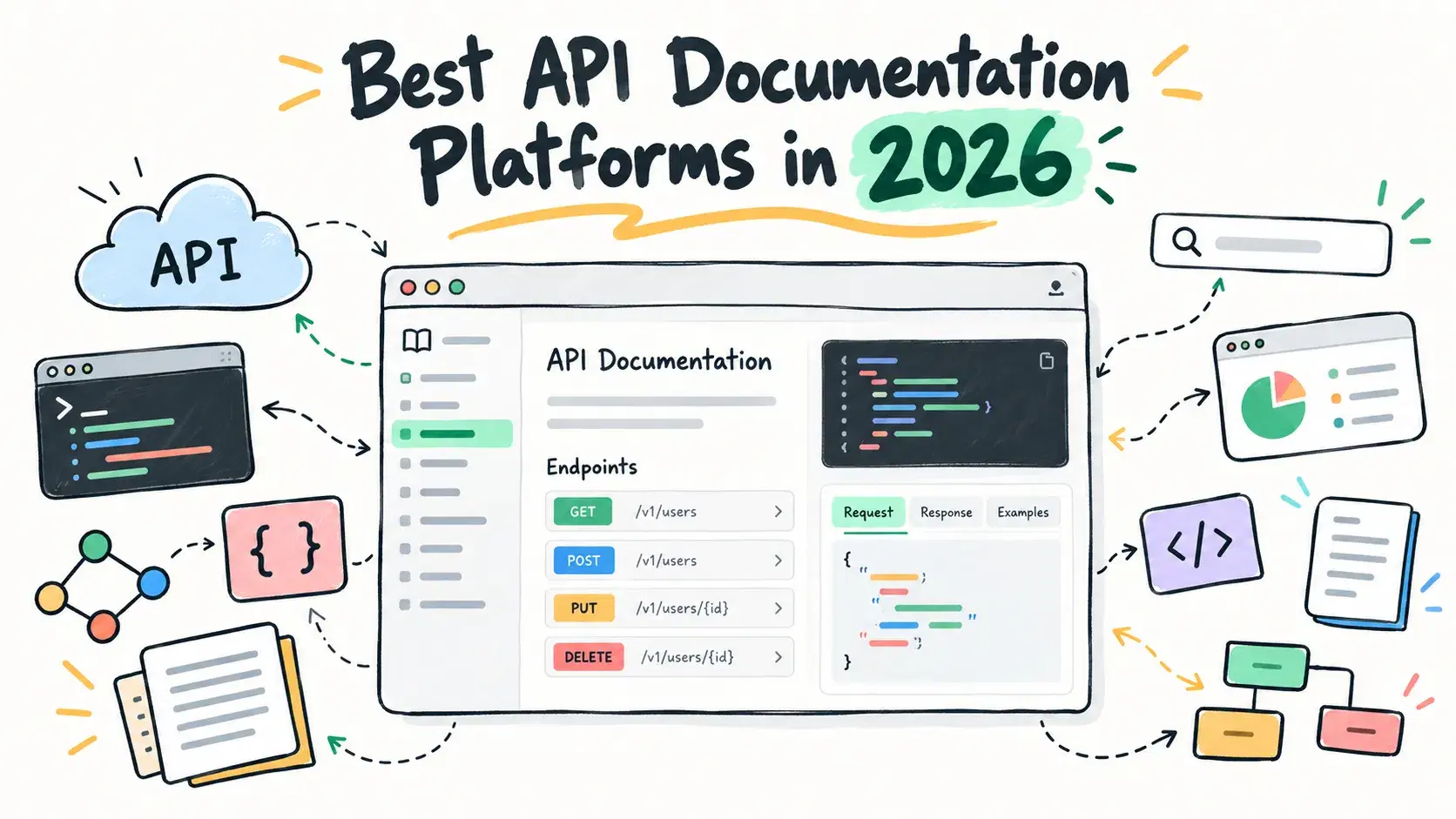
Most teams no longer write their API reference by hand. They point a tool at an OpenAPI file and let it render the endpoint list, the request and response schemas, and a try-it-now console, a better use of an engineer's time than hand-formatting a Markdown table every time a field changes.
The problem shows up once the spec is accurate and the docs still are not. Postman's 2025 State of the API Report, its seventh annual edition, published August 26, 2025 from more than 5,700 developers, architects and executives, found 55 percent of API teams still struggling with inconsistent, outdated or missing documentation, and 34 percent unable to find APIs that already exist inside their own company.
What Teams Actually Ship From
The same report found 60 percent of teams version their APIs and 57 percent keep them in a Git repository, exactly the workflow every tool below assumes: a spec file in source control and a doc site that rebuilds when it changes. Forty-one percent said they now use AI somewhere in generating API documentation, and Postman itself has since folded a docs-and-SDK generator called Fern into its product family, a sign of where the incumbent API client sees the category heading.
None of that changes what actually renders on the page. A spec still needs a tool to turn it into a browsable site, a search box, versioned pages and, for most companies, a domain that says their name instead of the vendor's.
What It Actually Costs to Remove the Vendor's Logo
A custom domain is the easy part; every platform below ships one on a cheap or free plan. The paywall that's easy to miss sits deeper: on three of the five commercial platforms, your own domain and no trace of the vendor's name are two different features, gated at two very different prices.
| Platform | Cheapest plan with a custom domain | Price | Also removes the vendor's branding? |
|---|---|---|---|
| Mintlify | Starter | $0/month | No. Only Enterprise, custom pricing |
| ReadMe | Starter | $0/month | No. Only Enterprise, custom pricing |
| Stoplight | Startup | $113/month (annual) | No. Only Pro Team, $362/month (annual) |
| Redocly | Pro | $10/seat/month | Not listed as a separate paid feature |
| Scalar | Free | $0/month | Not listed as a separate paid feature |
| Swagger UI | Self-hosted | Your own hosting cost | Yes, by default. There is no vendor mark to remove |
Checked on each vendor's pricing page on September 27, 2026. Mintlify and ReadMe both give every plan, including the free one, a custom domain, then hold "white labeling" and "no ReadMe branding" back for Enterprise, priced only by contacting sales. Stoplight is the most explicit about the gap: Basic and Startup get custom domains and theming, but "Remove Stoplight branding" only appears on the Pro Team list at $362 a month billed annually. If the actual requirement is "our logo, not theirs," that's the number to budget for, not the headline free tier.
Mintlify
Mintlify builds documentation sites from Markdown and OpenAPI files, with an AI layer that answers reader questions and flags pages that drift out of sync with the spec.
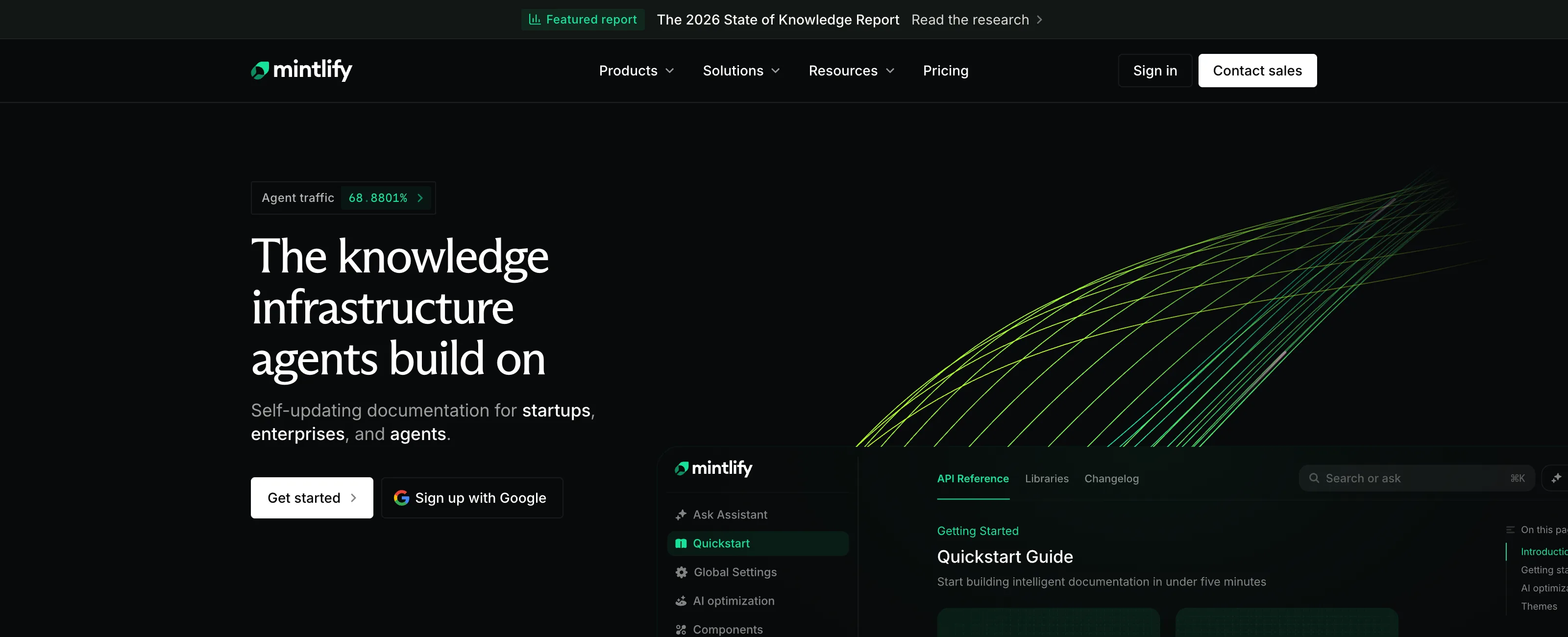
It does well at fast setup: connect a GitHub repo, point it at an openapi.yaml, and the API Reference, search and an in-browser playground exist within minutes, no build pipeline required. What it does not do on the free tier is scale past 5 editor seats or remove its own branding at any published price; both require talking to sales. Pricing as of September 27, 2026: Starter $0/month with a custom domain, Pro $450/month with unlimited seats and 10,000 AI credits a month at $0.01 per credit over that, Enterprise custom.
ReadMe
ReadMe pairs an interactive API reference with a full documentation CMS, so a team can publish guides, a changelog and a support forum from the same project as the API spec.
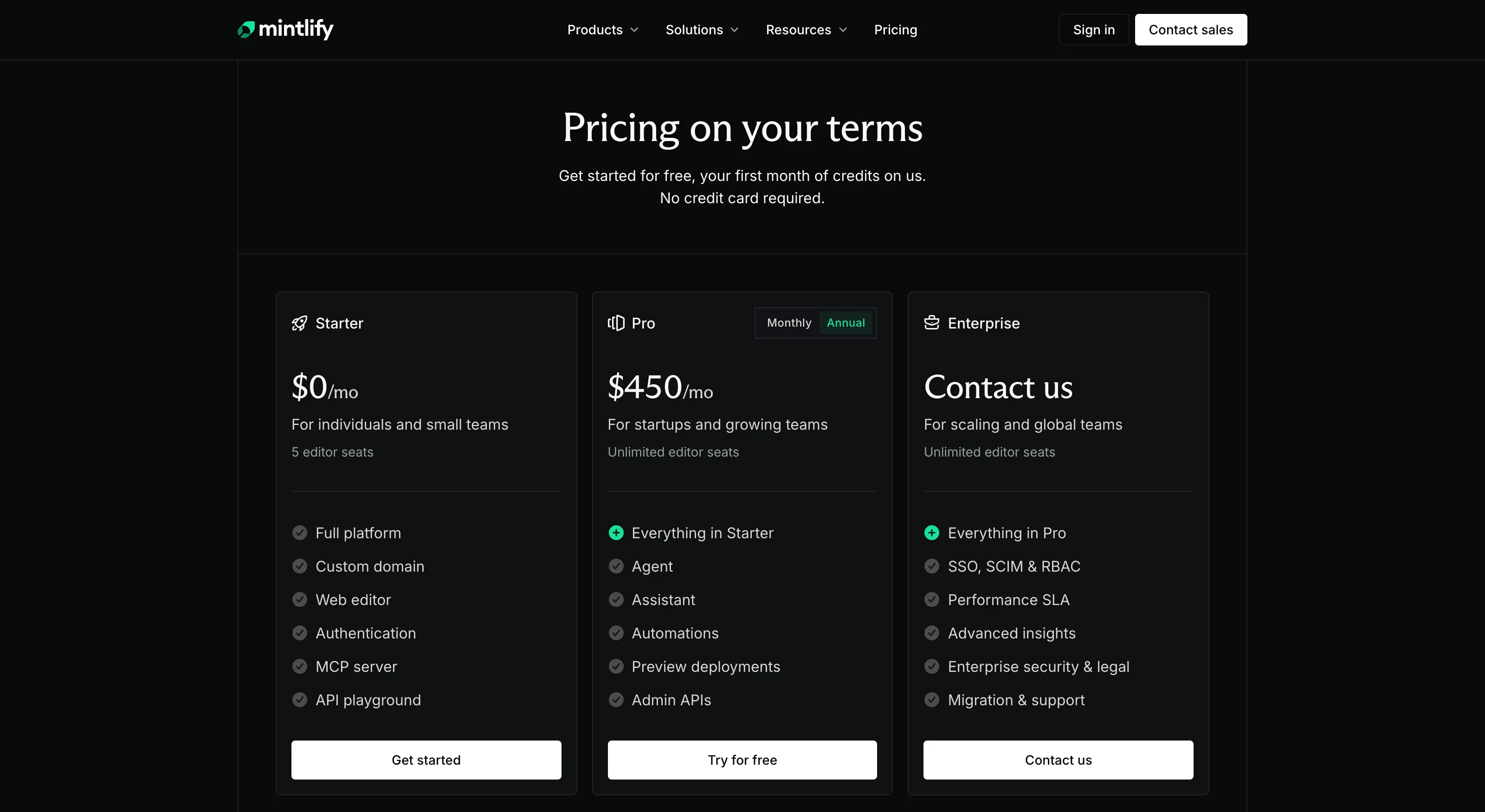
It does well at bi-directional sync: editing a page in the ReadMe web editor can push the change back into the source repo, not just read from it, which most competitors do not offer. It does not do multi-project accounts below Enterprise: Starter and Pro are both capped at one project, so two separate APIs need two subscriptions or a custom deal. Pricing as of September 27, 2026: Starter $0/month with one project and a custom domain, Pro $250/month billed annually adding teammates, branching and private docs, Enterprise custom with no ReadMe branding and multi-project support.
Stoplight
Stoplight, a SmartBear product since its 2022 acquisition, covers the design side of the API lifecycle as much as the documentation side, with a visual OpenAPI editor alongside the generated reference site.
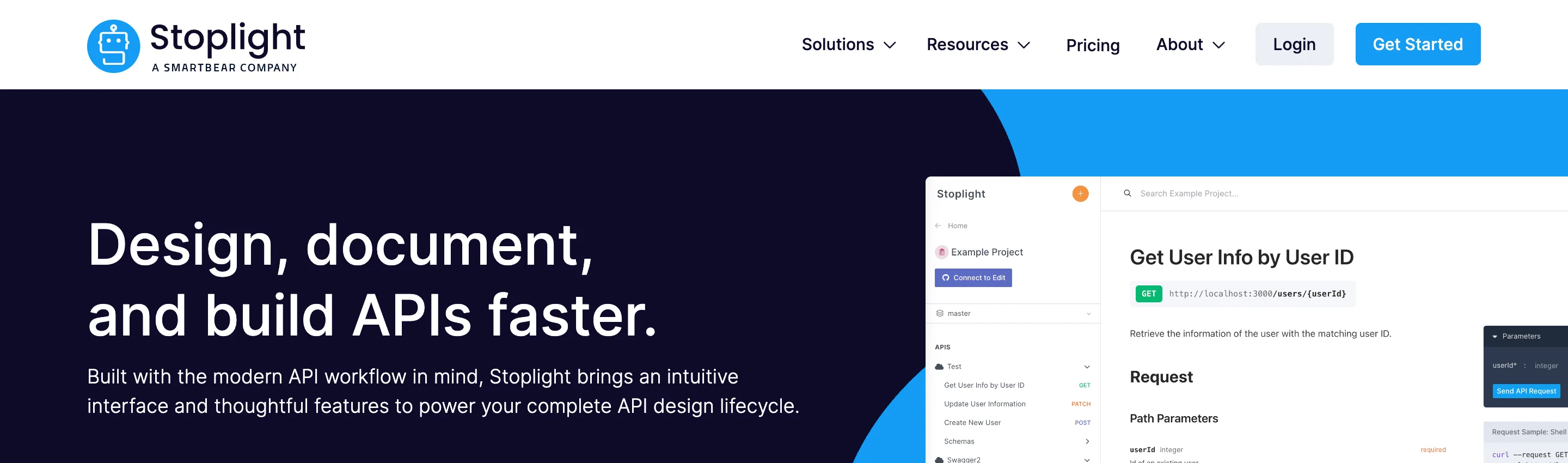
It does well at governing a large API portfolio: shared style guides, workspace groups and up to 20 teams on Pro Team give an organization one place to enforce consistency across dozens of specs. It does not do a generous free seat count: Free is one user and one project, and each additional editor past a plan's included count costs $11 to $27 a month. Pricing as of September 27, 2026: Free $0 for 1 user, Basic $44/month (annual) for 3 users, Startup $113/month (annual) for 8 users with custom domains, Pro Team $362/month (annual) for 15 users removing Stoplight branding, Enterprise custom.
Redocly
Redocly is built around Redoc, the open-source rendering engine, and sells hosting plus a markdown-docs layer and an internal API catalog on top of it, under per-seat, per-page pricing.
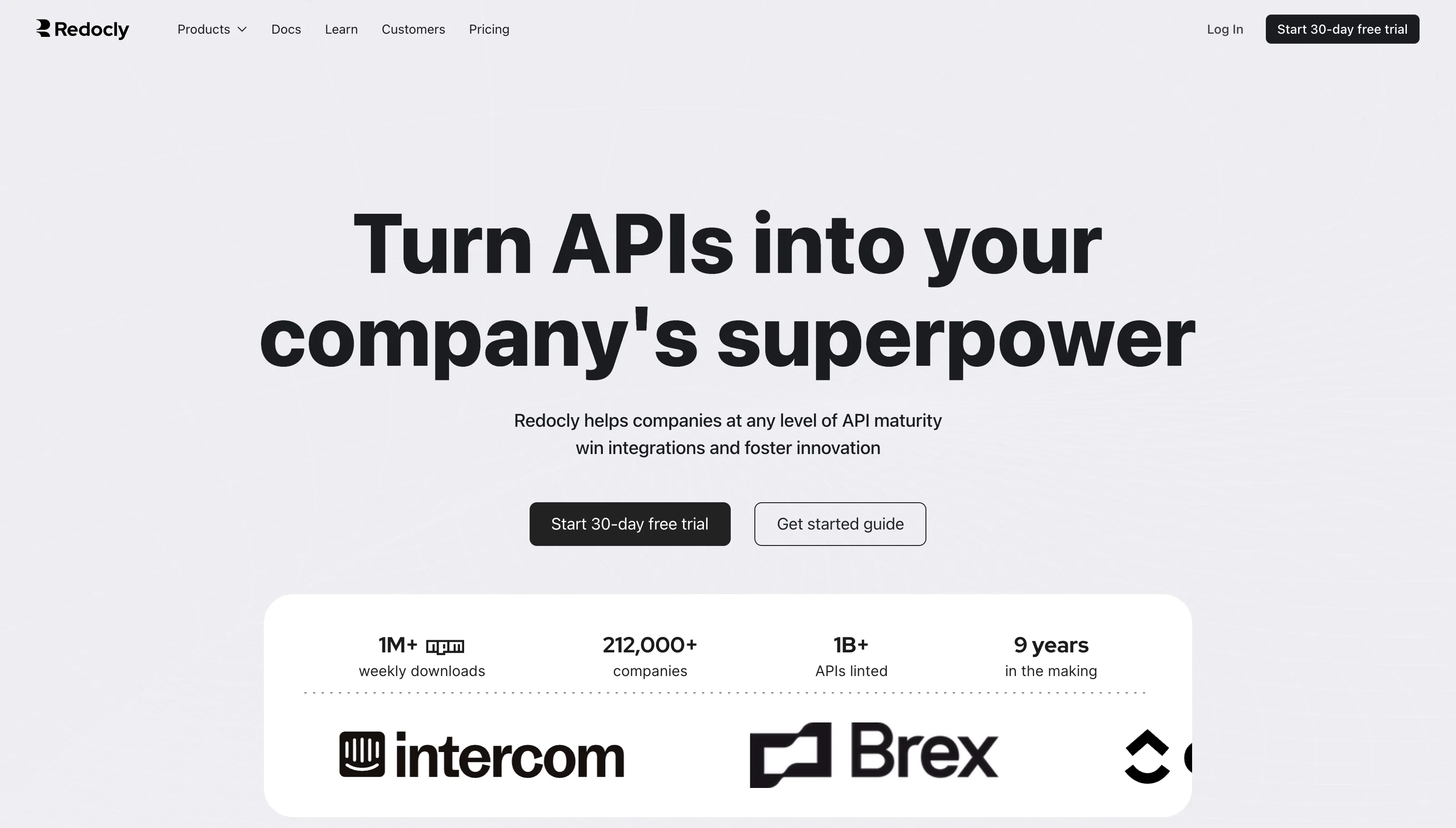
It does well at the numbers behind the open-source core: Redoc gets over 1 million downloads a week from npm by Redocly's own count, MIT licensed at v2.5.3, released May 29, 2026, with 25,927 GitHub stars. What the hosted product does not do is flat pricing at any scale: Pro is metered per seat and capped at 100 pages before the next tier, so a growing spec can force an upgrade with the seat count unchanged. Pricing as of September 27, 2026: Pro $10/seat/month for 1 project and 100 pages with a custom domain, Enterprise $24/seat/month for 500 pages, SSO and RBAC, Enterprise+ custom.
Scalar
Scalar builds its paid product directly on top of a fully open-source core, and its docs renderer is what shows up embedded in reference pages for companies like Zoom and Clerk.
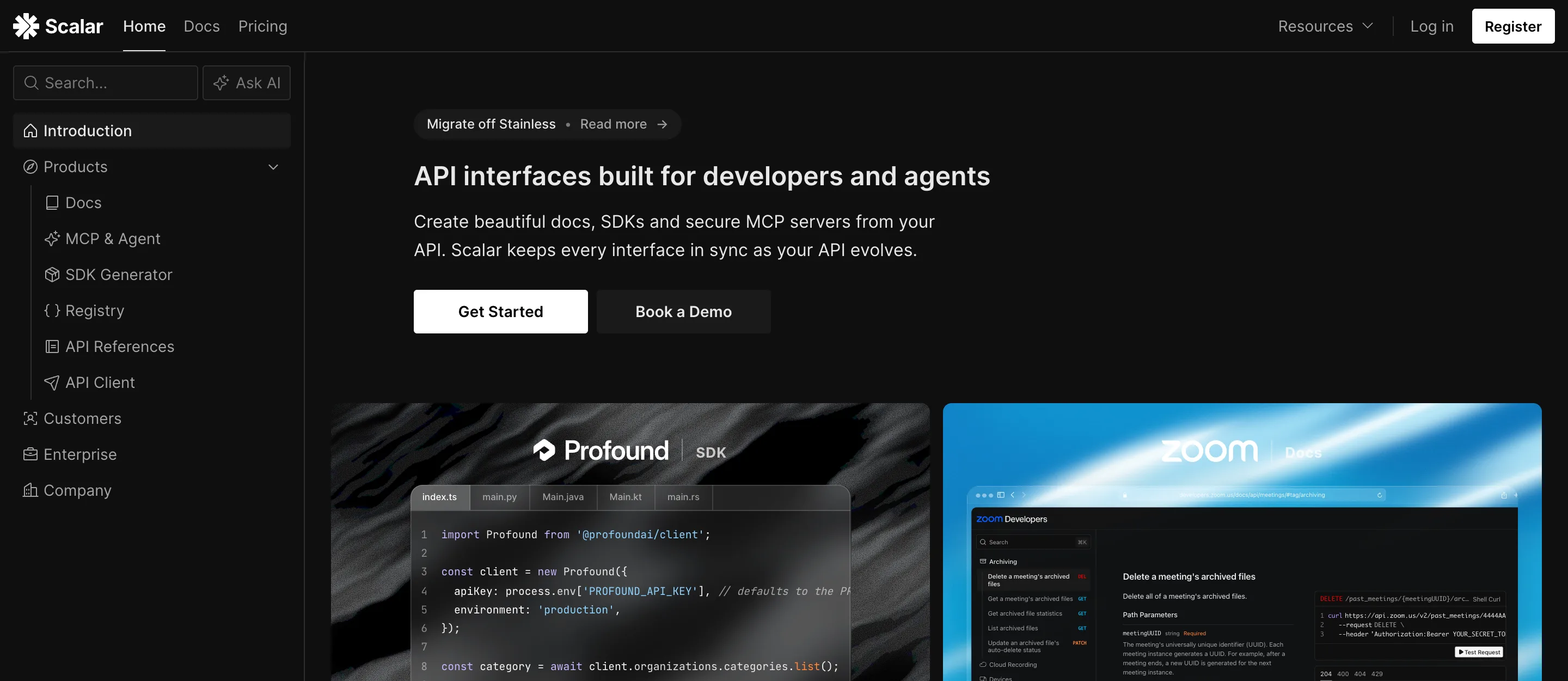
It does well at being genuinely self-hostable: the core is MIT licensed with 16,197 GitHub stars and a release as recent as September 25, 2026, so a team can run the reference UI and API client free indefinitely and only pay for Scalar's hosting, SDK generation or MCP server output. It does not do unlimited APIs short of Enterprise: Free stops at 3 APIs and a 25-endpoint SDK, and Business, the top self-serve tier, still caps at 25 APIs and 250-endpoint SDKs. Pricing as of September 27, 2026: Free $0 for 3 APIs, Pro $150/month ($125 billed yearly) for 15 APIs and 5 seats, Business $600/month ($500 billed yearly) adding SSO and subpath hosting, Enterprise custom.
Swagger UI
Swagger UI is the tool that made "paste your OpenAPI spec, get an interactive doc page" a default expectation, and the rendering engine most paid platforms above still get compared against.
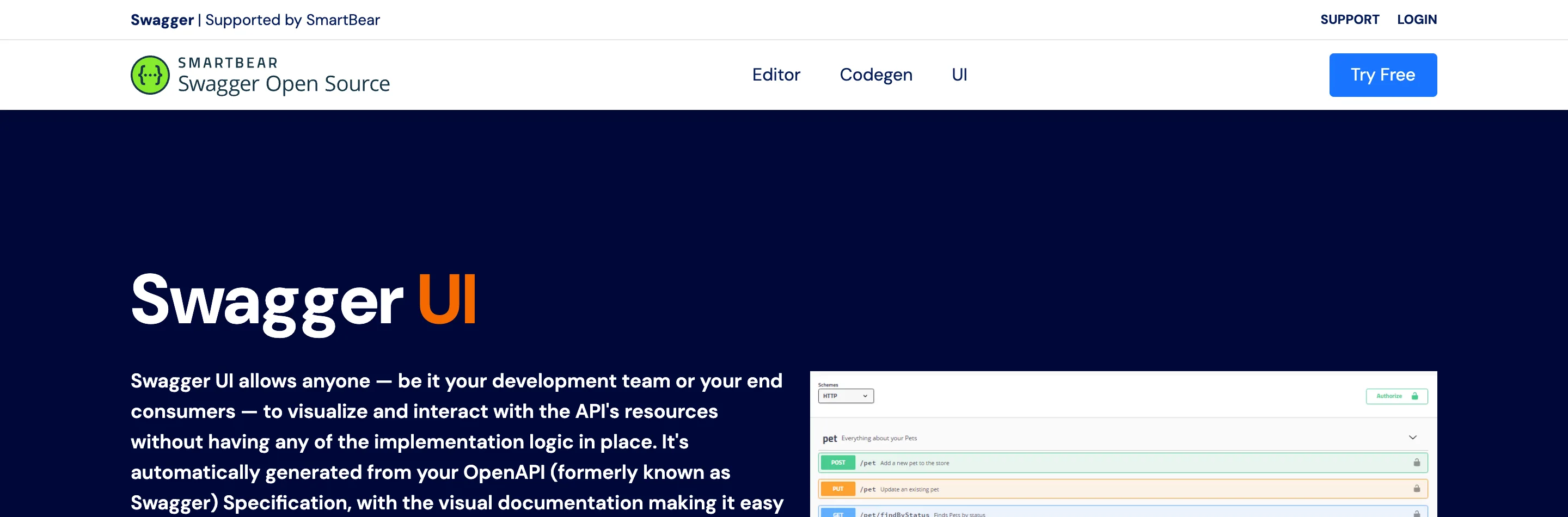
It does well at being a known quantity: Apache 2.0 licensed, 29,026 GitHub stars, release v5.33.0 on September 16, 2026, with no account, seat count or page limit because there is no hosted product at all. It does not do a docs CMS, search across guides, or AI answers; it renders one spec into one interactive page and leaves hosting and a domain to whoever deploys it. DevToolLab's own Swagger Viewer does the same paste-a-spec-get-a-page job with nothing to install.
Side by Side
| Tool | Model | Cheapest paid tier | Self-host | License |
|---|---|---|---|---|
| Mintlify | Seats + AI credits | $450/month | No | Proprietary |
| ReadMe | Per project | $250/month (annual) | No | Proprietary |
| Stoplight | Seats | $44/month (annual) | No | Proprietary |
| Redocly | Seats + pages | $10/seat/month | Partial (Redoc core only) | MIT (Redoc core) |
| Scalar | APIs + SDK size | $150/month ($125 annual) | Yes | MIT |
| Swagger UI | None, self-hosted | Free | Yes | Apache 2.0 |
How to Choose Without Migrating Twice
Count your specs, not your team size. Redocly and Scalar price on distinct APIs and pages, not just seats, so check your real spec count against their tier tables first.
Decide up front whether the vendor's name has to disappear. For zero third-party branding, price Enterprise on Mintlify or ReadMe now, or budget Stoplight's $362-a-month Pro Team plan, rather than discovering the gate after launch.
Check whether your spec already renders free. Paste it into Swagger UI or Scalar's open-source core first; if it looks acceptable, the paid tier sells hosting, search and branding control, not the rendering.
Test the sync direction, not just the output. ReadMe's bi-directional editing and Mintlify's drift detection solve different problems: one lets a writer fix docs without a pull request, the other flags when spec and page disagree. Pick based on who actually edits your docs.
Price the whole team, not one seat. Stoplight and Redocly both charge per extra user; multiply that by realistic headcount a year out, not this quarter's hires.
Which One Should You Actually Use?
Already have a Git-based OpenAPI spec and want it live today: Mintlify's free Starter plan gets a working, custom-domain doc site up with no code beyond the spec, free until a team outgrows 5 editor seats.
Need non-developers to edit docs directly: ReadMe's web editor and bi-directional sync are built for exactly that split, at the cost of being locked to one project per plan below Enterprise.
Documenting APIs across a large org, design-first: Stoplight's style guides and multi-team governance on Pro Team justify $362 a month if the alternative is a dozen teams drifting into inconsistent specs.
Want the open-source core, no required subscription: Scalar and Redoc (via Redocly) both let you self-host the rendering free and pay only for hosting, search or SDK generation added later.
Just need a spec to render somewhere, today, for nothing: Swagger UI still does exactly that, unchanged in spirit since it defined the category, with no account to create.
Conclusion
Turning an OpenAPI file into a readable page has been solved and free for years, through Swagger UI and now Scalar's open-source core. What the 2026 crop of paid platforms actually sells is everything around that page: AI-assisted drift detection, bi-directional editing, multi-team governance, and a domain with no one else's logo on it. Before renewing or picking a platform, confirm the plan actually includes the one of those you are paying for, rather than assuming a "docs platform" subscription buys the same thing everywhere.
Related DevToolLab Tools
- Swagger Viewer - load the same OpenAPI spec these platforms render, browse its endpoints, and send a live test call before committing to a hosted tool.
- JSON Schema Generator - infer a JSON Schema from real response data to fill in the request and response models a reference page needs.
- cURL to Code Converter - turn the curl example every one of these doc sites generates into the fetch, Axios or Python call your service needs.
- HTTP Status Checker - confirm the status codes and redirects your documentation claims against what the live endpoint actually returns.
Related Guides
- Beyond Postman: The Best API Testing Tools for Developers in 2026 - for testing the endpoints these platforms document, once the spec is written.
- Best API Gateway Tools in 2026 - for the layer that enforces the contract this documentation describes.
- Best AI Code Documentation Generators in 2026: Ranked and Compared - the adjacent category that documents your source code itself, not the API surface it exposes.