
SOC 2 is the report a US enterprise buyer's procurement team asks for before a contract clears, and most of the work behind it is evidence: proof that MFA is enforced, that access was reviewed last quarter, that the laptop fleet is encrypted, that a policy exists and someone signed it. Compliance automation platforms connect to your cloud accounts, identity provider, HR system and repositories, collect that evidence continuously, and hand an auditor a dashboard instead of a shared drive.
Of the eight platforms compared here, exactly one prints a number on its public pricing or plans page: Secureframe's Fundamentals package, "starting at $7,000/year." Everyone else, including both market leaders, routes you to a demo. That opacity sits on top of a very large business. Vanta reported $300 million in annual recurring revenue in April 2026 and raised at a $4.15 billion valuation in July 2025, Drata paid $250 million for the trust-center startup SafeBase in February 2025, and challenger Oneleet raised a $33 million Series A in October 2025 on $9 million of ARR with the pitch that incumbents sell "compliance theater." The category is consolidating and re-pricing at the same time, which is a bad moment to buy blind.
What You Are Actually Buying
Three layers hide behind the phrase "compliance automation," and vendors bundle them differently.
The first is evidence collection and continuous monitoring: integrations that read your AWS, GitHub, Okta and Rippling configurations and flag a failing control before the auditor does. Every platform here sells this, and the differences are integration count, how many frameworks the controls map to, and how much the AI layer drafts for you.
The second is the audit itself. SOC 2 reports are issued by a licensed CPA firm, and most platforms hand you to a partner network. Thoropass is the exception that is the audit firm, and Oneleet bundles the security work (pentest, scanning) that a serious auditor will ask about anyway.
The third is trust: a public trust center, questionnaire automation and vendor-risk reviews, which is where the incumbents spent their acquisition money and where the add-on pricing lives.
Vanta
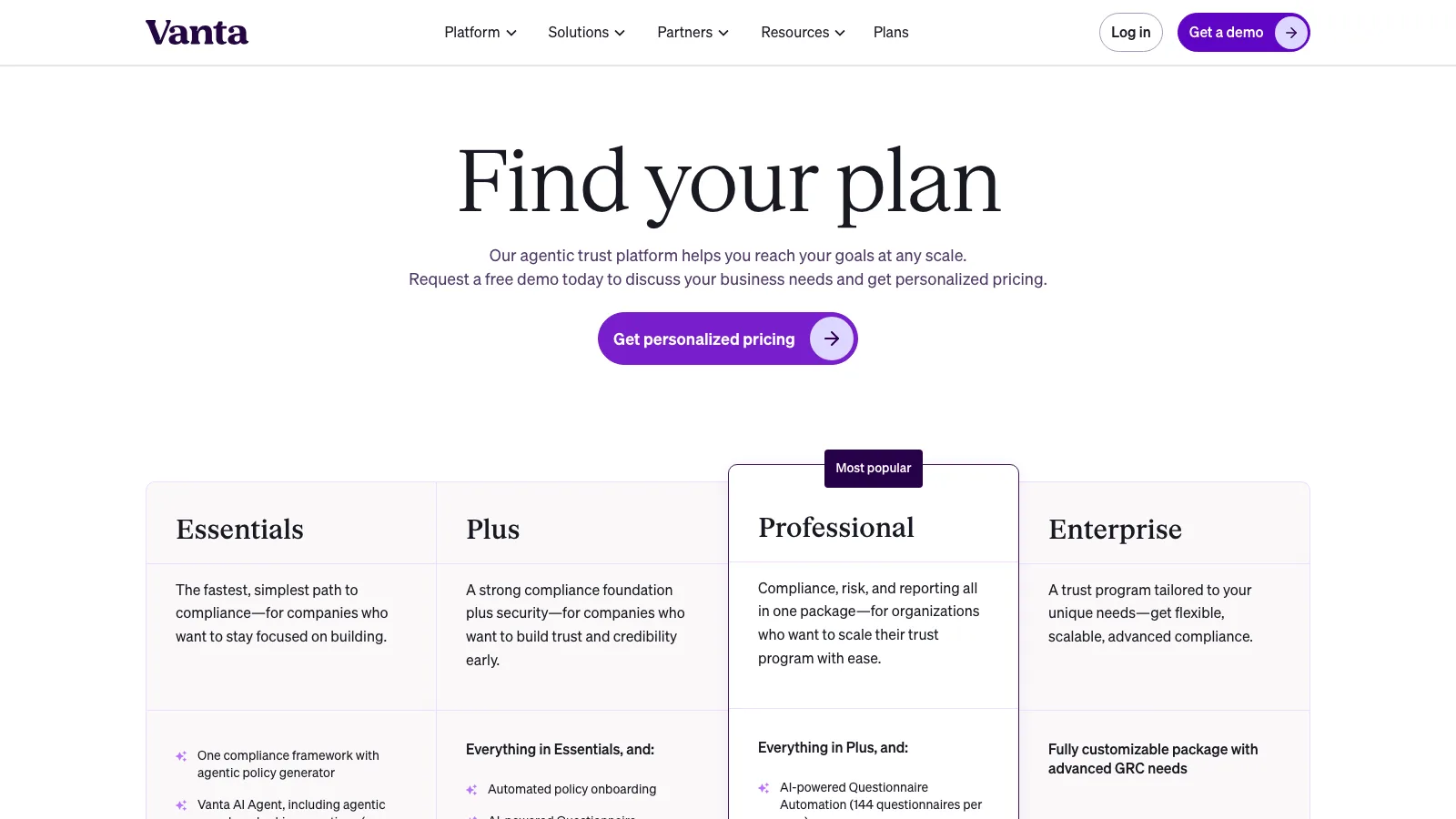
Vanta is the market leader by the numbers it publishes about itself: more than 16,000 customers and 1,000 employees per Fortune's April 2026 coverage of the $300 million ARR milestone, and $504 million raised since 2021. The plan ladder is Essentials, Plus, Professional and Enterprise, all "personalized pricing." Essentials is scoped to one compliance framework with the agentic policy generator, automated evidence collection, an auditor API and a Trust Center. Plus adds automated policy onboarding, access management and 25 AI-answered security questionnaires a year. Professional raises that to 144 questionnaires, adds risk management, custom monitoring tests and six customizable reports. Enterprise is a fully custom package.
What it does well. Breadth. The auditor network and AI agent are the most complete here, Vanta lists 400+ integrations against Sprinto's 300+, and with 16,000 customers your auditor has almost certainly seen a Vanta export before.
What to watch. Every framework beyond the first, every questionnaire block and the security-review add-on is a line item, and none of them has a public price. Budget for the negotiation.
Pricing: Essentials, Plus, Professional, Enterprise · all quote-based · questionnaire automation 25 or 144 per year by tier
Drata
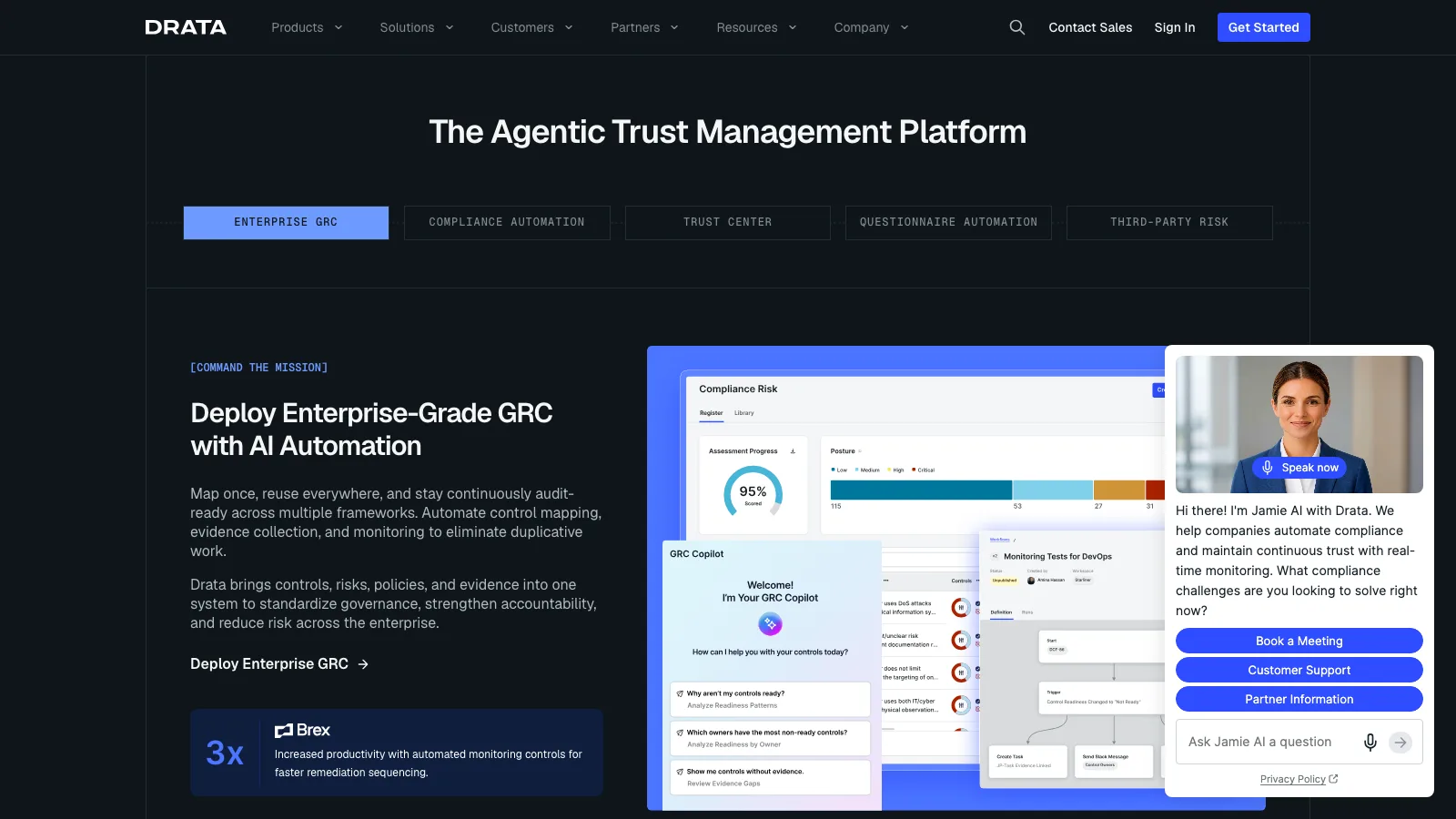
Drata reached a $2 billion valuation in December 2022 and has spent since then moving upmarket: the $250 million SafeBase acquisition brought a trust center and security-review product in-house, and the homepage now leads with "Enterprise GRC" ahead of compliance automation. There is no plan ladder to read at all. The pricing URL lands on the homepage, which segments buyers into Startup, Growth and Enterprise stages, and every path ends at a "Contact Sales" button with no numbers. The homepage cites a customer that cut SOC 2 audit duration by 75% and cross-mapped controls to other frameworks in two hours, and a G2 rating of 4.8.
What it does well. Control mapping across frameworks ("map once, reuse everywhere") and the GRC layer for companies that have outgrown a single SOC 2 report and are managing ISO 27001, HIPAA and PCI at once.
What to watch. A startup that needs one Type II report is not the customer the pricing page is written for. Ask what Growth actually includes.
Pricing: No published tiers · contact sales
Secureframe
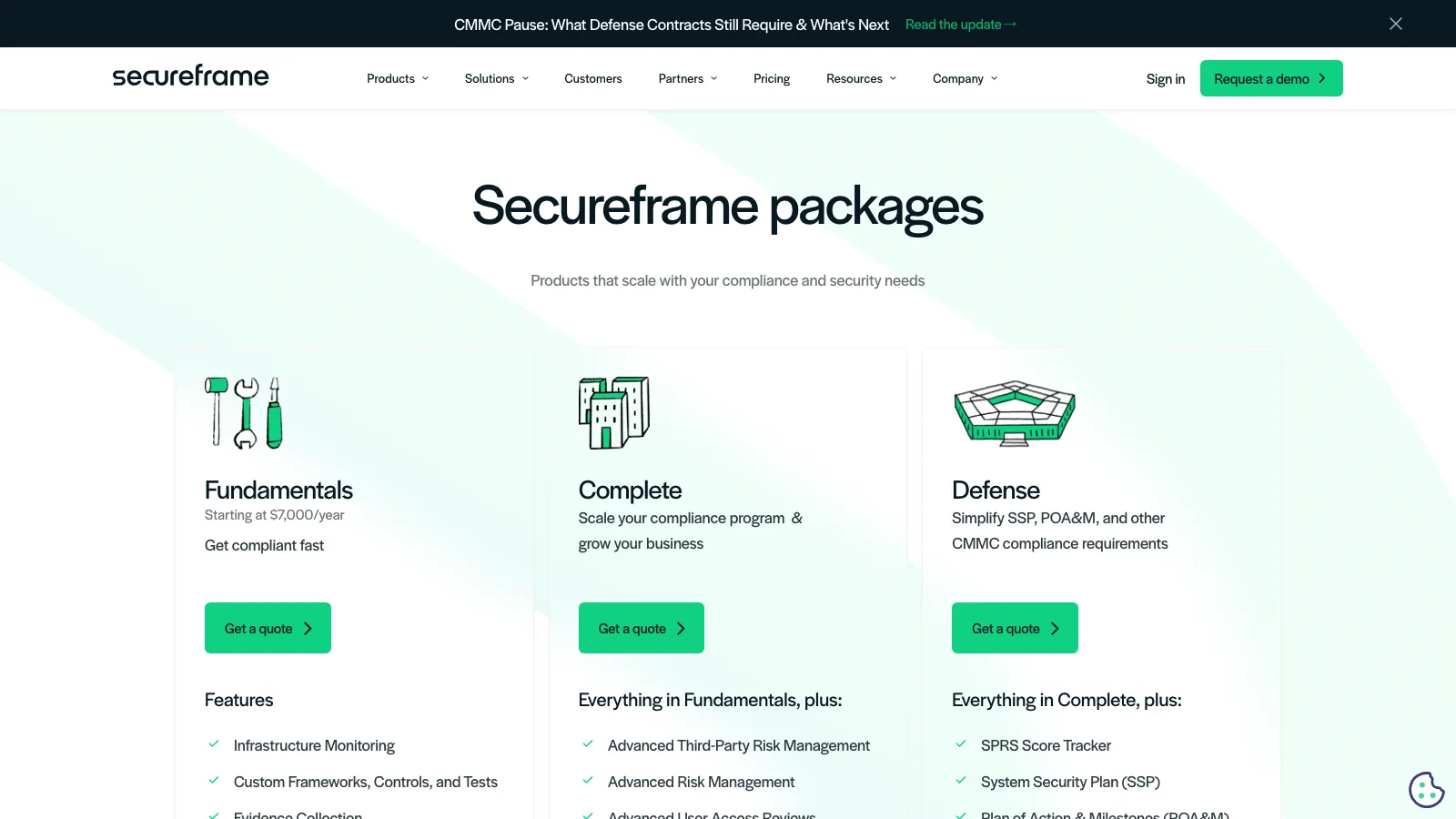
Secureframe is the one vendor willing to anchor the conversation. Fundamentals is "starting at $7,000/year" and covers infrastructure monitoring, custom frameworks, controls and tests, and evidence collection. Complete adds third-party risk management, advanced risk management and user access reviews. Defense is built for CMMC, with a SPRS score tracker, System Security Plan and POA&M tooling for teams selling to the US Department of Defense. The company raised $56 million in 2022 and, unusually, its pricing page carries a banner about a CMMC pause and what defense contracts still require.
What it does well. A published floor, and the only dedicated CMMC package in this group (Vanta, Drata and Sprinto list CMMC as a supported framework, but none sells SSP and POA&M tooling as a tier), which matters if federal contracts are on your roadmap.
What to watch. "Starting at" means the $7,000 covers a small scope; every framework and add-on moves the quote up from there.
Pricing: Fundamentals from $7,000/year · Complete and Defense quote-based
Sprinto
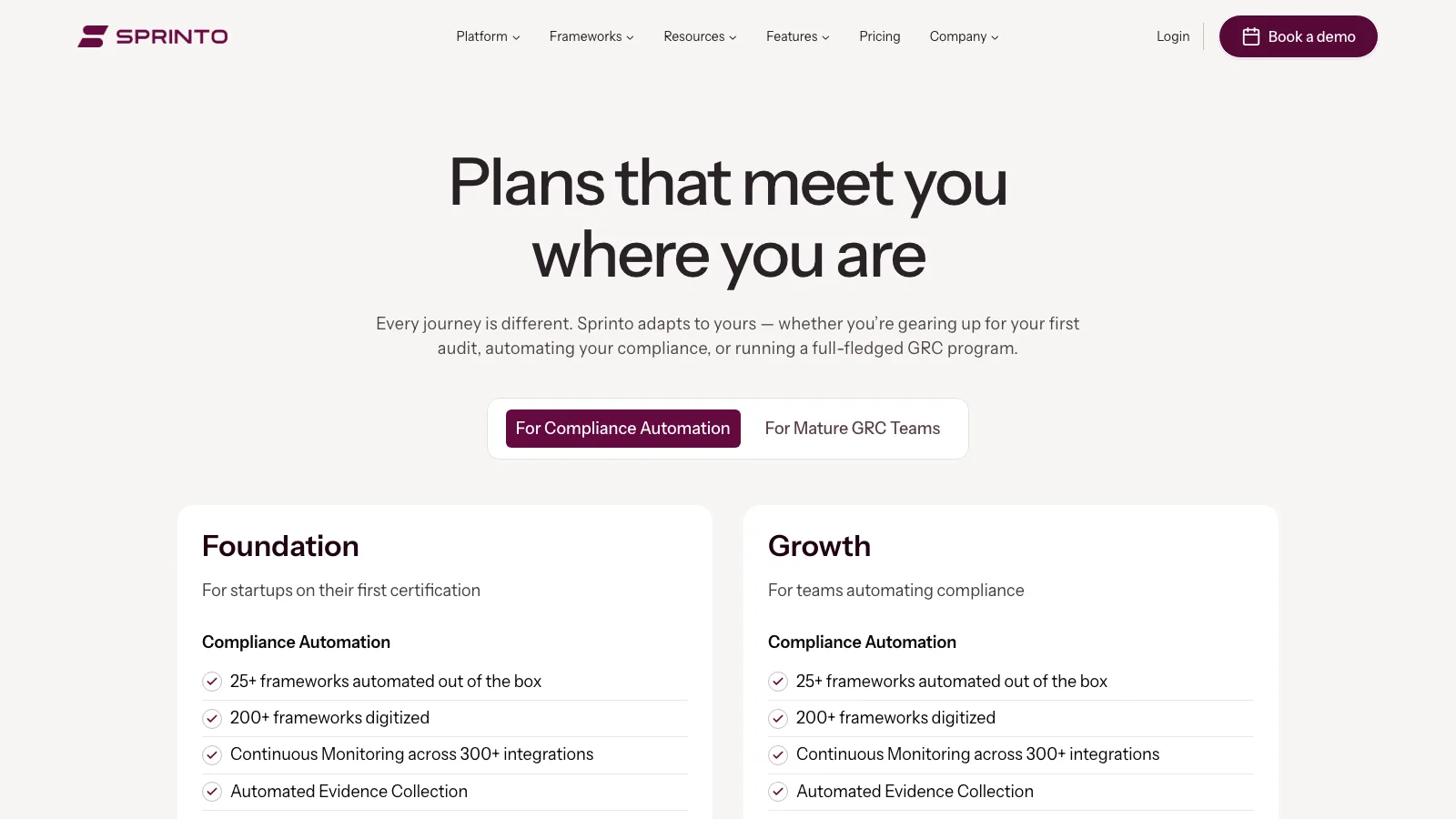
Sprinto raised $20 million in April 2024 and has grown by out-marketing the incumbents; its blog published "Honest Vanta Review: What It Gets Right and Where It Falls Short" on August 11, 2026, and its footer links head-to-head pages against Vanta, Drata and Secureframe. The plans are Foundation (first certification) and Growth (automating compliance), plus a modular track for mature GRC teams (Continuous Compliance, Enterprise TPRM, Enterprise Risk Management, Enterprise Trust Management), all quote-based. Both plans claim 25+ frameworks automated out of the box, 200+ frameworks digitized, continuous monitoring across 300+ integrations and automated evidence collection.
What it does well. Framework count per dollar. If you are a mid-market SaaS with SOC 2 done and ISO 27001, HIPAA and GDPR queued up, Sprinto's cross-mapping is the pitch.
What to watch. Auditors are partners, not employees, so ask who your named contact is before the first evidence request goes unanswered.
Pricing: Foundation, Growth, plus mature-GRC modules · quote-based
Thoropass
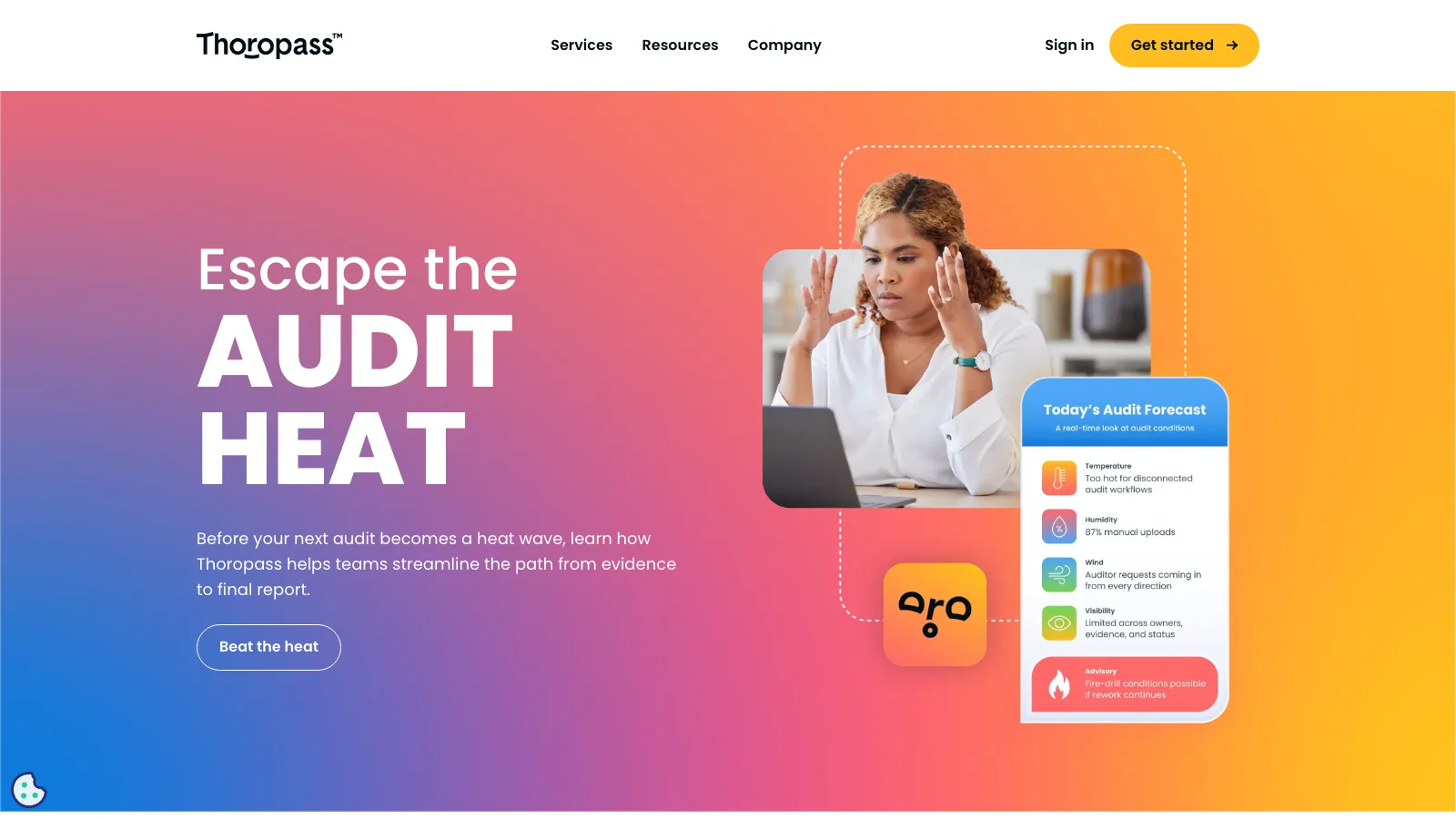
Thoropass inverts the model: it is a licensed audit firm with a platform attached, rather than a platform with a partner network. Its FAQ is explicit that "Thoropass is a licensed auditor that delivers audits," conducted to professional standards by a firm that holds the highest AICPA peer review rating, supporting SOC 2, ISO 27001, PCI DSS, HITRUST and GDPR in one process, and it cites more than 1,000 organizations. Customers cite answering evidence requests inside the tool as the reason they switched.
What to watch. One vendor for readiness and attestation is efficient, and it also removes the independence that comes from picking your own audit firm. Some enterprise buyers will ask about that. No pricing is published.
Pricing: Quote-based · audit delivered by Thoropass rather than a partner
Oneleet
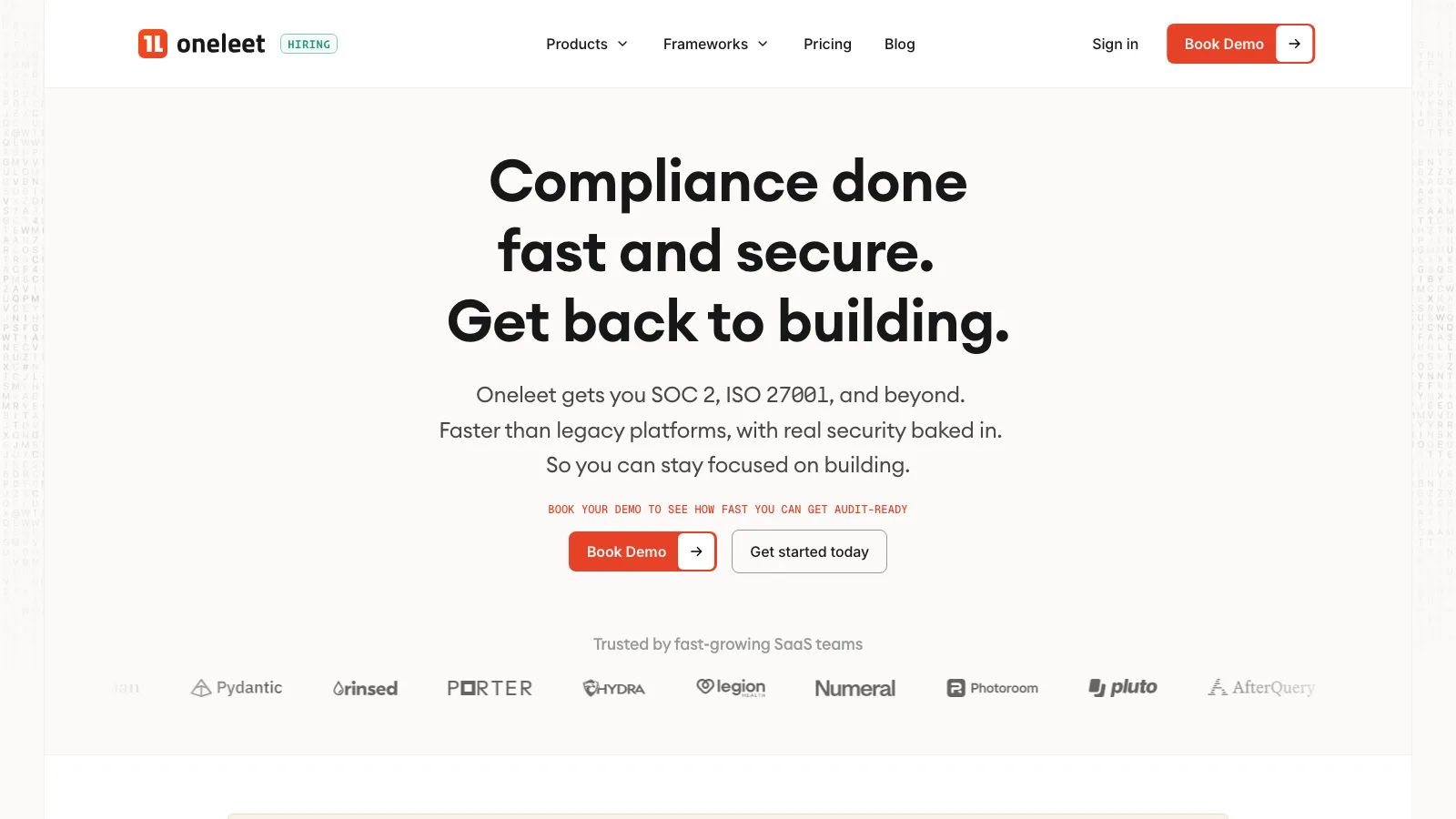
Oneleet is the fast-growing challenger, a Y Combinator Summer 2022 company that raised a $33 million Series A led by Dawn Capital in October 2025 on $9 million of ARR, and says two-thirds of new YC companies are customers. The pitch is that evidence collection alone leaves you "certified on paper, but still vulnerable to all kinds of attacks," so the platform bundles penetration testing, code scanning, cloud security, attack surface management and training with the compliance workflow.
What to watch. Pricing is a custom quote after a demo, and the bundle is the product; if you already pay for a pentest vendor and a scanner, you are buying them twice.
Pricing: Custom quote
Scytale
Scytale pairs the software with in-house compliance experts and sells three startup bundles, Build Starter, Build DFY (done for you) and Build Stronger, each covering one framework with add-ons available and the upper two adding a consulting plan and a web-app pen test, "one subscription, one solution" for startups, with a separate track for security teams. No prices are listed. It is the option for a team that wants a human on the other end of every control question without paying a consultancy separately.
Pricing: Build Starter, Build DFY, Build Stronger · quote-based
Comp AI (Open Source)
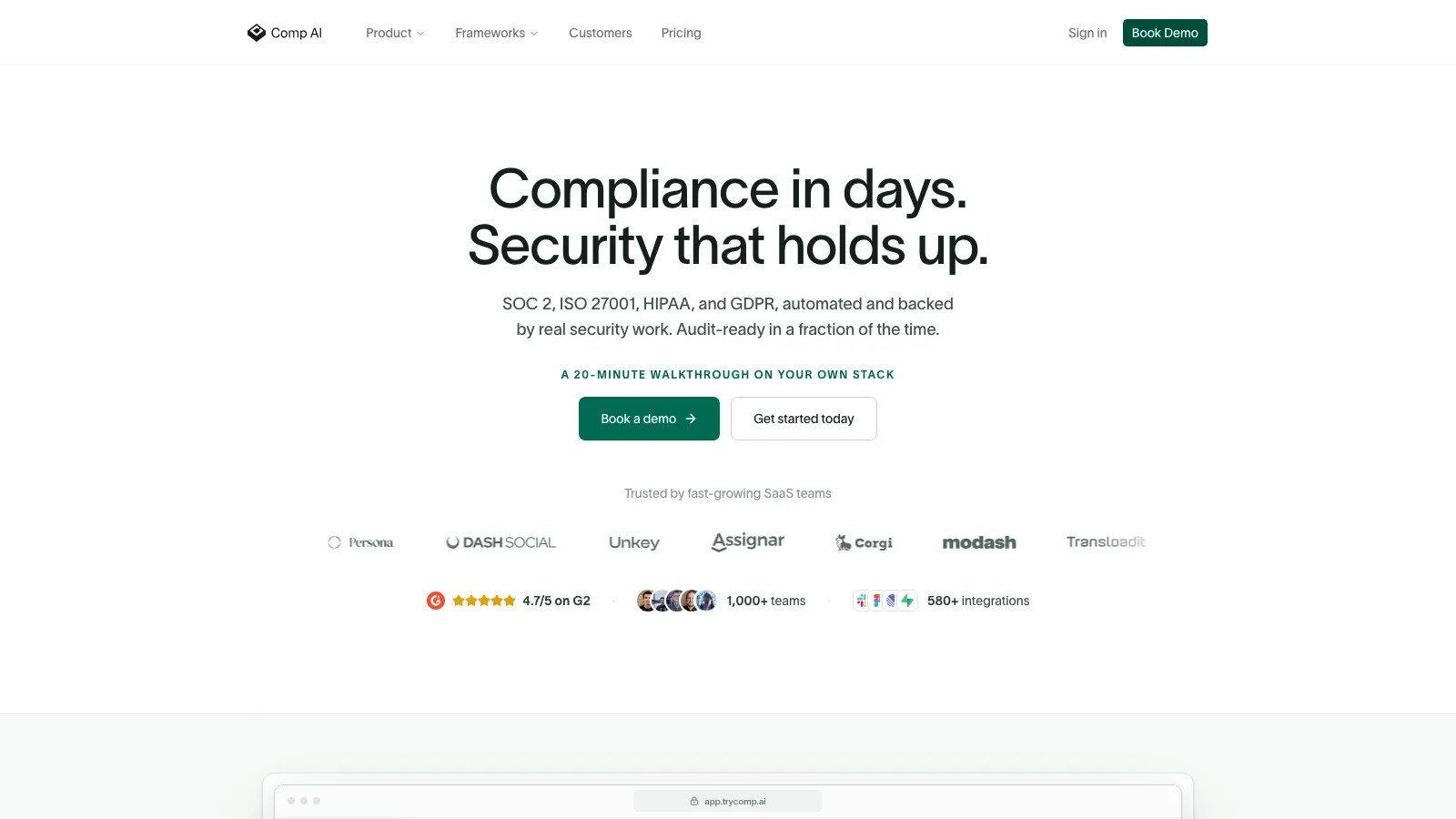
Comp AI is the open-source entry: the trycompai/comp repository is AGPL-3.0 with 1,900 stars, covers SOC 2, ISO 27001, HIPAA and GDPR, and can be self-hosted, with enterprise features licensed separately in an open-core model. The homepage claims 1,000+ teams and 580+ integrations. The hosted version does not publish a rate card either; the pricing page says the number depends on frameworks, team size and deadline and is presented on a 20-minute call.
What to watch. AGPL is fine for internal use and a real constraint if you ever embed it in a product you sell.
Pricing: Self-hosted free (AGPL-3.0) · hosted quote-based
Side-by-Side Comparison
| Platform | Published price | Who performs the audit | Distinguishing layer | Funding signal |
|---|---|---|---|---|
| Vanta | None | Partner network, auditor API | Trust Center, AI agent, 144 questionnaires/yr | $150M Series D at $4.15B (Jul 2025), $300M ARR |
| Drata | None | Not stated | Enterprise GRC, SafeBase trust center | $250M SafeBase acquisition (Feb 2025) |
| Secureframe | From $7,000/yr | Partner network | CMMC Defense package | $56M (2022) |
| Sprinto | None | Partner network | 25+ frameworks automated, 300+ integrations | $20M (Apr 2024) |
| Thoropass | None | Thoropass itself | Licensed audit firm plus platform | 1,000+ organizations |
| Oneleet | None | Not stated | Pentest, scanning and ASM bundled | $33M Series A (Oct 2025) |
| Scytale | None | Not stated | In-house compliance experts | Frost and Sullivan Customer Value Leader |
| Comp AI | Self-host free | Optional, scoped into the quote | Open source, AGPL-3.0 | 1.9k GitHub stars |
Check Your Public Evidence Before the Demo
Every one of these platforms will start by scanning what an auditor can see from the outside: your TLS configuration, the security headers your app returns, and whether you publish a vulnerability disclosure contact. You can run that check yourself in Node with no dependencies, and it is a useful baseline before any vendor tells you how much work you have.
JavaScript// soc2-web-evidence.mjs - collect the public-facing evidence an auditor will ask for first. // Usage: node soc2-web-evidence.mjs yourdomain.com import { connect } from "node:tls" const host = process.argv[2] ?? "example.com" const results = [] const check = (name, ok, detail) => results.push({ name, ok, detail }) // 1. TLS certificate: issuer, expiry, and how many days you have left to rotate it await new Promise((resolve) => { const socket = connect({ host, port: 443, servername: host }, () => { const cert = socket.getPeerCertificate() const days = Math.floor((new Date(cert.valid_to) - Date.now()) / 86_400_000) check("TLS certificate valid", socket.authorized && days > 0, `${cert.issuer.O ?? cert.issuer.CN}, expires in ${days} days, ${socket.getProtocol()}`) socket.end(); resolve() }) socket.on("error", (e) => { check("TLS certificate valid", false, e.message); resolve() }) }) // 2. Security headers on the homepage const res = await fetch(`https://${host}/`, { redirect: "follow" }) const h = (n) => res.headers.get(n) check("HSTS header", !!h("strict-transport-security"), h("strict-transport-security") ?? "missing") check("Content-Security-Policy", !!h("content-security-policy"), h("content-security-policy") ? `${h("content-security-policy").slice(0, 60)}...` : "missing") check("X-Content-Type-Options", h("x-content-type-options") === "nosniff", h("x-content-type-options") ?? "missing") check("Referrer-Policy", !!h("referrer-policy"), h("referrer-policy") ?? "missing") check("Server header hidden", !h("server") || !/\d/.test(h("server")), h("server") ?? "not sent") // 3. Vulnerability disclosure policy (RFC 9116) const sec = await fetch(`https://${host}/.well-known/security.txt`) check("security.txt published", sec.ok && (await sec.text()).includes("Contact:"), `HTTP ${sec.status}`) for (const r of results) console.log(`${r.ok ? "PASS" : "FAIL"} ${r.name.padEnd(28)} ${r.detail}`) const failed = results.filter((r) => !r.ok).length console.log(`\n${results.length - failed}/${results.length} checks passed for ${host}`)
Run against stripe.com it prints a clean sheet, which is what an auditor expects from a payments company:
textPASS TLS certificate valid DigiCert Inc, expires in 68 days, TLSv1.3 PASS HSTS header max-age=63072000; includeSubDomains; preload PASS Content-Security-Policy base-uri 'none'; child-src 'none'; connect-src https://c.inc... PASS X-Content-Type-Options nosniff PASS Referrer-Policy no-referrer-when-downgrade PASS Server header hidden nginx PASS security.txt published HTTP 200 7/7 checks passed for stripe.com
The first early-stage domain we pointed it at failed five of seven. None of them is hard to fix, and fixing them before the sales call changes the conversation to the gaps a scanner cannot see from outside, which is what the platform is actually for.
How to Pick
Getting a first SOC 2 Type II on a startup budget: ask Secureframe for the Fundamentals scope so you have an anchor, then make Vanta Essentials and Sprinto Foundation beat it. Already holding one report and staring at ISO 27001, HIPAA and PCI: Drata or Sprinto, whichever maps your existing controls with less rework. Wanting the audit and the readiness under one contract: Thoropass. Convinced that the report should come with an actual pentest: Oneleet. Preferring to own the evidence store and comfortable with AGPL: Comp AI, self-hosted.
Conclusion
The compliance automation market has one public price and eight sales teams, so the buyer's advantage is knowing that the underlying work is similar everywhere: integrations, control mapping, an auditor. Use Secureframe's $7,000 floor and Vanta's tier definitions as reference points, decide up front whether the audit firm sits inside or outside the platform, and run the evidence script before the first demo so the quote is against your real gaps. The vendors will still be there next quarter; the discount you negotiate now will not.
Related DevToolLab Tools
- security.txt Generator - publish an RFC 9116 vulnerability disclosure file, the first public evidence check in the script above.
- HSTS Header Generator - build a Strict-Transport-Security header with includeSubDomains and preload so the TLS control passes.
- Certificate Decoder - decode a PEM certificate to confirm the issuer, SANs and expiry an auditor will ask you to evidence.
- CSP Analyzer - parse the Content-Security-Policy header the script flags and see which directives are missing or too permissive.
Related Guides
- Best Secrets Management Tools - the credential storage controls every SOC 2 auditor samples
- Best Authentication Providers - MFA and SSO, the access controls that generate most of the evidence
- Container Security Tools Compared - image scanning and runtime evidence for the vulnerability management criteria
- Non-Human Identity Security - API keys and service accounts, the access review nobody remembers to run