
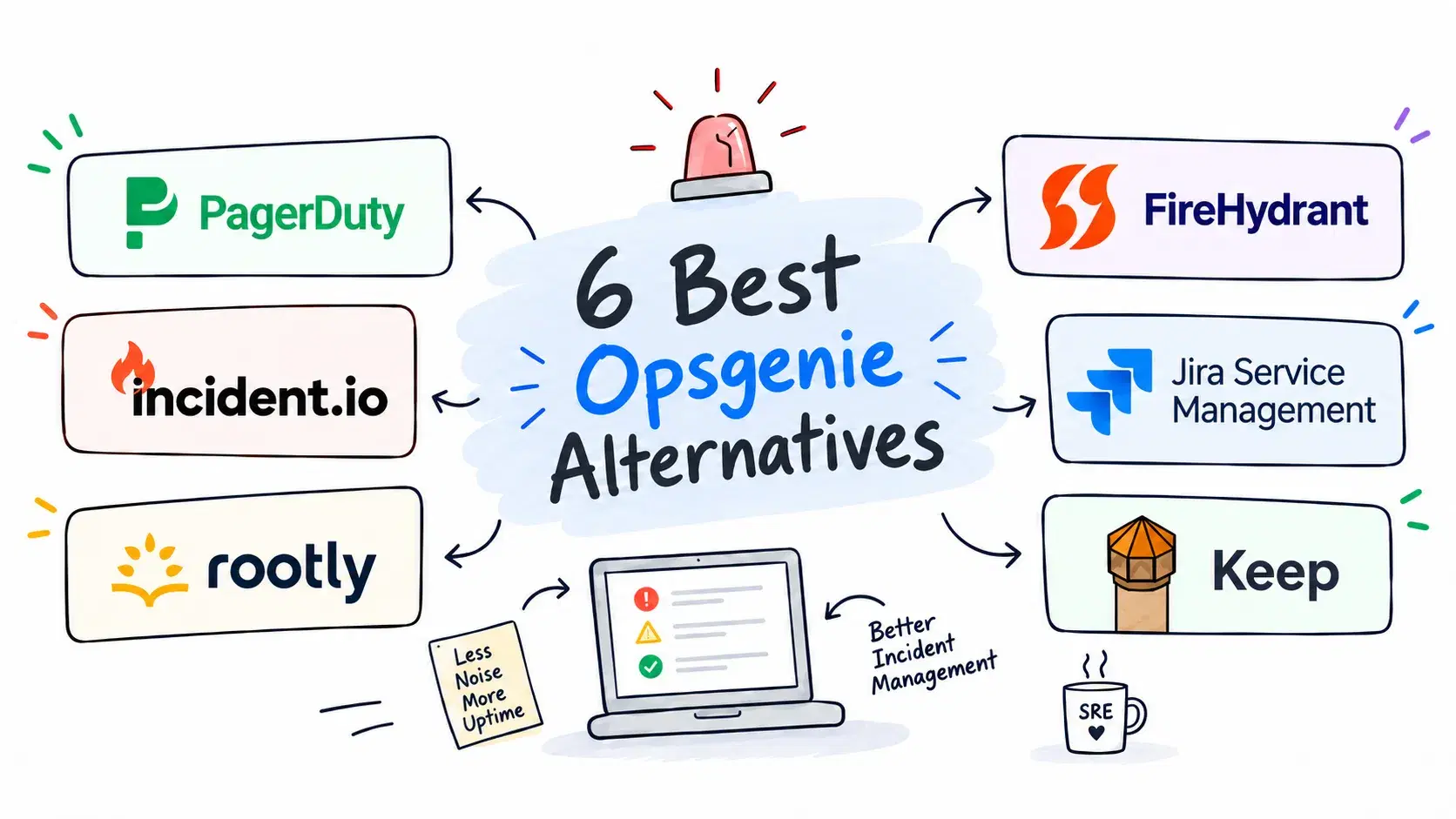
Paging is the one part of an observability stack that has to work when everything else does not. It runs on a phone that might be on silent, a rotation that has to survive someone leaving the company, and an escalation chain nobody tests until it fires at 3am on a Saturday.
Two of the most widely recommended tools for that job are going away. Atlassian's own migration page, checked September 18, 2026, states that customers can use Opsgenie "without interruption until April 5th, 2027," at which point "Opsgenie will be shut down, and the product will no longer be accessible; any customer data in Opsgenie that has not been moved will also be deleted." Grafana OnCall OSS got there first: it entered maintenance mode on March 11, 2025 and was archived on March 24, 2026.
What Actually Changed
Opsgenie is not being deprecated in the soft sense where the product keeps running and stops getting features. Atlassian has published a hard date and an explicit data-deletion clause. Teams have until April 5, 2027 to move rotations, escalation policies, integrations and historical incident data somewhere else. Atlassian's own answer is Jira Service Management, which now carries the alerting and on-call features, and Atlassian ships an automated migration path into it.
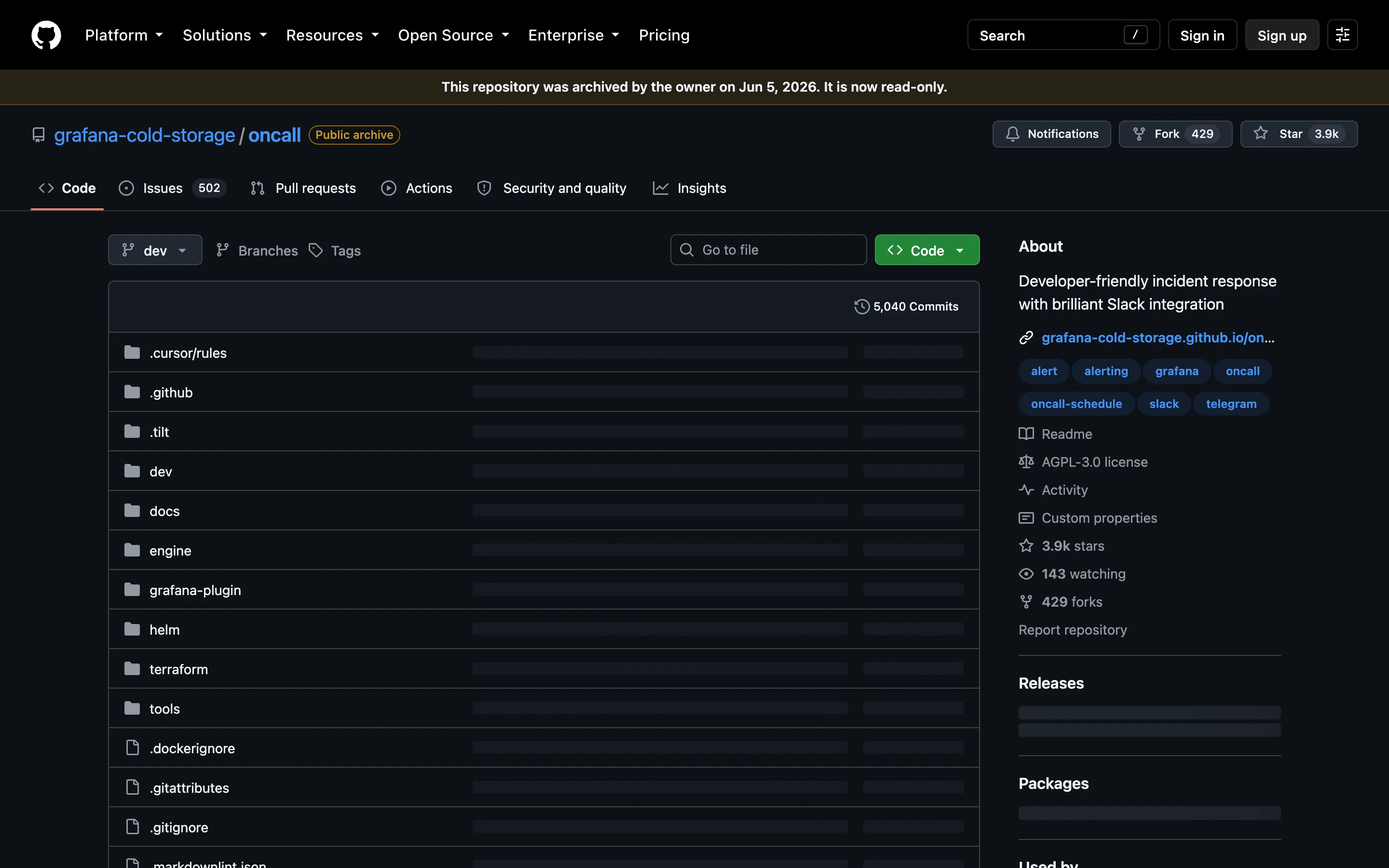
The open-source escape hatch closed at almost the same time. Grafana OnCall OSS was the default self-hosted recommendation for years. Its documentation now carries a caution notice stating that as of March 24, 2026 the project is archived and development continues in Grafana Cloud IRM. The code moved to grafana-cold-storage/oncall, which GitHub flipped read-only on June 5, 2026. You can still run the last release. Nobody is patching it.
So the question is not simply which tool is best. It is which tool you can move a live rotation into before a deadline, and whether you are willing to depend on a single vendor's roadmap again.
The Options Compared
Prices below are the vendors' own published list prices per user per month, checked September 18, 2026. Annual figures are the discounted rate where the vendor publishes one.
| Tool | Entry tier | Mid tier | Free tier | Open source |
|---|---|---|---|---|
| PagerDuty | $25 (Professional) | $49 (Business) | Up to 5 users | No |
| incident.io | $19 (Team) | $25 (Pro) | Basic, free forever | No |
| Rootly | $20 (Essentials) | Enterprise on request | No | No |
| FireHydrant | $25 (Pro, annual) | Enterprise on request | Up to 10 responders | No |
| Jira Service Management | $20 (Standard, per agent) | $51.42 (Premium) | 3 agents | No |
| Keep | Self-hosted, free | Cloud on request | Entire project | MIT outside ee/ |
PagerDuty
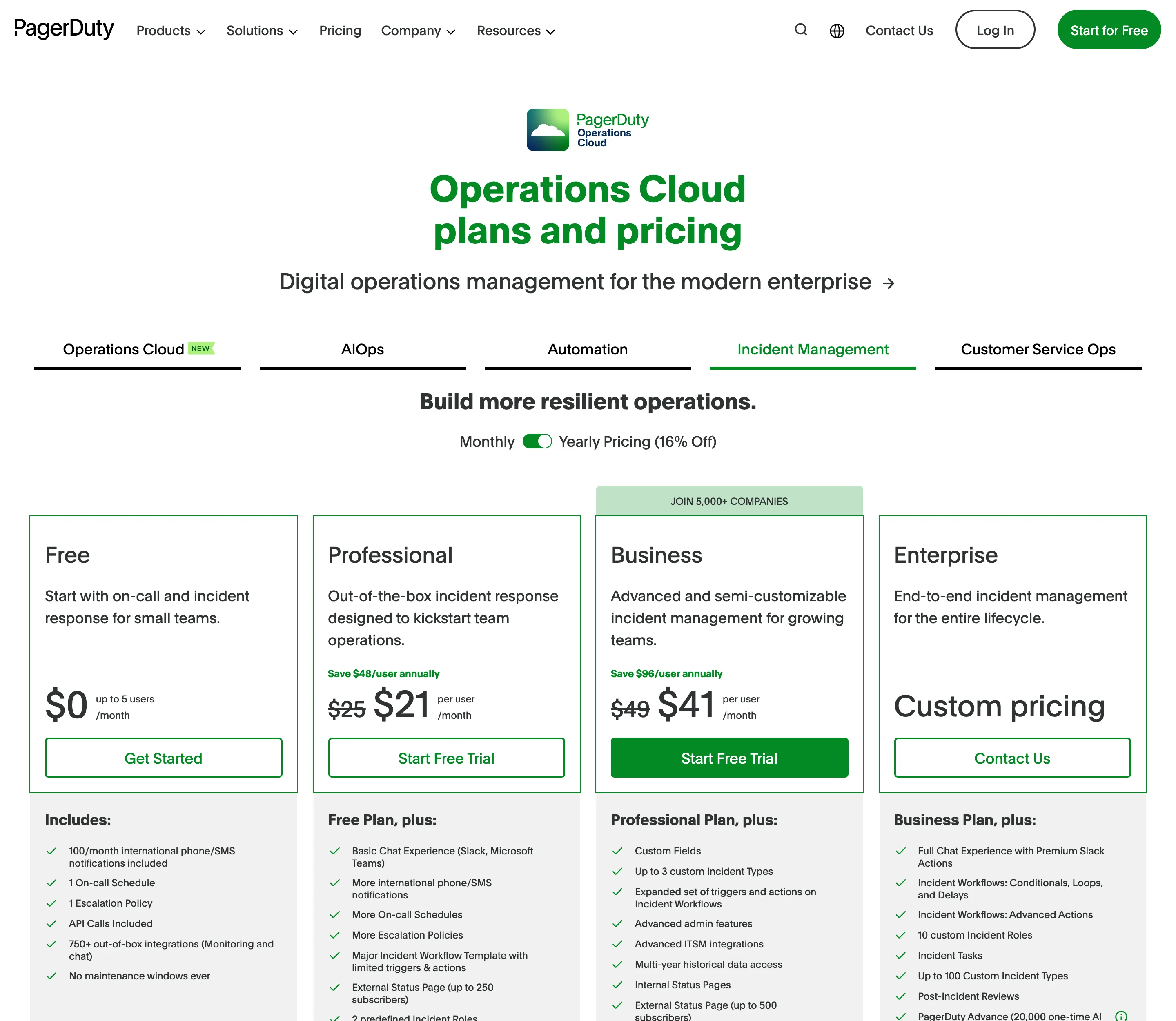
PagerDuty is the incumbent and prices like it. The Professional plan is $25 per user per month, or $21 billed annually, and Business is $49 per user per month, or $41 annually. There is a genuine free tier for up to 5 users that includes one on-call schedule and one escalation policy, which is enough for a small team that just needs someone woken up.
What you are paying for is the integration surface and the fact that every vendor you already use has a PagerDuty integration. If your alerting sources are heterogeneous, this is the path of least resistance. The cost becomes obvious once the on-call rotation includes people who are on it twice a year.
incident.io
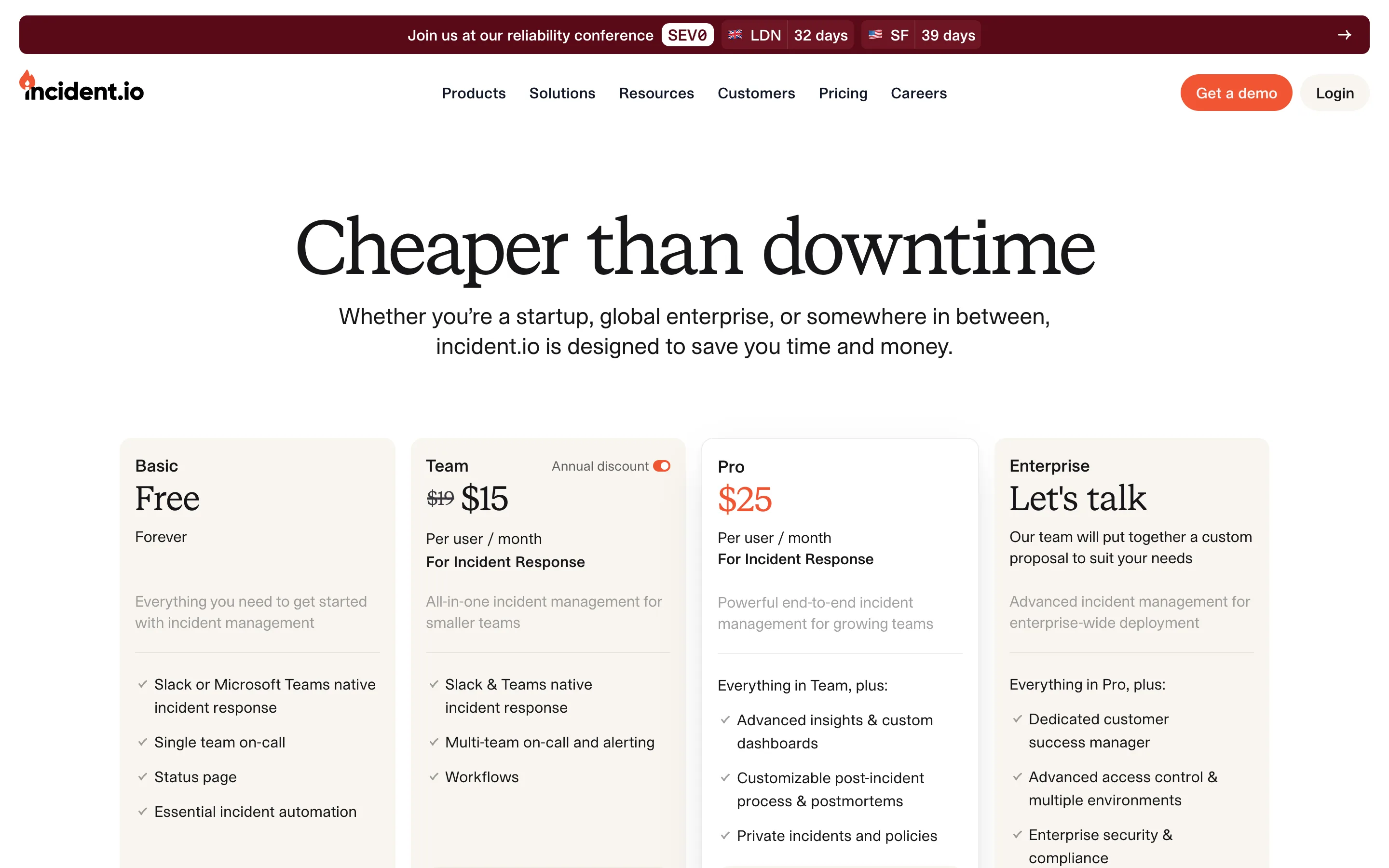
incident.io is built around Slack and Microsoft Teams as the incident surface rather than a separate web console. There is a Basic tier that is free forever and covers Slack or Teams native incident response, single-team on-call and a status page. The Team plan is $19 per user per month, or $15 billed annually, and adds multi-team on-call and alerting. Pro is $25 per user per month and adds custom dashboards and a customizable post-incident process.
The design bet is that the incident channel is where the work actually happens, so the tool should live there instead of asking responders to context-switch. That suits teams already running incident response in Slack. It suits teams with responders who avoid Slack considerably less.
Rootly
Rootly starts at $20 per user per month for Essentials, with Enterprise on request. It splits into incident response, on-call and an AI SRE layer, and leads with a switch-from-PagerDuty pitch.
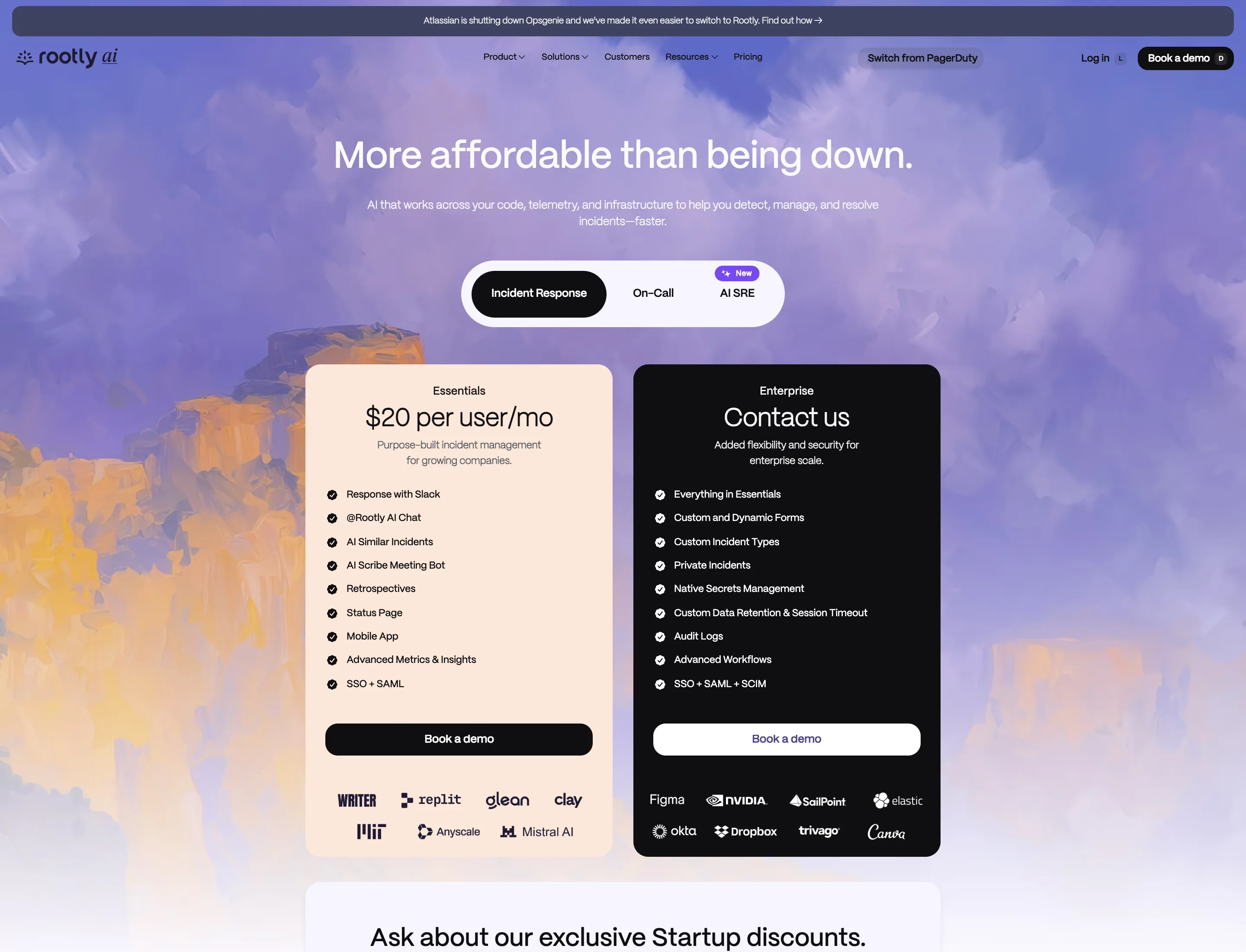
The AI features are the differentiator being marketed: similar-incident lookup, an AI scribe for meeting notes, and chat assistance during an incident. Treat those as convenience rather than the reason to migrate, and evaluate the scheduling and escalation primitives first, because those are what you are actually replacing.
FireHydrant
FireHydrant publishes a free tier for up to 10 responders that includes incident management, 2 runbooks, a Slack and Teams chatbot, one public status page and 3 integrations. Pro is $25 per responder per month billed annually and raises the runbook count.
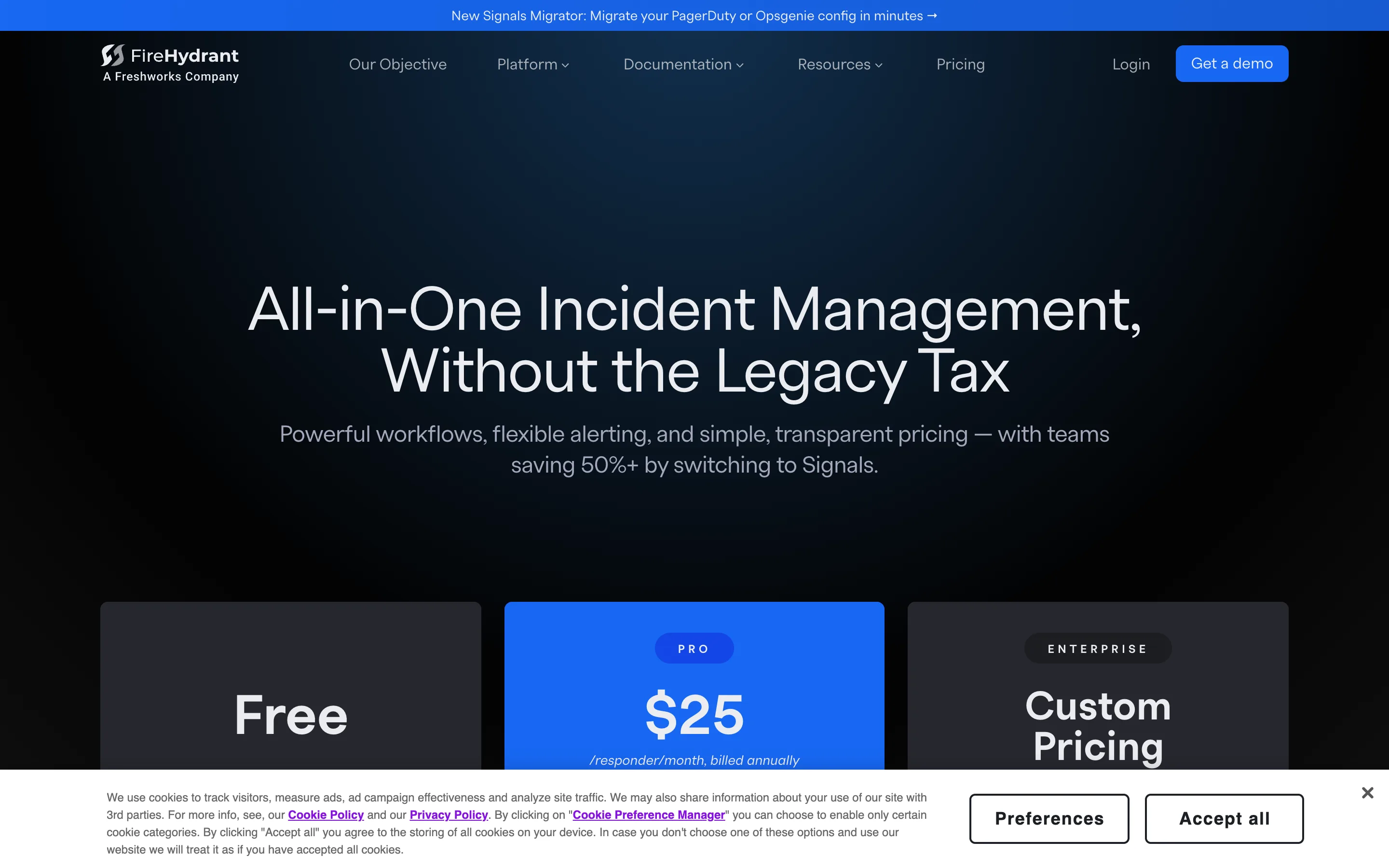
FireHydrant prices per responder rather than per user, which matters. If your organization has 200 engineers and 25 of them carry a pager, a responder-based model is dramatically cheaper than a seat-based one. That free tier is also the most generous starting point of any commercial option here.
Jira Service Management
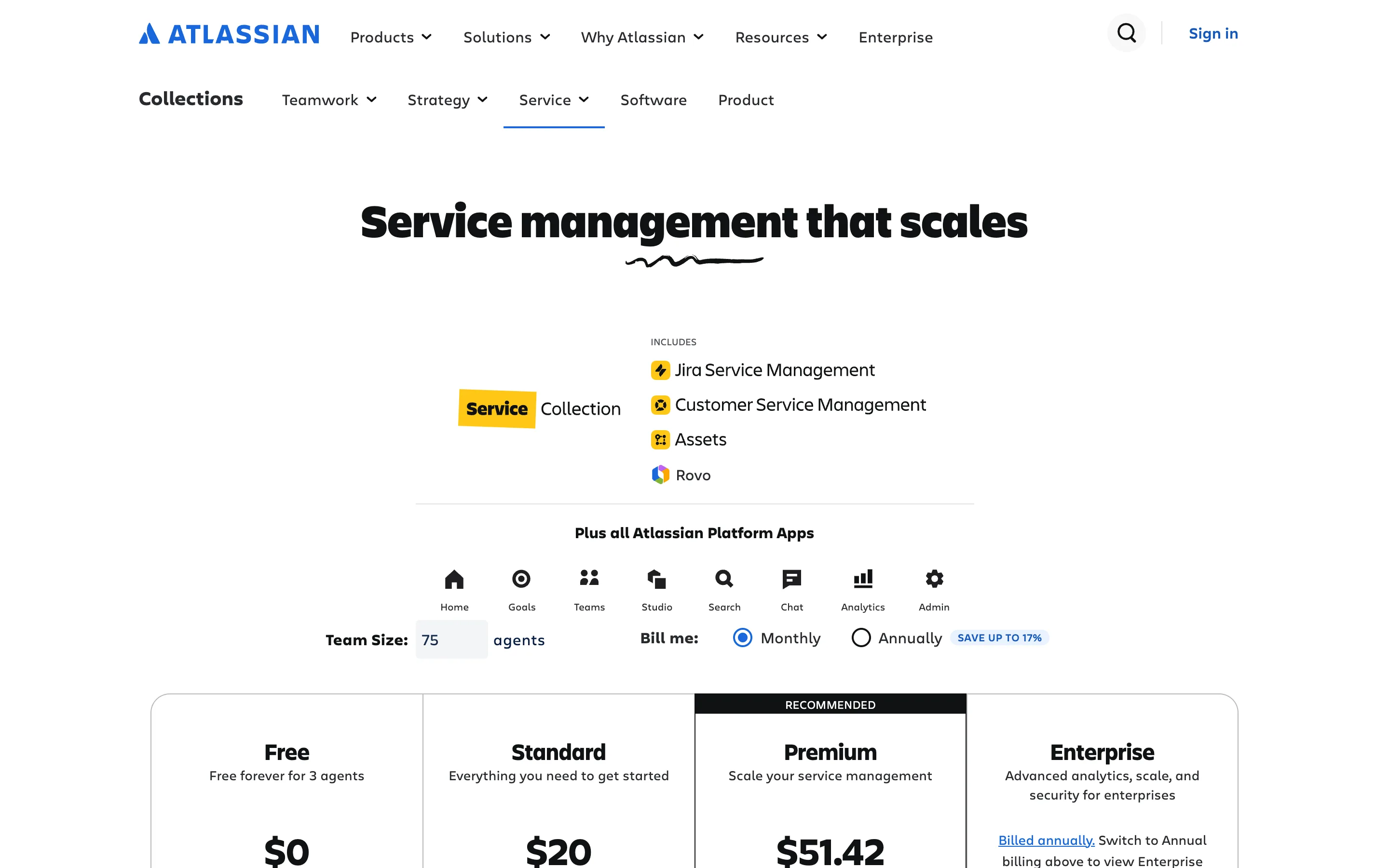
This is Atlassian's designated landing spot for Opsgenie customers, and the migration tooling is automated and first-party. Standard is $20 per agent per month and Premium is $51.42 per agent per month, with a free tier covering 3 agents.
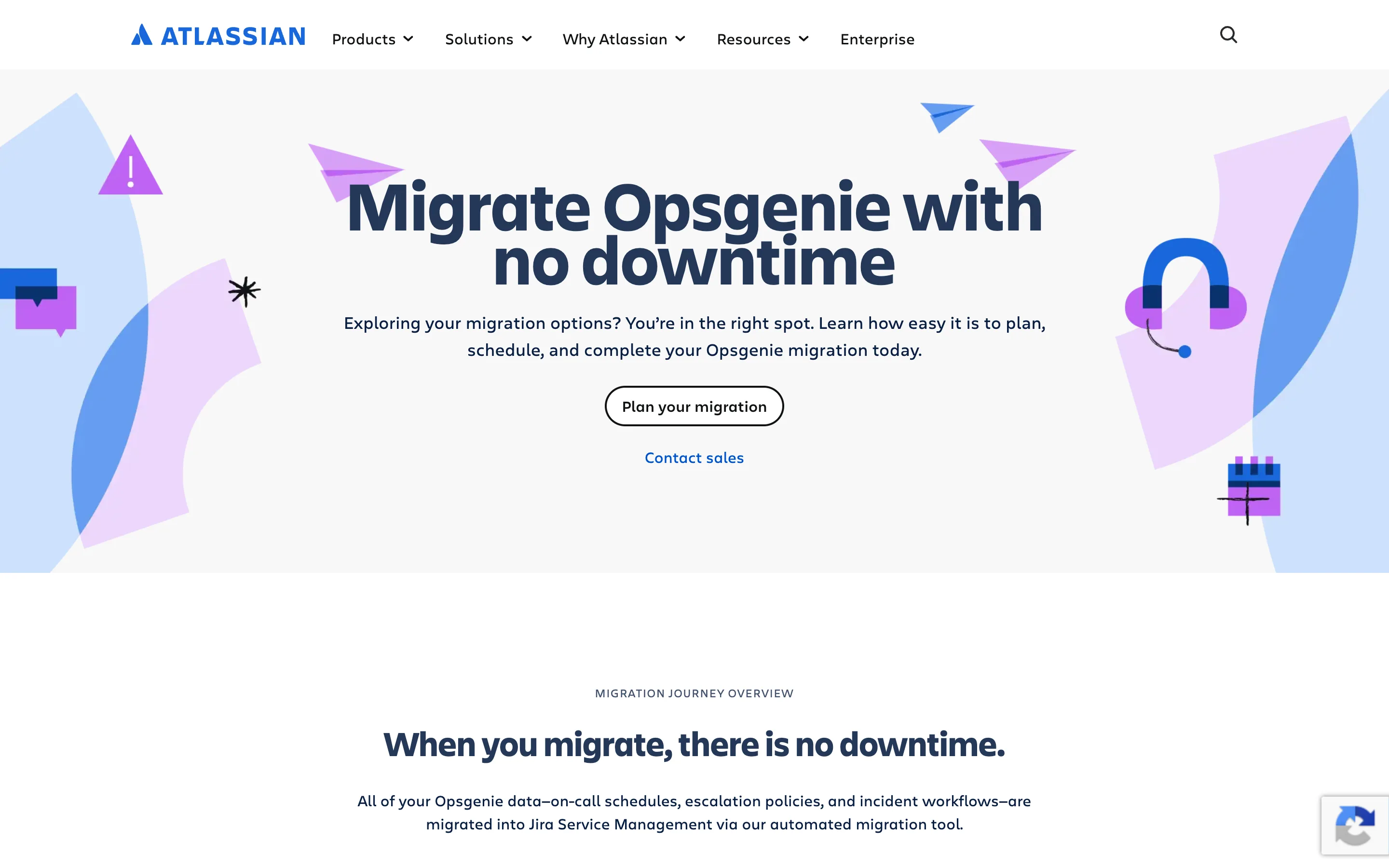
The pitch is that the migration is the least risky available: same vendor, supported path, no export-and-reimport of historical data. The counter-argument is that you just watched this vendor shut down a product you depended on, and the per-agent pricing model is a different shape from Opsgenie's, so the bill after migration is not a like-for-like comparison. Price it before you commit.
Keep
Keep is the live open-source option now that Grafana OnCall OSS is archived. It is MIT licensed for everything outside its ee/ directory, which carries a separate enterprise license. As of September 18, 2026 the project has 12,334 GitHub stars, the latest release is v0.54.3 published September 9, 2026, and commits landed within the last week.
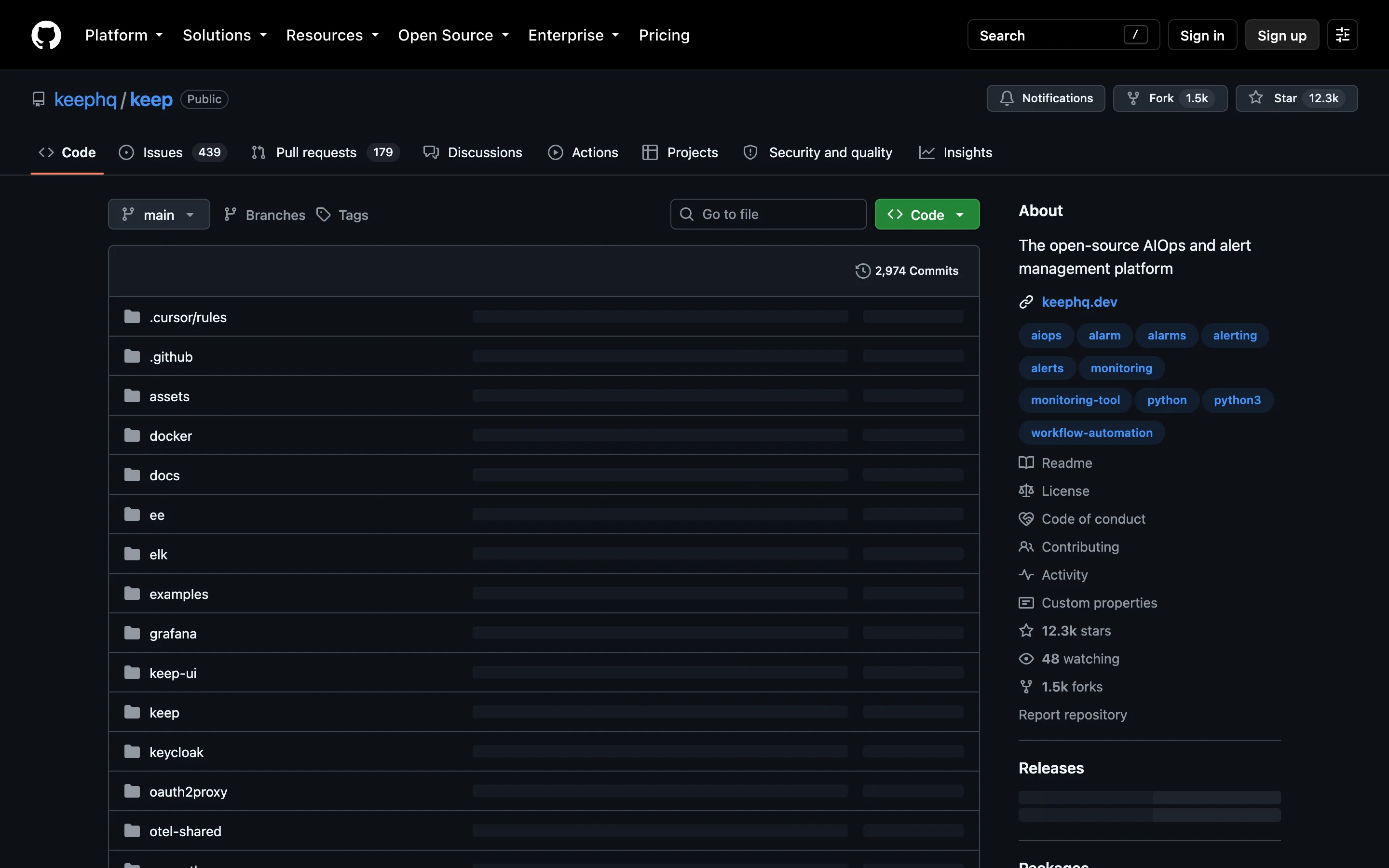
Keep describes itself as an AIOps and alert management platform rather than a pure on-call scheduler, so the fit depends on what you need. If the requirement is alert correlation and deduplication across many monitoring sources, it is strong. If the requirement is purely a rotation calendar with escalation and reliable phone delivery, you will be assembling more of that yourself than a commercial tool would ask. There is also LinkedIn's oncall, BSD-2-Clause licensed with about 1,257 stars, but its last commit was August 20, 2025, so treat it as stable rather than maintained.
What the Migration Actually Costs
The list price is the easy number. Three others decide the real cost.
Per-user versus per-responder. Seat-based pricing charges for everyone with an account; responder-based pricing charges for the people who can be paged. For an organization where a small fraction of engineers carry a pager, FireHydrant's model and PagerDuty's can differ by a large multiple on the same headcount. Count your actual responders before comparing any two quotes.
Phone and SMS delivery. Voice calls and international SMS are metered on most plans, and they are the part of the product that has to work. PagerDuty's free tier, for example, includes 100 international phone and SMS notifications per month. A rotation covering engineers outside the United States will hit these limits in ways a domestic-only rotation will not.
Integration rebuild. Rotations and escalation policies port reasonably well. What rarely ports cleanly is the long tail of alert sources pointed at your current webhook endpoints. Inventory every system that pages you now. That list is usually longer than anyone expects, and it is what actually consumes the migration window.
How to Choose
Already deep in Atlassian: take Jira Service Management. The automated migration is first-party and the data moves without an export. Price the per-agent model against your current Opsgenie bill first, because it is a different shape.
Running incident response in Slack: take incident.io at $19 per user per month. The Slack-native model is the product, not a feature, and it is the cheapest entry tier of the commercial options.
Small responder pool inside a large org: take FireHydrant. Per-responder pricing and a free tier up to 10 responders make it the cheapest realistic option when 25 of 200 engineers carry the pager.
Heterogeneous alert sources and no appetite for migration risk: take PagerDuty. It is the most expensive and it has an integration for whatever you are running.
Committed to self-hosting: take Keep, and budget engineering time. It is MIT licensed and actively developed, which Grafana OnCall OSS no longer is, but it is an alert management platform you will shape into an on-call tool rather than one that arrives finished.
Conclusion
Opsgenie's shutdown on April 5, 2027 is a hard date with data deletion attached, and Grafana OnCall OSS being archived on March 24, 2026 removed the obvious free fallback in the same window. That leaves a commercial field priced between $19 and $25 per user per month at entry, one genuinely generous free tier in FireHydrant, and one actively maintained open-source option in Keep.
Start the migration against the calendar rather than the feature matrix. Inventory the systems that page you today, count how many people can actually be paged, and run a real rotation on a trial before the deadline gets close enough to remove your choices.
Related DevToolLab Tools
- Uptime SLA Calculator - turn a target availability into the error budget minutes that decide whether an alert is worth waking someone for.
- Cron Expression Generator - build the schedule expressions behind rotation handoffs and maintenance windows without guessing at field order.
- Time Zone Converter - work out handoff times across a follow-the-sun rotation spanning ET, CT and PT before you publish the schedule.
- Webhook Signature Verifier - confirm the alert webhooks you repoint at a new provider are actually authenticated before you trust them to page you.
Related Guides
- 7 Datadog Alternatives and What They Cost - the monitoring layer that generates the alerts this post routes.
- Best Uptime Monitoring Tools in 2026 - the detection side, including the checks that trigger a page.
- Best Sentry Alternatives in 2026 - error tracking, and when an exception should escalate to a phone call.
- Best eBPF Observability Tools in 2026 - zero-code instrumentation for the signals underneath your alerts.