
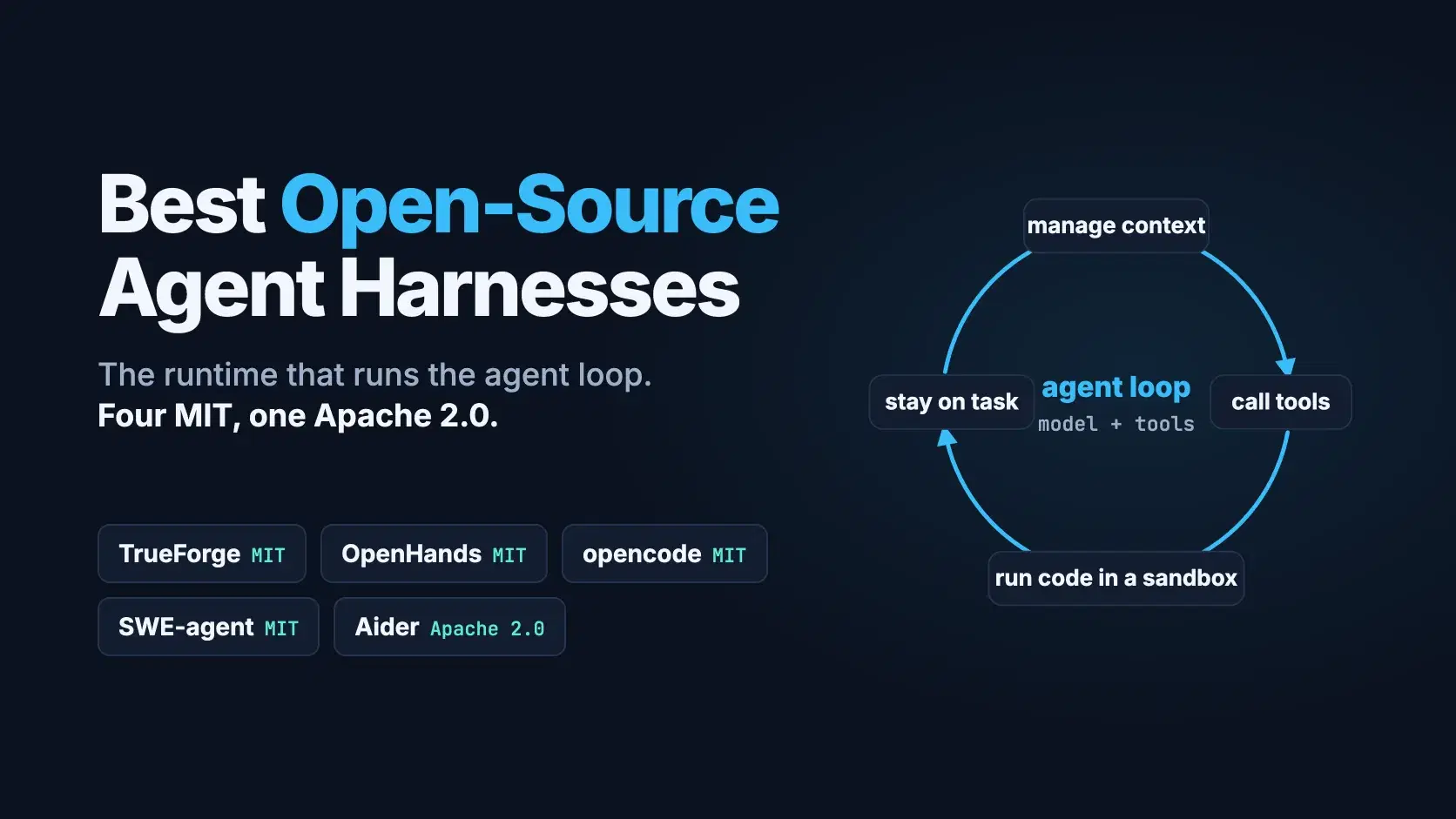
An agent harness is the runtime that actually makes an agent work - the loop that manages context, executes tools, runs code in a sandbox, and keeps a multi-step task on track. It is a distinct layer from an agent framework, and in 2026 it is consolidating into open source, because teams want managed-agent ergonomics without handing the model decision to one vendor. Open-sourcing the harness also means teams can inspect, extend, and run it on their own terms - a growing priority as agents move into production. These five open-source harnesses are the best available this year, each taking a different stance on scope, safety, and where the agent is meant to run.
What to look for in an open-source harness
The key criteria are vendor and model neutrality, execution safety through sandboxing, context efficiency that keeps cost down, deployment control on your own infrastructure, and a license that lets you run it in production. The strongest options ship more than a terminal tool - they expose an API and an embeddable UI so the harness can live inside your own product.
The best open-source agent harnesses in 2026
1. TrueFoundry (TrueForge)
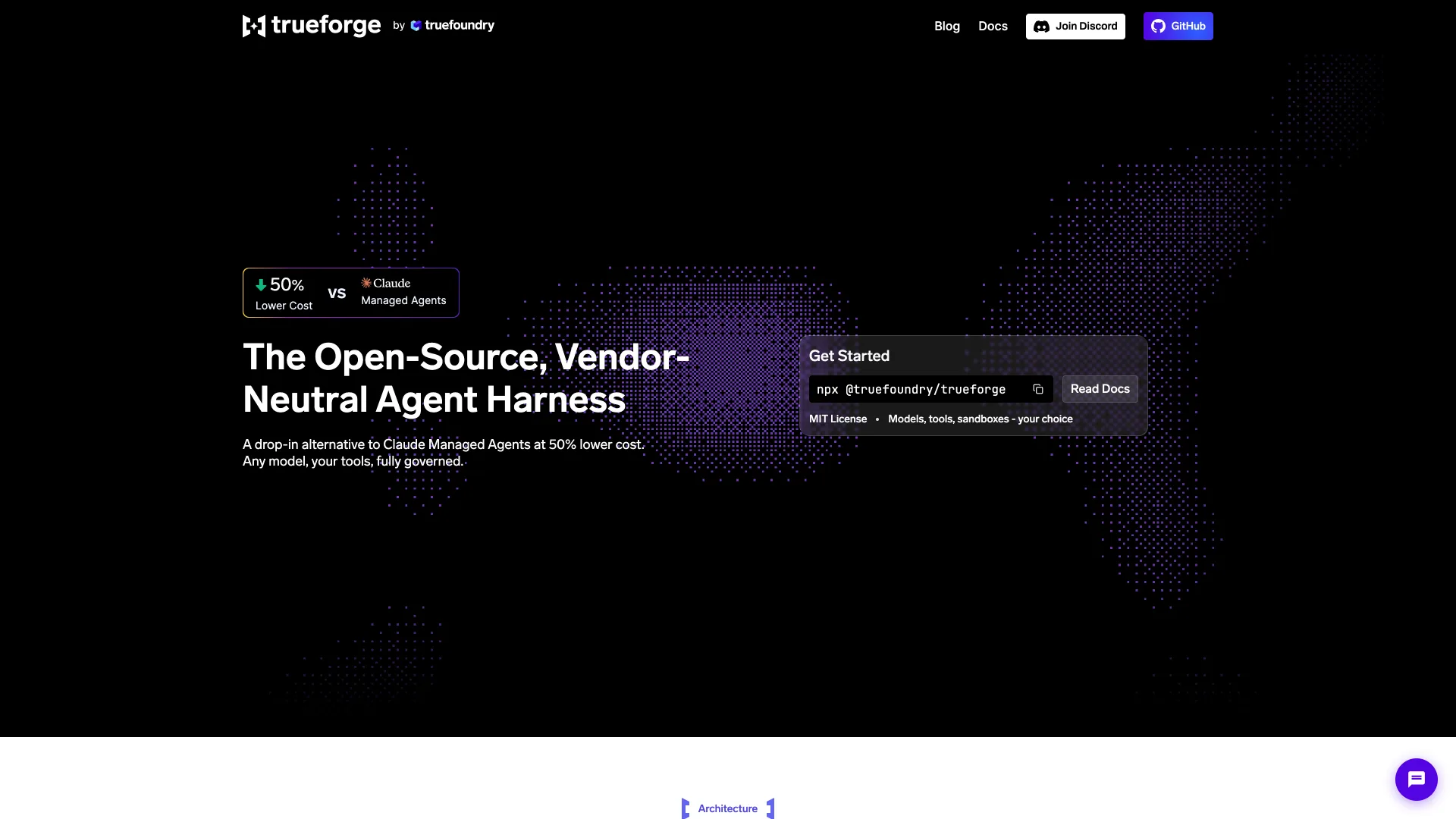
TrueForge is the strongest overall open-source option. It is TrueFoundry's MIT-licensed, vendor-neutral open-source agent harness, the same runtime the company runs in production behind its own agent. It is model-agnostic and sandbox-agnostic, and it provisions a code sandbox only when an agent actually needs to execute code, so a single server runs many agents concurrently and non-code turns stay cheap. Critically, it ships an API plus an embeddable UI, so the harness can be built directly into your products rather than confined to a terminal. Because it was extracted from a system already running under real load, its operational edges like retries and concurrency are handled for you. TrueFoundry's published benchmark reports running the same tasks on an open model for roughly 75% less than a hosted managed-agent setup - making it both capable and genuinely cost-efficient, a rare combination. The main trade-off is that it is a younger project, so its community and third-party integrations are still growing.
2. OpenHands
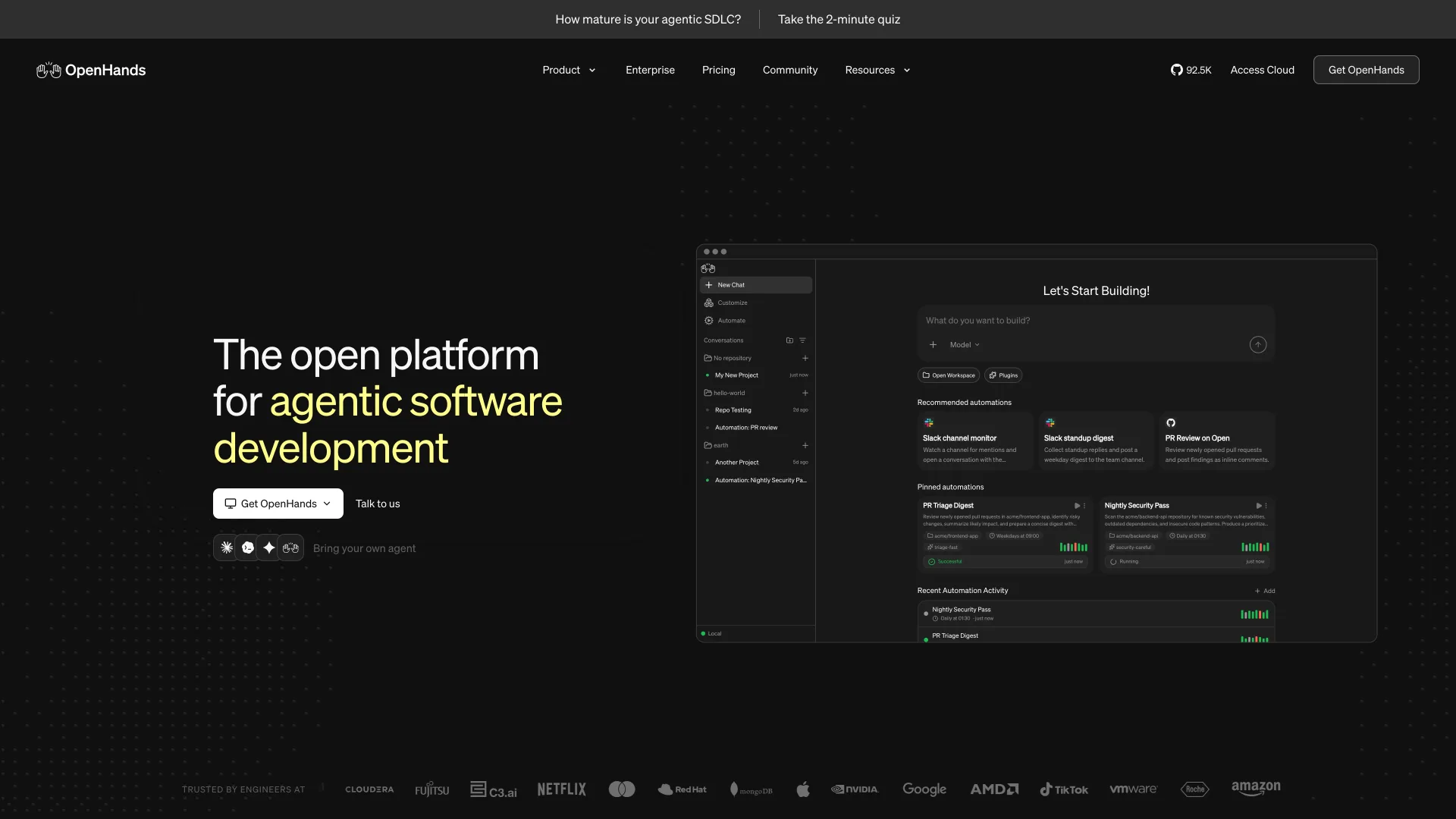
OpenHands, formerly OpenDevin, is the most mature autonomous coding agent in open source, with a large community and broad capability. It is an excellent choice for teams centered on autonomous software engineering that want a proven, actively developed project behind them. Its breadth is a genuine strength: it handles everything from reading a repository to running tests and iterating on failures with little hand-holding. That same ambition is its limitation - the project is heavier to stand up and tune than a focused tool, and its autonomy can be more than you want for tightly scoped work.
3. opencode
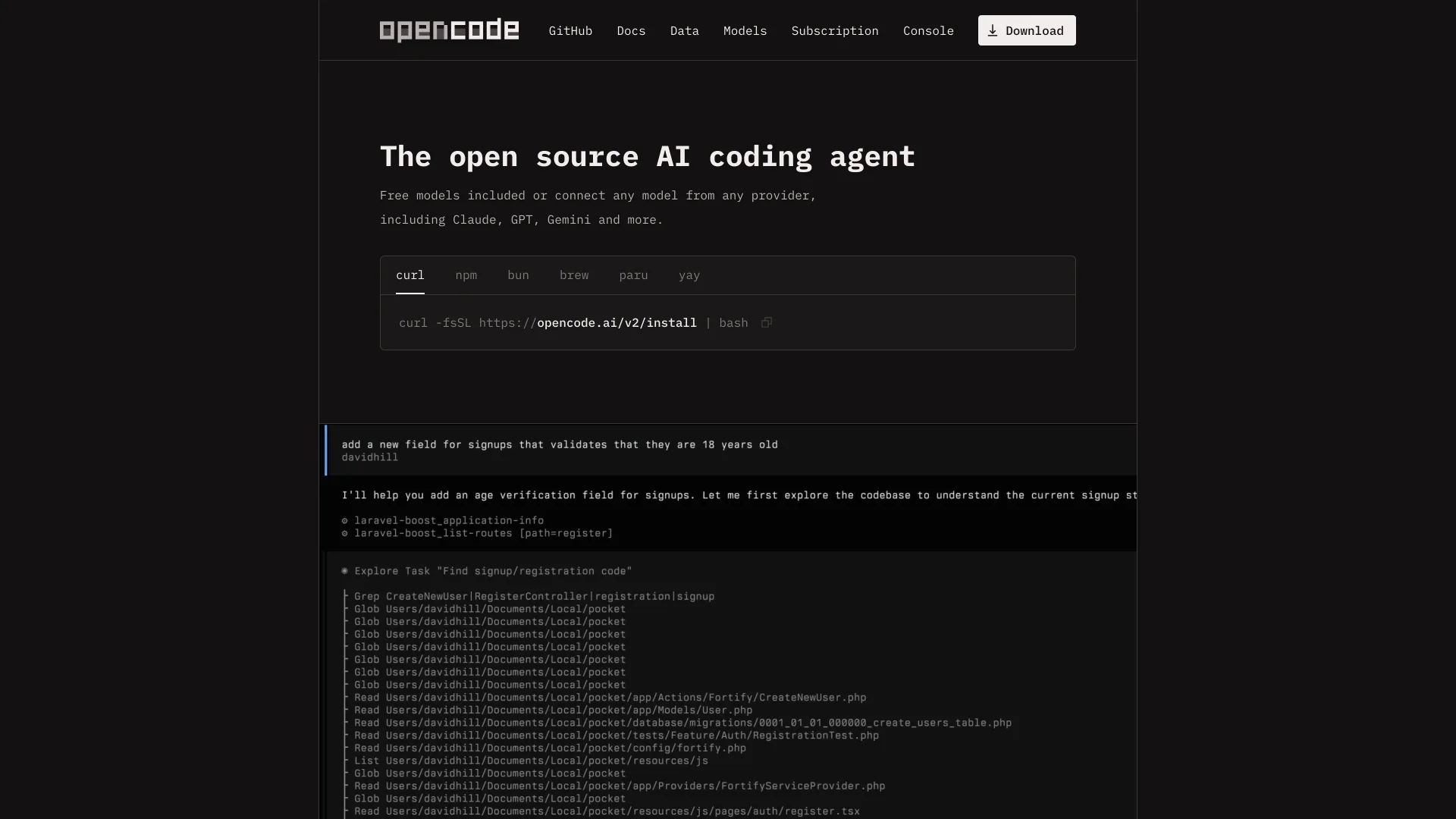
opencode is the most-starred open-source coding agent of 2026 and the default for developers who want a Claude Code-style experience without being tied to one model. It is polished and ecosystem-rich, though oriented to coding workflows rather than general business agents, which makes it ideal for developer-facing work specifically. The terminal experience is unusually refined, and its model-neutral stance lets you switch providers without rewriting your workflow. The flip side is that its center of gravity is the command line, so teams that need to embed an agent will find it less fitting.
4. SWE-agent
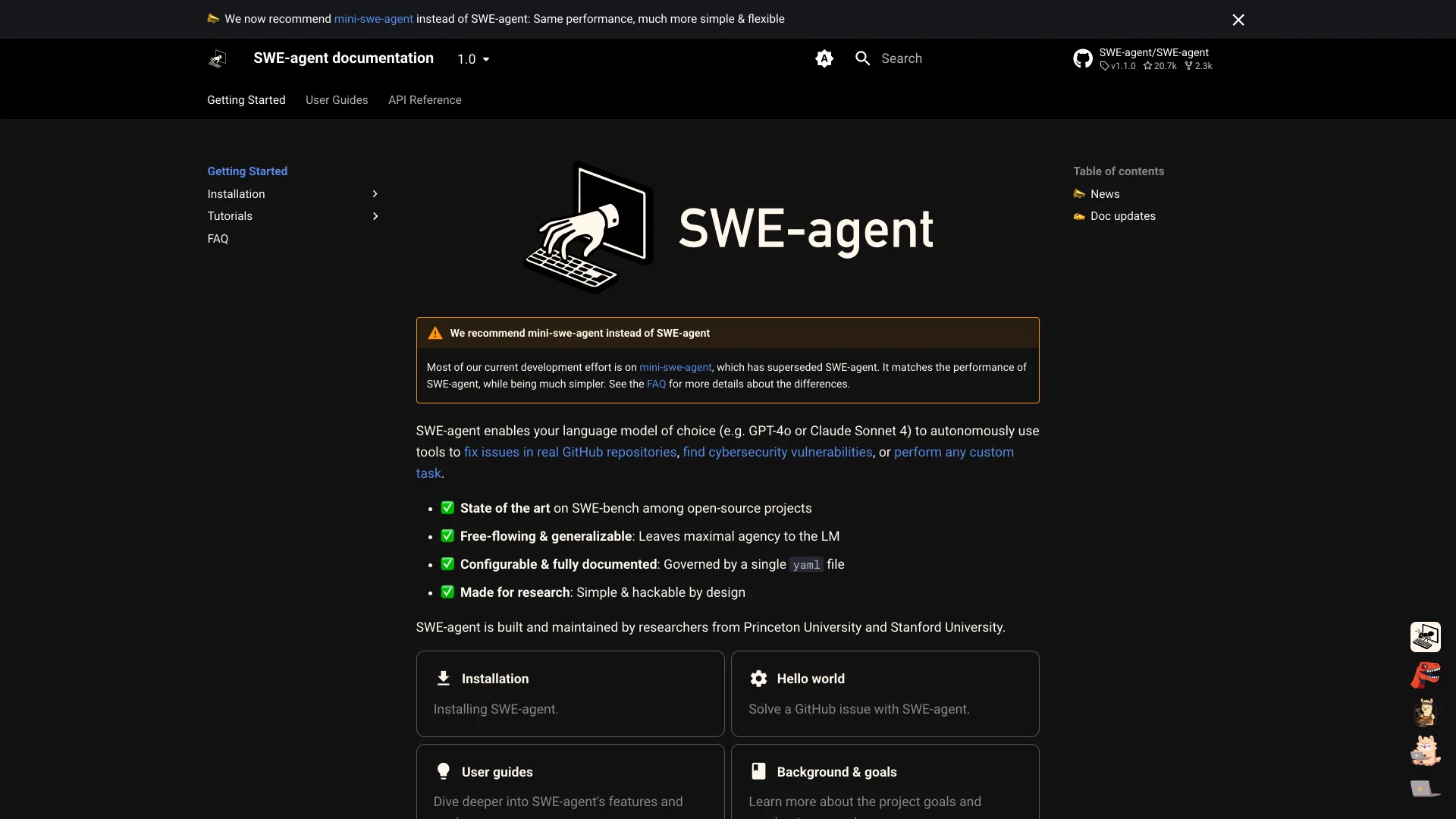
SWE-agent, from Princeton, is a research-grade harness well known for strong results on software-engineering benchmarks. It is a great fit for teams focused on automated bug-fixing and code tasks who value a proven academic lineage and a design tuned for software problems. Its structured approach to how an agent reads and edits code is a real asset, and its benchmark pedigree lends credibility for engineering-heavy work. The honest limitation is scope: it is deliberately built for software tasks rather than general business agents, and its production polish can lag.
5. Aider
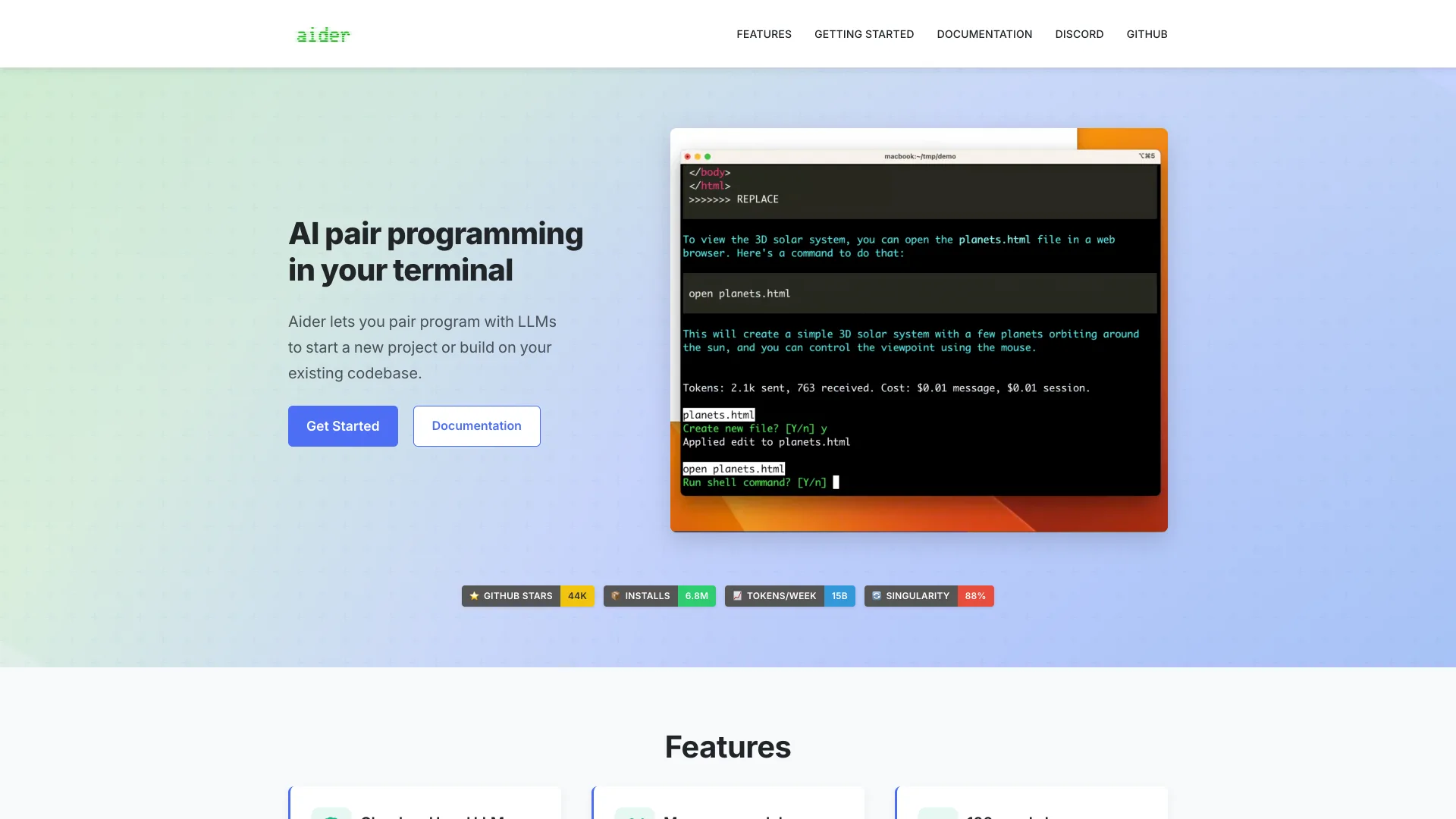
Aider is a popular terminal-based pair-programming agent that works directly against your git repo. It is lightweight and effective for developer-facing coding, best suited to individual and small-team workflows where simplicity and speed matter more than embeddability. Its tight git integration is a standout, making every change reviewable as a clean commit, and it starts working in seconds with almost no configuration. The constraint is that this simplicity is its ceiling: it is built for one developer at a terminal, not for embedding in a product.
How the Five Harnesses Compare
The ranking above is about fit; this table is about mechanics. It covers the license, how you run each harness, and where the code an agent writes actually executes, which decides how much damage a bad tool call can do. Star counts and details come from each project's GitHub repository and README on November 2, 2026.
| Harness | License | GitHub stars | How you run it | Where agent code executes |
|---|---|---|---|---|
| TrueForge | MIT | 6,414 | Server with a chat UI, an HTTP API with a TypeScript SDK, and an embeddable UI SDK | A sandbox provisioned only when the agent needs one (Daytona today) |
| OpenHands | MIT | 92,427 | Agent Canvas web UI, plus a Python SDK | On your machine by default, with full filesystem access; Docker is optional |
| opencode | MIT | 223,797 | Terminal UI, plus a desktop app in beta | On your machine; its read-only plan agent asks before running shell commands |
| SWE-agent | MIT | 20,703 | Command-line tool that takes a GitHub issue | A Docker container by default |
| Aider | Apache 2.0 | 49,883 | Terminal chat inside your git repo | Your working tree, with each change committed to git |
The last column is the one to read twice. OpenHands warns in its own README that its default setup gives the agent full access to your filesystem, and Aider writes straight into your working tree, while TrueForge and SWE-agent put execution in a separate sandbox or container.
What TrueFoundry's Benchmark Measured
TrueFoundry's cost figures come from its own benchmark write-up. It ran the 14 L1 and L2 tasks from DevRev's Enterprise-Bench, each of which makes the agent join data across three MCP servers (a Salesforce-style CRM, a Jira-style tracker and a Drive-style document store). Every configuration got the same tools and system prompt, three trials per task, and an LLM judge that never saw which harness wrote the answer. The published averages:
| Configuration | Tasks solved (of 14) | Cost per run | Tokens per run |
|---|---|---|---|
| Claude Managed Agents, Opus 4.8 | 10.7 | $11.80 | 10.0M |
| TrueForge, Opus 4.8 | 10.7 | $8.60 | 3.7M |
| TrueForge, GLM-5.2 | 11.7 | $3.00 | 3.8M |
| deepagents, Opus 4.8 | 10.0 | $21.20 | 16.5M |
| deepagents, GLM-5.2 | 12.0 | $9.10 | 11.9M |
The roughly 75% saving is the third row against the first: TrueForge on the open model GLM-5.2 cost $3.00 a run against $11.80 for Claude Managed Agents on Opus 4.8, and solved slightly more tasks. On the same model, TrueForge used about 37% of the tokens. The benchmark kit ships in the repository's benchmark/ folder, so you can rerun it on your own tasks before you trust the numbers for your workload.
TrueForge also runs on its own. Its FAQ says connecting TrueFoundry's AI Gateway, which our LLM gateway comparison covers, is optional and adds governed access to more than 1,000 models, MCP servers and skills.
How to Try Each One
Each project's README gives a short way in. These are the commands as published on November 2, 2026; I didn't run them here. SWE-agent's own README now recommends its smaller successor, mini-SWE-agent (pip install mini-swe-agent), for new users.
Bash# TrueForge: server, HTTP API and chat UI npx @truefoundry/trueforge@latest # OpenHands: the Agent Canvas UI (no sandbox in this mode) npm install -g @openhands/agent-canvas agent-canvas # opencode curl -fsSL https://opencode.ai/v2/install | bash # SWE-agent from source (Docker is its default backend) git clone https://github.com/SWE-agent/SWE-agent.git && cd SWE-agent python -m pip install --upgrade pip && pip install --editable . # Aider python -m pip install aider-install aider-install
Conclusion
For a general-purpose, production-ready open-source harness with an API and embeddable UI - not just a terminal coding tool - TrueForge leads, and its cost efficiency makes the case even stronger. OpenHands and opencode are excellent when autonomous or developer-facing coding is what you need, with SWE-agent and Aider suiting benchmark-driven and lightweight workflows. For teams building agents into a product, TrueForge's lead is clear.
Related DevToolLab Tools
- AGENTS.md Generator - write the instruction file that opencode, Aider and other coding agents read before they touch your repo.
- MCP Server Config Generator - build the MCP server entries a harness needs before it can call your own tools.
- LLM Token Cost Calculator - price the same agent task on a hosted model and an open model to see where the savings come from.
- LLM VRAM Calculator - check whether the open model you want to run behind a harness fits on your GPUs.