
Sooner or later a SOC 2 auditor, an enterprise security questionnaire or a cyber insurance renewal asks for a penetration test report. The traditional answer is a consulting engagement that tests one snapshot of the app and is stale by the next deploy.
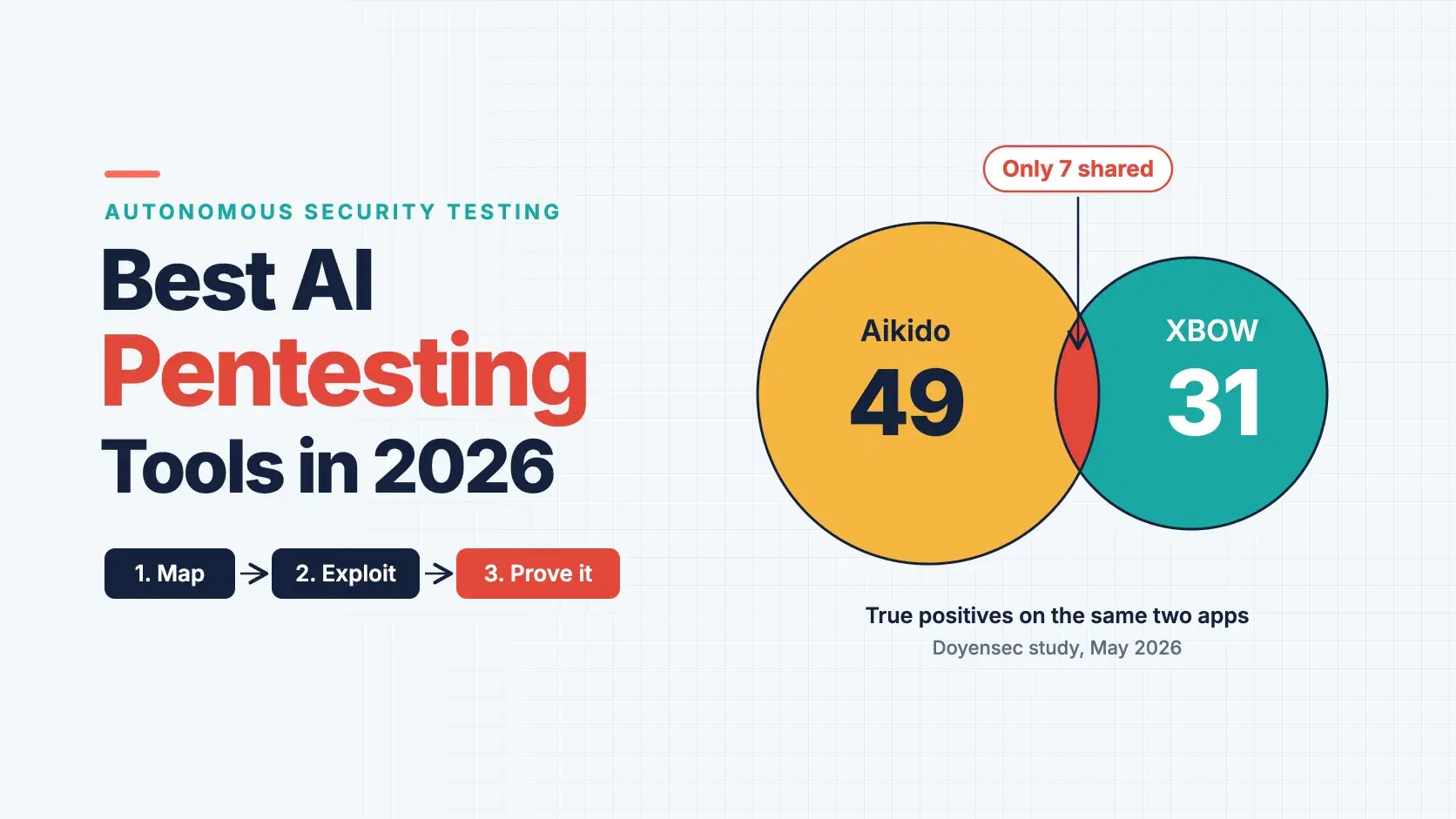
In May 2026 the application security firm Doyensec ran two AI pentesting platforms, Aikido and XBOW, against the same two open-source web apps at $4,000 a scan each. Both found real, exploitable bugs with very few false positives. Of the 73 distinct true positives the two reported, they agreed on 7. Aikido sponsored the study, which Doyensec discloses on page 3: the sponsor had input into the constraints but no role in collecting or presenting results.
What Teams Actually Run
No neutral adoption survey exists for AI pentesting yet, so the honest signals are money and repositories. Horizon3.ai raised a $250 million Series E at a $2 billion valuation on August 3, 2026, and TechCrunch reported roughly 7,200 customers. XBOW raised a $120 million Series C in March 2026 plus a $35 million extension in May, and RunSybil announced $40 million in funding on March 18, 2026.
GitHub stars on October 2, 2026 put Strix at 65,978, Shannon at 48,524, PentAGI at 25,185 and PentestGPT at 15,662. CAI, a 9,839-star framework from Alias Robotics, was archived in August 2026 with a README promising "No further releases, bug fixes, security patches or support," so check the license and last commit before you build on any of these.
The worked example throughout is a Series A SaaS company in Austin with one Next.js app and a REST API on AWS us-east-1, whose SOC 2 Type II auditor wants a pentest report this year.
What a Validated Finding Costs on the Same App
Doyensec published results for Fider 0.33.0 and Photoview 2.4.0, and Keygraph later ran its open-source Shannon agent against the same Photoview build. This script puts both datasets side by side:
JavaScript// What a validated finding cost on the same app, and how much two paid platforms overlapped. // Aikido and XBOW: Doyensec, "Comparing AI Application Security Testing Platforms" (May 2026, // sponsored by Aikido). Both tiers were $4,000 per scan at the time of the study. // Shannon: Keygraph's own run against the same Photoview 2.4.0 build (vendor-published). // Its cost is LLM spend only; engineer setup and triage time are not included. const photoview = [ { tool: "Aikido Standard", source: "Doyensec", usd: 4000, tp: 32, fp: 0 }, { tool: "XBOW Plus", source: "Doyensec", usd: 4000, tp: 7, fp: 0 }, { tool: "Shannon + Claude Opus 5", source: "Keygraph", usd: 115, tp: 23, fp: 1 }, { tool: "Shannon + Grok 4.6", source: "Keygraph", usd: 35.07, tp: 10, fp: 0 }, { tool: "Shannon + DeepSeek v4 Flash", source: "Keygraph", usd: 6.1, tp: 18, fp: 0 }, ] const usd = (n) => "$" + n.toLocaleString("en-US", { minimumFractionDigits: 2, maximumFractionDigits: 2 }) console.log("Photoview 2.4.0".padEnd(30) + "Cost".padStart(11) + "TP".padStart(5) + "FP".padStart(4) + " $/TP".padStart(11)) for (const r of photoview) { console.log(r.tool.padEnd(30) + usd(r.usd).padStart(11) + String(r.tp).padStart(5) + String(r.fp).padStart(4) + usd(r.usd / r.tp).padStart(11)) } // Doyensec matched identical findings between the two paid platforms by hand. const overlap = [ { app: "Fider 0.33.0", aikido: 17, xbow: 24, same: 3 }, { app: "Photoview 2.4.0", aikido: 32, xbow: 7, same: 4 }, ] overlap.push(overlap.reduce( (t, o) => ({ app: "Both apps", aikido: t.aikido + o.aikido, xbow: t.xbow + o.xbow, same: t.same + o.same }), { app: "", aikido: 0, xbow: 0, same: 0 }, )) console.log("") console.log("App".padEnd(18) + "Aikido".padStart(8) + "XBOW".padStart(6) + "Same".padStart(6) + "Union".padStart(7) + " Best single tool") for (const o of overlap) { const union = o.aikido + o.xbow - o.same const best = Math.max(o.aikido, o.xbow) console.log( o.app.padEnd(18) + String(o.aikido).padStart(8) + String(o.xbow).padStart(6) + String(o.same).padStart(6) + String(union).padStart(7) + ` ${best}/${union} = ${Math.round((best / union) * 100)}%`, ) }
Real output:
textPhotoview 2.4.0 Cost TP FP $/TP Aikido Standard $4,000.00 32 0 $125.00 XBOW Plus $4,000.00 7 0 $571.43 Shannon + Claude Opus 5 $115.00 23 1 $5.00 Shannon + Grok 4.6 $35.07 10 0 $3.51 Shannon + DeepSeek v4 Flash $6.10 18 0 $0.34 App Aikido XBOW Same Union Best single tool Fider 0.33.0 17 24 3 38 24/38 = 63% Photoview 2.4.0 32 7 4 35 32/35 = 91% Both apps 49 31 7 73 49/73 = 67%
Read the cost column carefully. The Shannon rows are the vendor's own run and count model spend only, and a true positive is not a unit of value: one pre-auth SQL injection outweighs ten missing headers. The overlap is the sturdier finding. Doyensec calls its matching a quick review, so real overlap may be higher, but the best single platform still caught only two thirds of what the pair found. A second engine buys more coverage than a retest from the same one.
Aikido Attack
Aikido is the only vendor here that publishes a per-test price. Its Typical Pentest is $4,000 per assessment for one application and its primary APIs, white-box, with free retests for 6 months and a "No High or Critical Finding = Don't Pay" guarantee. Rightsized tests run $50 to $30,000+, scoped from your repositories.
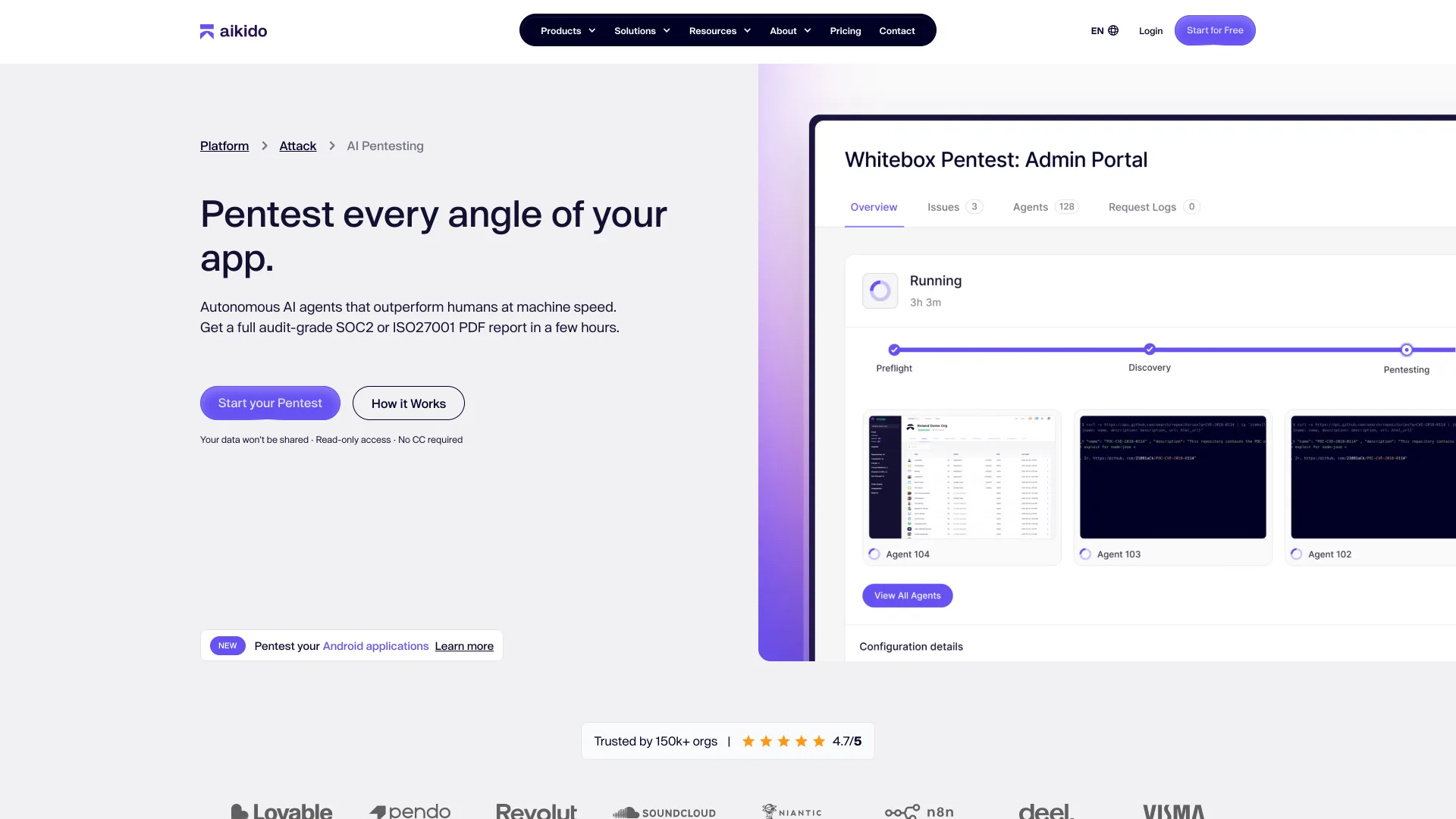
In Doyensec's study Aikido took under 20 minutes to configure, reported 49 true positives to XBOW's 31, and wrote somewhat clearer replication steps. Reports come in management, customer and auditor formats, which is what the Austin company's auditor will ask for.
What it does not do well: it overstated the severity of all eleven Photoview findings Doyensec re-scored, though overall severity accuracy was a near-tie, 69% to XBOW's 68%. It had 2 false positives to XBOW's 1, and black-box or gray-box tests cost extra.
XBOW
XBOW is the name most people meet first here; its homepage says it was the "First autonomous system to rank #1" on HackerOne, in June 2025. The Seattle company's $120 million Series C was led by DFJ Growth and Northzone.
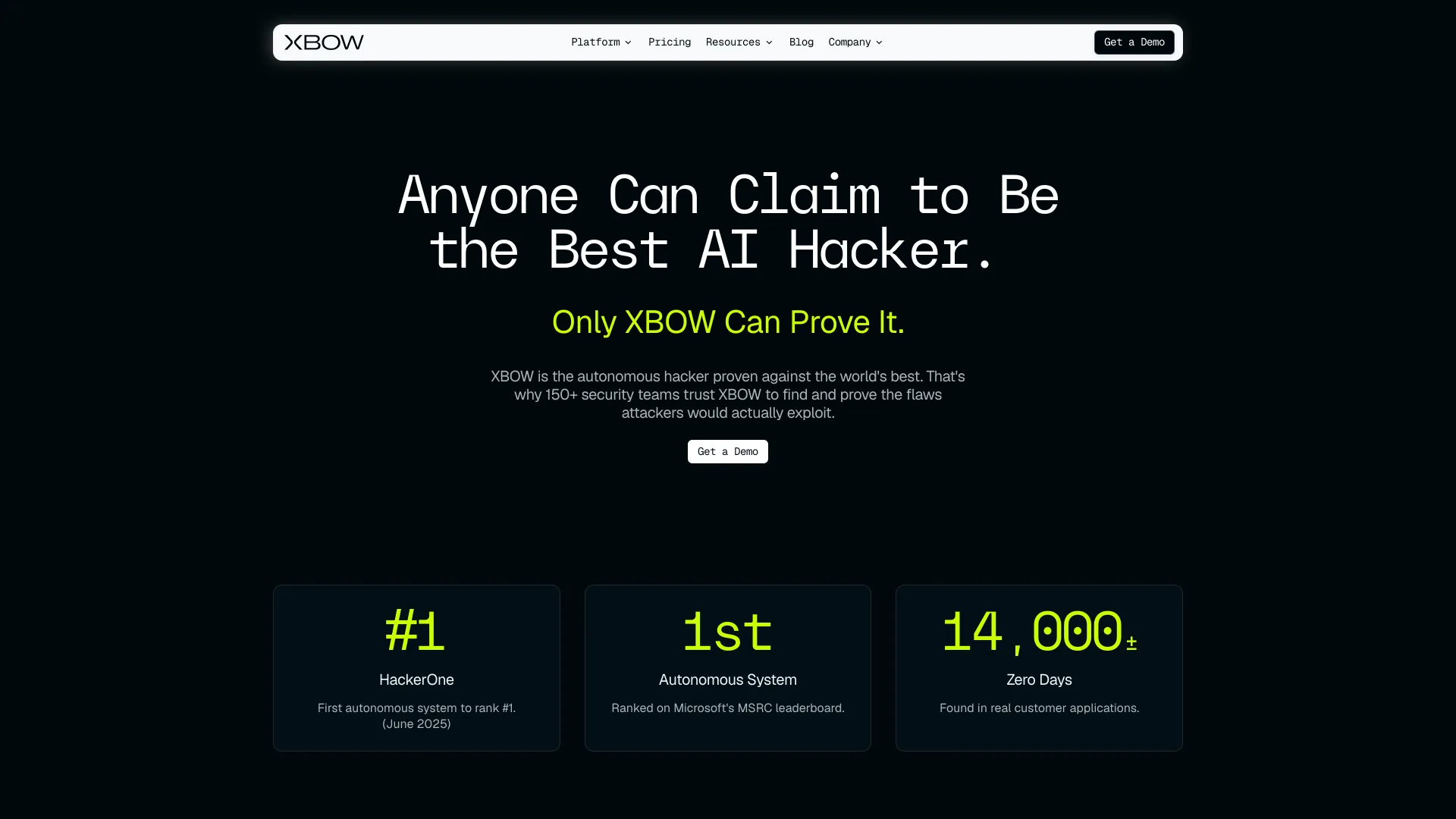
Its strength in the study was precision: 1 false positive against 31 true positives, plus a broader spread of vulnerability classes on Fider.
What it does not do well: buying it. The $4,000 Plus and $8,000 Premium tiers listed during Doyensec's study are gone; on October 2, 2026 the pricing page says pricing is "scoped to your environment" and shows a quote form. Doyensec waited for a sales representative, sent over 22 emails to support, saw the Fider process take more than a week, then waited five days for the report. XBOW is also sold on the AWS, Google, Oracle and Microsoft marketplaces.
Horizon3.ai NodeZero
NodeZero from Horizon3.ai is not a web app tester first. You deploy a NodeZero host inside your network from a preconfigured OVA virtual machine, then run internal, external or Kubernetes pentests that hunt for exploitable attack paths, including weak Active Directory credentials.
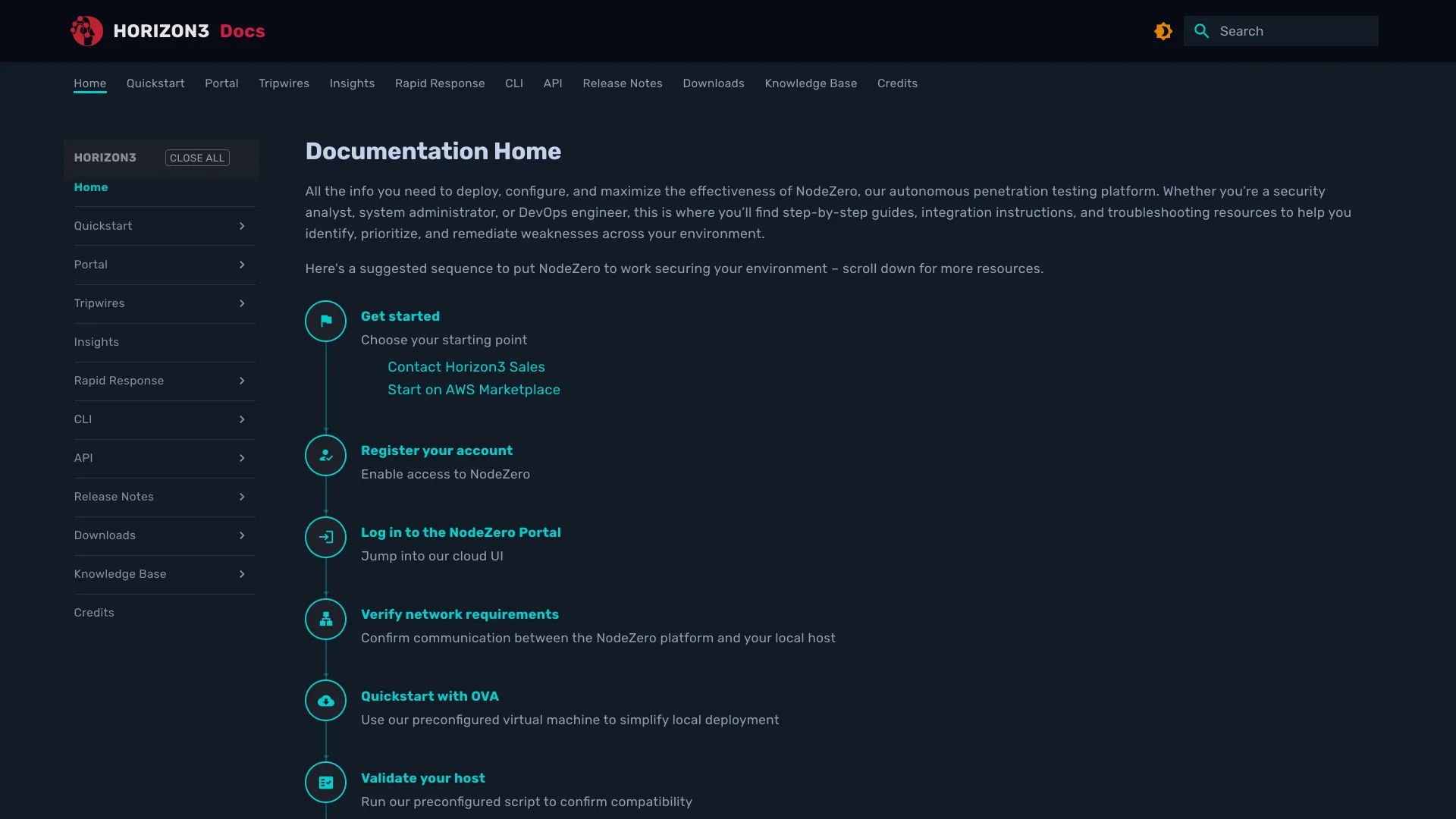
It sells as Flex for episodic tests, Core for continuous ones, plus Pro and Elite, with web app pentesting as an add-on, and promises unlimited scope and frequency within a subscription.
What it does not do: publish a price, or test your Next.js app by default. For the Austin company, with no office network or domain controller, most of what NodeZero does well is out of scope.
RunSybil
RunSybil is the newest well-funded entrant, and its pitch is chaining. Its March 18, 2026 announcement names Khosla Ventures as lead, with the Anthology Fund from Anthropic and Menlo Ventures participating, and lists Cursor, Notion and Baseten as customers.
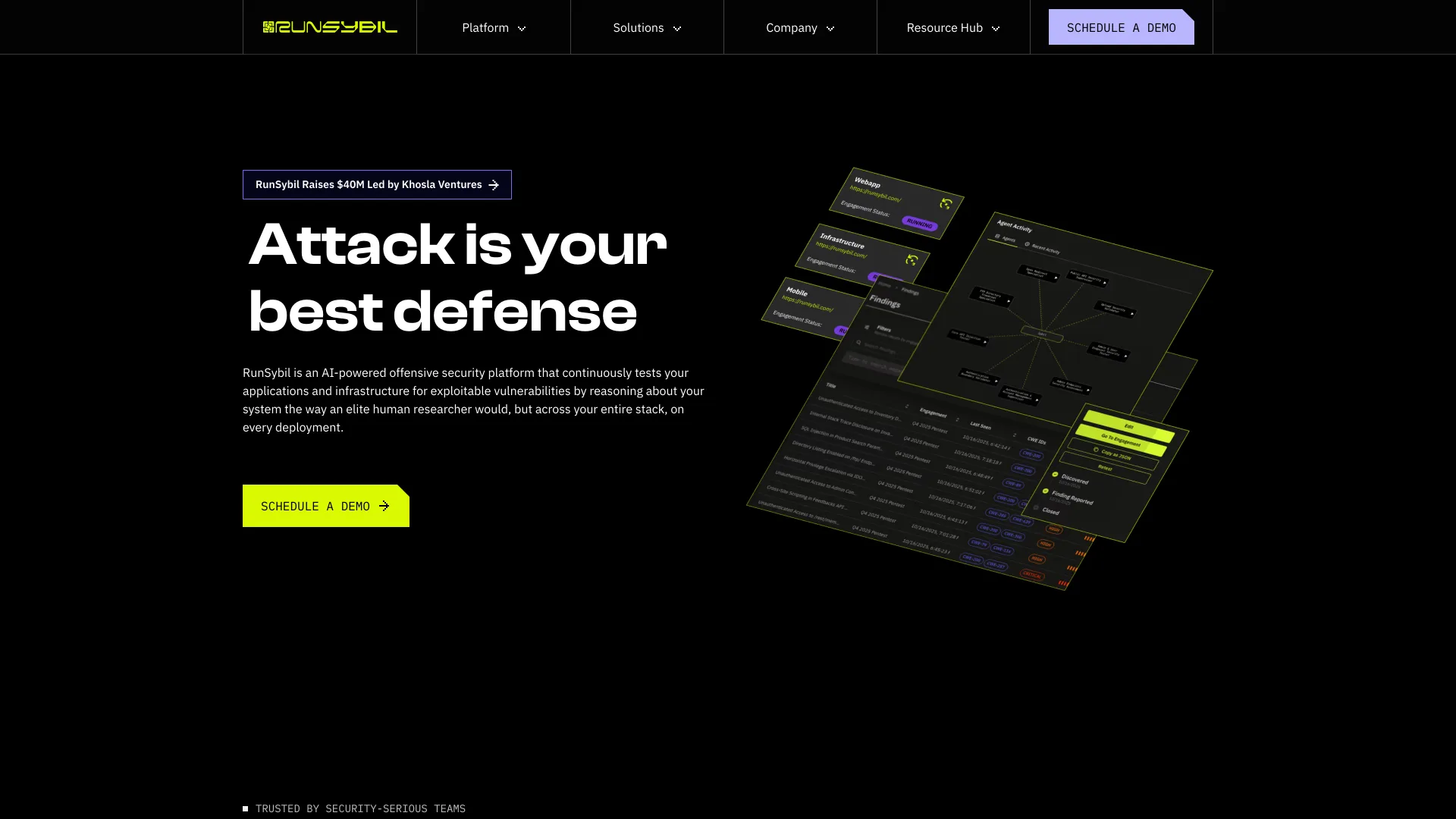
Its agent, Sybil, covers code, APIs, cloud and infrastructure on every deployment. The company's own example: a lower-severity bug led it to an endpoint that let anyone access all customers with one unauthenticated request.
What it does not do: publish a price or a method. Every path ends in a demo request, and as of October 2, 2026 the only comparisons I found that include it were written by competing vendors.
Strix
Strix is the most-starred open-source pentester in this list, Apache-2.0 licensed, at v1.6.2 since September 5, 2026. It runs teams of agents in a Docker sandbox with an intercepting proxy and a browser, and validates findings with working proofs of concept.
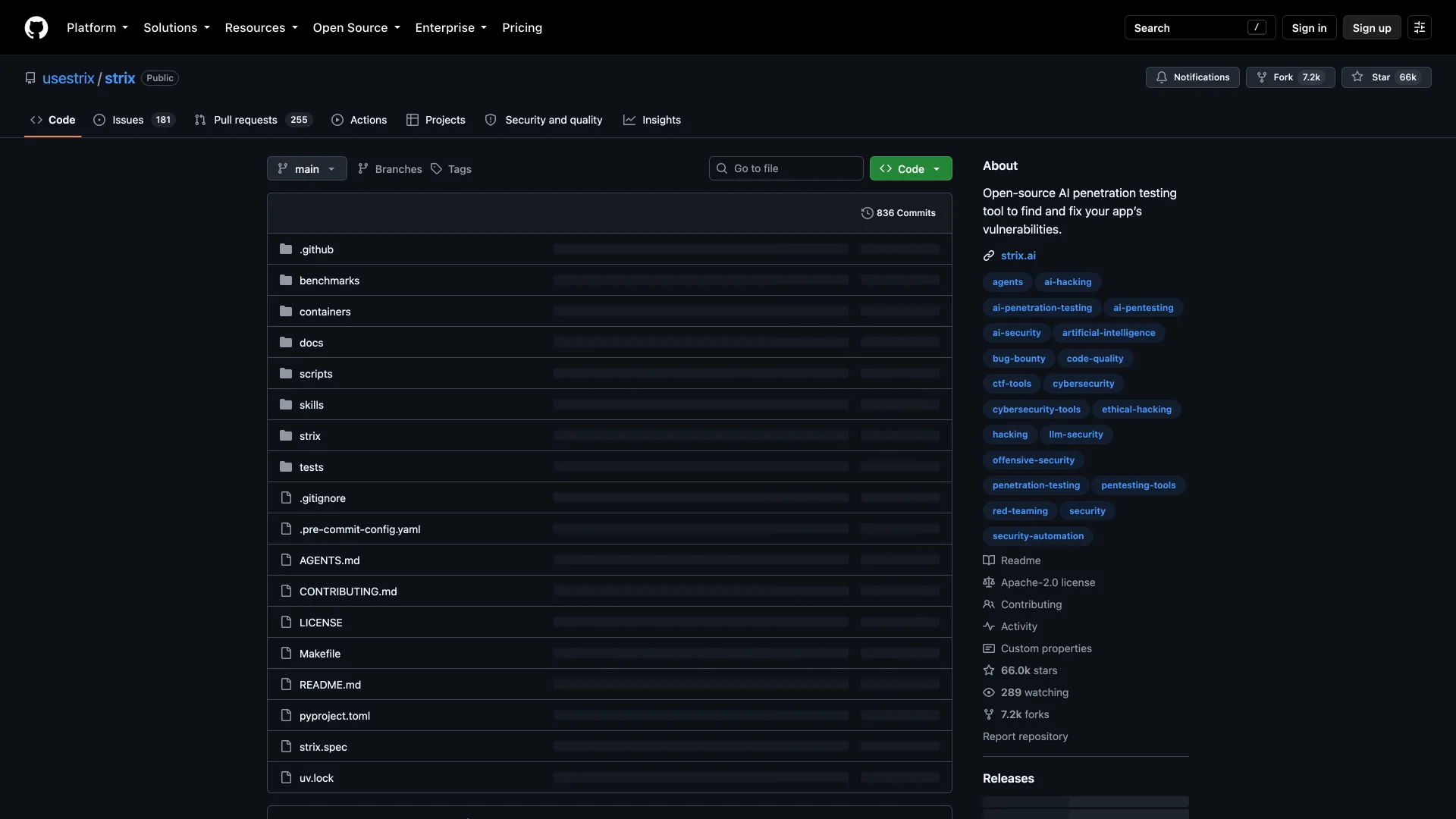
You bring Docker and a key for any supported model provider, and its GitHub Actions integration can block a pull request on a finding. Hosted Strix Cloud Pro is $29 per seat per month, with pentests "billed separately, pay per test."
What it does not do: publish that per-test price, or cap your own model bill when you self-host. Neither benchmark above included it.
Shannon
Shannon from Keygraph is white-box: it reads your source, attacks the running app, and follows the rule "No exploit, no report." It is AGPL-3.0, v3.3.0 shipped September 21, 2026, and it needs Docker, Node.js 18+ and your own model key, local models through Ollama or vLLM included.
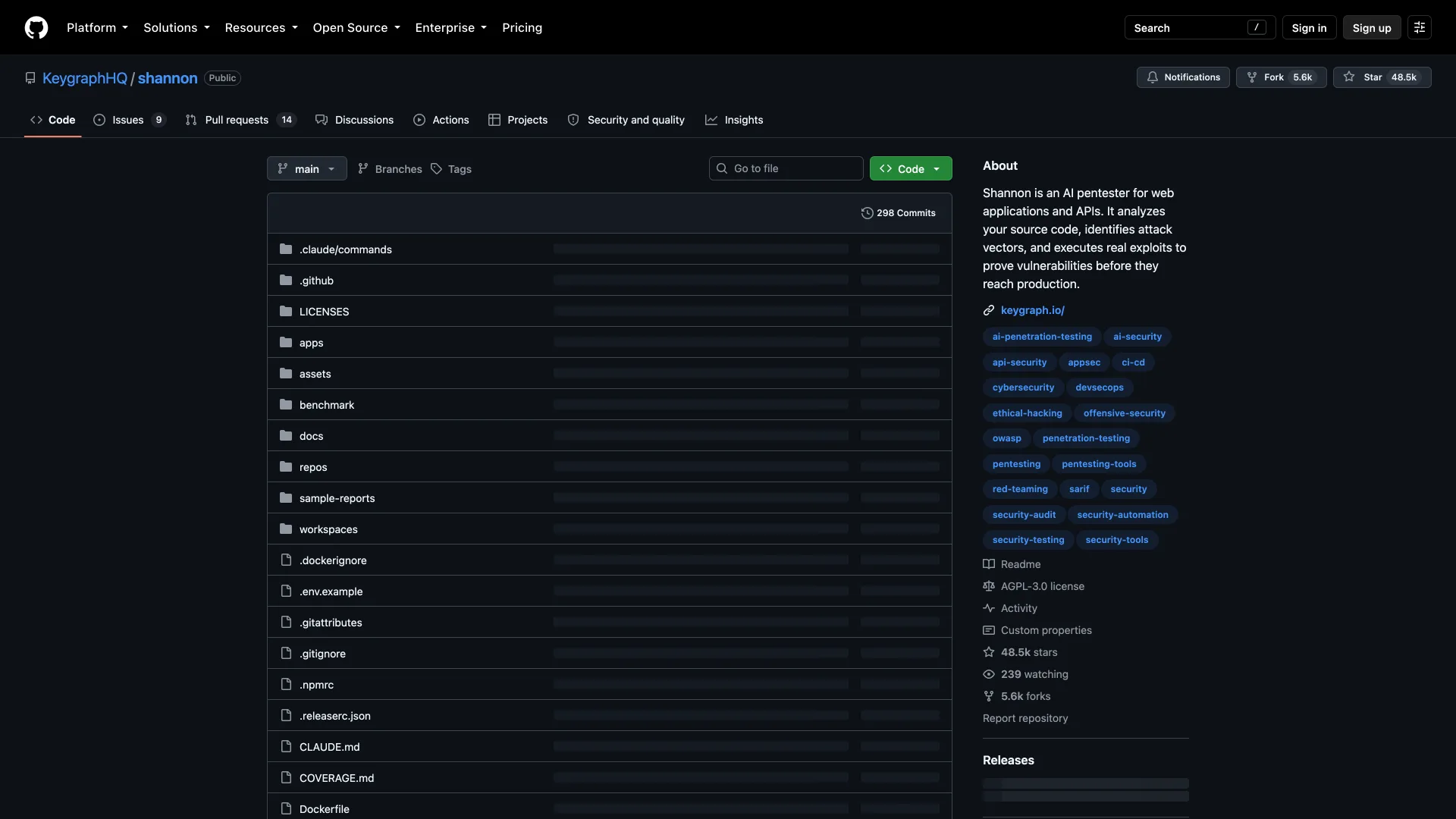
On Photoview, Keygraph reports Shannon with Claude Opus 5 caught 6 of the 7 vulnerabilities the project later patched, against 3 of 7 for Grok 4.6 and DeepSeek v4 Flash. A run takes roughly 1 to 1.5 hours, writes SARIF 2.1.0 and fails CI on Critical or High findings by default.
What it does not do: stay passive. Its agents create users and mutate data, so run it on staging, and the README warns that Anthropic and OpenAI cyber safeguards can interrupt a scan. AGPL terms apply if you modify it and offer it over a network. Hosted Keygraph Pro is $50 per developer per month, and a $0 Community Program covers US nonprofits and pre-Series-A startups up to 20 active developers.
PentAGI
PentAGI is the self-hosted, network-flavored option, with MIT-licensed source and v2.1.0 released May 29, 2026. A Docker Compose stack with a web UI drives more than 20 bundled tools, including nmap, Metasploit and sqlmap, from sandboxed containers.
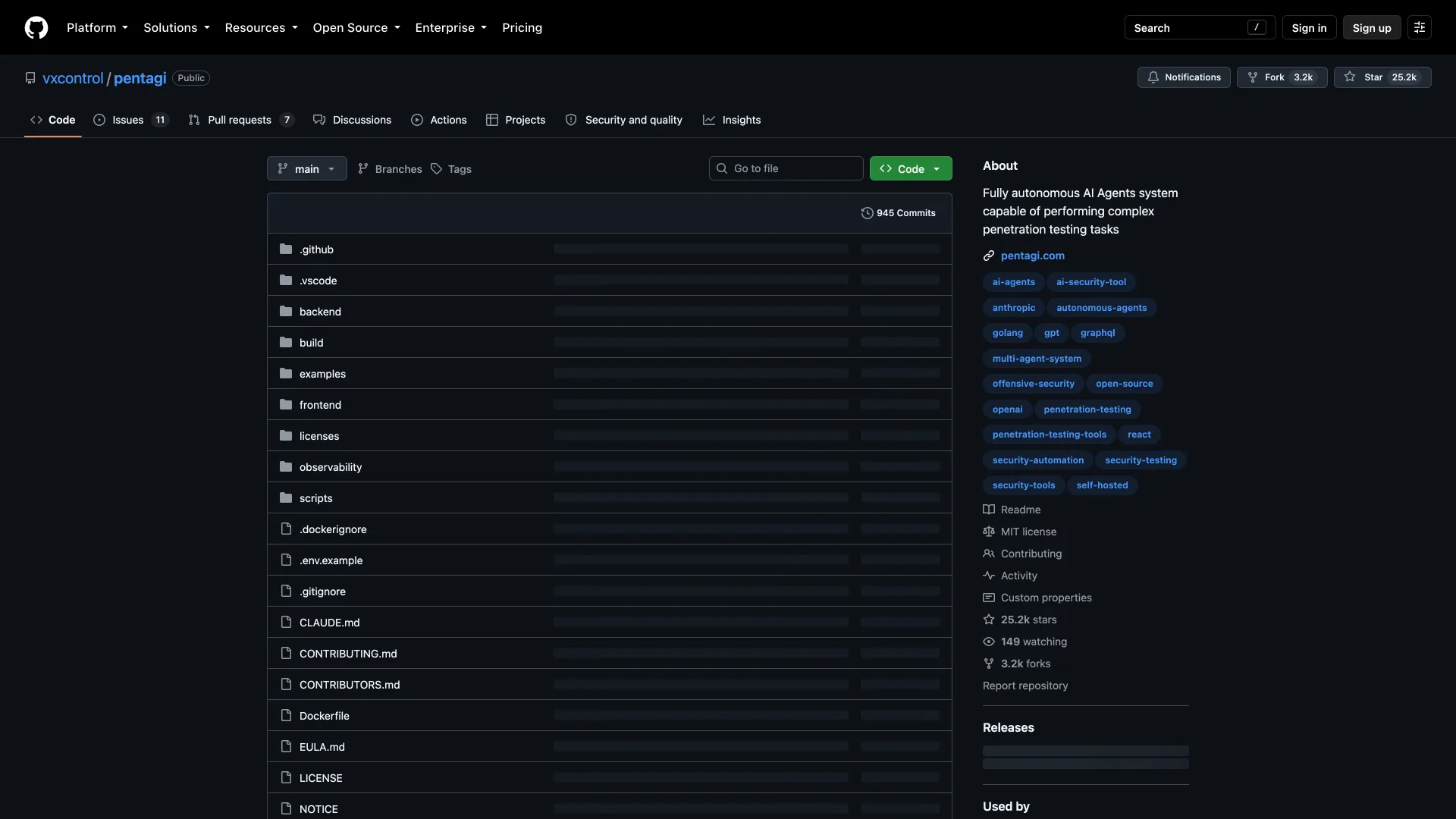
It keeps memory in PostgreSQL with pgvector and talks to Ollama, OpenAI, Anthropic, Gemini, Bedrock and DeepSeek. The floor is 2 vCPUs, 4 GB of RAM and 20 GB of disk.
What it does not do: run itself, or stay purely MIT. It is several services to operate, and an EULA covering the Docker images and web UI grants a revocable license for lawful pentesting only; MIT prevails for the source itself. No published benchmark covers it.
Side by Side
| Tool | Target | Published price | License | Version or form |
|---|---|---|---|---|
| Aikido Attack | Web apps, APIs | $4,000 per assessment | Proprietary | SaaS |
| XBOW | Web apps, APIs | Quote only | Proprietary | SaaS |
| NodeZero | Networks, AD, cloud | Quote only | Proprietary | SaaS plus OVA host |
| RunSybil | Apps, cloud, infra | Quote only | Proprietary | SaaS |
| Strix | Web apps, APIs | $0, Cloud Pro $29/seat/mo | Apache-2.0 | v1.6.2 (Sep 5, 2026) |
| Shannon | Web apps, APIs | $0, Keygraph Pro $50/dev/mo | AGPL-3.0 | v3.3.0 (Sep 21, 2026) |
| PentAGI | Networks, web apps | $0 | MIT source, EULA on images | v2.1.0 (May 29, 2026) |
How to Choose Without Buying Twice
- Write down who reads the report. An auditor or customer needs a vendor-issued report, so ask your auditor whether an AI-generated one satisfies them before you buy. Engineers can live with SARIF from an open-source run.
- Split the web app from the network. Active Directory, an office network or Kubernetes in scope points at NodeZero or PentAGI; one app and an API points at the rest.
- Run an open-source agent against staging first. Shannon or Strix with a mid-priced model costs a few dollars and shows your finding volume, and whether your app survives agents creating users.
- Buy the second opinion from a different engine. With 7 shared findings out of 73, a second vendor adds more than a retest from the first.
- Price the retest, not just the test. Aikido includes 6 months of retests; in Doyensec's purchase, XBOW included one retest within 30 days.
- Keep a human for business logic. Shannon's own README says it is "not a replacement for human pentesters."
Which One Should You Actually Use?
One web app and an auditor waiting, like the Austin example: Aikido's $4,000 Typical Pentest for the report, plus Shannon or Strix on staging in CI between tests.
Internal networks, Active Directory or Kubernetes in scope: NodeZero, or PentAGI if it must be self-hosted and free.
No budget, a staging environment and a model key: Strix if Apache-2.0 matters because you might embed it; Shannon if you want white-box exploitation and SARIF gating and AGPL-3.0 is fine.
An enterprise with committed cloud spend: XBOW through your cloud marketplace agreement, or a RunSybil demo if chaining across code and infrastructure is the gap.
A pre-Series-A startup or US nonprofit: Keygraph's Community Program, $0 for up to 20 active developers.
Conclusion
The change in 2026 is that an autonomous pentest became a line item: $4,000 a test from a vendor, or a few dollars of tokens from an agent you run yourself. The first third-party comparison also showed that two good tools disagree far more than they agree.
Before you renew, ask the vendor for its findings against a public target such as Photoview 2.4.0 and diff them against Doyensec's published spreadsheet. A vendor that will not run a public app will not show you its blind spots on yours.
Related DevToolLab Tools
- CVSS Calculator - re-score an AI pentester's findings, since both platforms in the Doyensec study overstated some severities.
- Secret Scanner - sweep a repository for live keys before a white-box agent sends its source to a model provider.
- IAM Policy Analyzer - find over-broad AWS permissions an agent could chain from a web bug into your us-east-1 account.
- CSP Analyzer - check whether your Content-Security-Policy would have blocked the reported cross-site scripting.
Related Guides
- Best DAST Tools in 2026 - ZAP, Nuclei and StackHawk, the scanners to run before an exploit-validating agent.
- Best AI Code Security Tools - the static half, which white-box agents like Shannon now blend into.
- What Is SOC 2 Type 2 - what the auditor in the worked example is evaluating.
- Best SOC 2 Compliance Automation Platforms - the platforms that bundle a pentest into the audit.