
Choosing a coding model used to mean choosing an API vendor. That changed over 2026: the open-weight labs now ship downloadable frontier-class models, and a team with its own GPUs can run one without sending a line of source code to a third party. The catch is that comparing them to a closed frontier model is much harder than the leaderboards suggest.
Here is the concrete problem. Anthropic's Claude Fable 5.1, announced in September 2026, reports Terminal-Bench 4.0 at 55.8% and publishes no SWE-bench Verified score. Moonshot's Kimi K3, the largest set of open weights you can download today, reports Terminal-Bench 2.1 at 88.3 and also publishes no SWE-bench Verified score. Neither number compares to the other, and the widely repeated claim that Fable scores 95% on SWE-bench Verified comes from third-party leaderboards, not Anthropic.
Open Weight Coding Models Compared
Every number is from the model's own card, or where marked, an independent harness. Compare down a column, never across.
| Model | Params (active) | License | Context | SWE-bench Verified | Terminal-Bench 2.1 | DeepSWE |
|---|---|---|---|---|---|---|
| Claude Fable 5.1 (reference) | not disclosed | proprietary | 1M | not published | 85.02% (Vals AI) | not published |
| Kimi K3 | 2.8T (104B) | Kimi K3 (revenue-gated) | 1M | not published | 88.3 | 67.5 |
| DeepSeek V4 Pro | 1.6T (49B) | MIT | 1M | 80.6% | not published | not published |
| GLM-5.3 | 753B | glm-5.3 (review above $10B) | 1M in evals | not published | 88.2 | 66.9 |
| MiniMax M2.5 | 229B (~10B) | Modified-MIT | not stated | 80.2% | not published | not published |
| Qwen3.8-27B | 27B dense | Apache 2.0 | 262K | not published | 73.0 | 42.2 |
Why You Cannot Directly Compare Fable 5.1 to Open Weights
Anthropic's benchmark table for Claude Fable 5.1 reports Terminal-Bench 4.0 at 55.8%, Terminal-Bench-Science 0.1 at 52.6%, CursorBench 3.2.0 at 73.4% and AutomationBench at 31.4%. It does not report SWE-bench Verified, SWE-bench Pro or LiveCodeBench, and no open-weight model appears anywhere in its comparisons, which are Claude Opus 5 (Terminal-Bench 4.0 52.3%), Claude Fable 5 (42.0%) and GPT-5.6 Sol (37.3%).
The open-weight labs report nearly the opposite set: SWE-bench Verified, SWE-bench Pro, DeepSWE and Terminal-Bench, but at older Terminal-Bench versions.
That version detail matters more than anything else on this page. Terminal-Bench is a family, not one benchmark, and difficulty jumps hard between releases. GLM-5.3 scores 88.2 on Terminal Bench 2.1 and 28.3 on Terminal Bench 3.0, both on the same model card. Claude Fable 5.1 scores 55.8% on Terminal-Bench 4.0. Read those three as a ranking and you would conclude GLM-5.3 beats Fable 5.1 by 32 points and also loses by 27. Match the version first.
The One Same-Harness Comparison That Exists
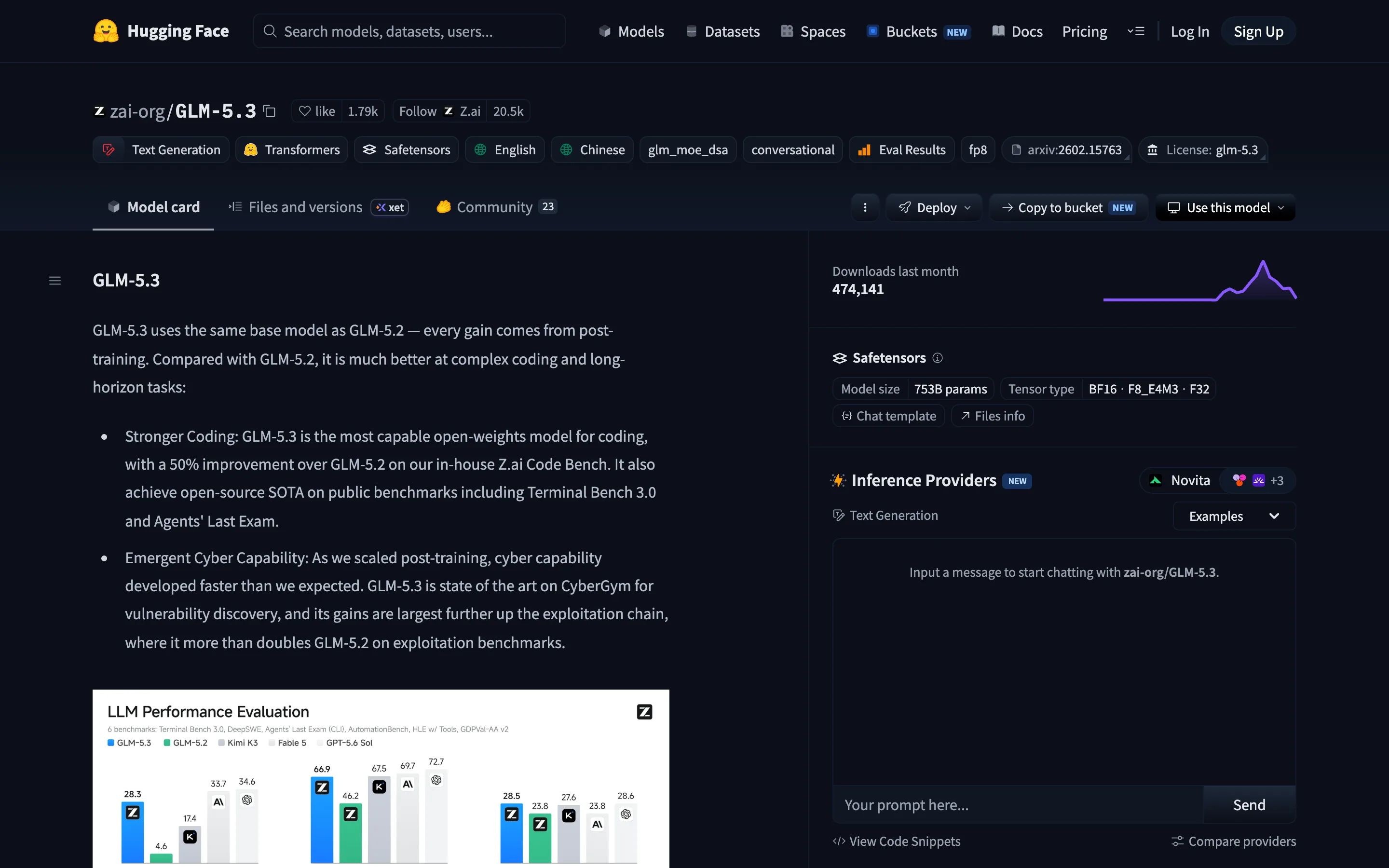
Z.ai's GLM-5.3 model card is unusually useful here, because it runs Claude Fable 5, GPT-5.6 Sol, Kimi K3 and its own models through the same six benchmarks and publishes the chart. On Terminal Bench 3.0 it puts Claude Fable 5 at 33.7, GLM-5.3 at 28.3 and Kimi K3 at 17.4. On DeepSWE it puts Claude Fable 5 at 69.7, Kimi K3 at 67.5 and GLM-5.3 at 66.9. On Agents' Last Exam (CLI) the order inverts: GPT-5.6 Sol 28.6, GLM-5.3 28.5, Kimi K3 27.6, Claude Fable 5 23.8.
Two caveats keep that honest: Z.ai ran the harness and has an interest in the result, and it benchmarks Claude Fable 5, not 5.1. Anthropic reports 5.1 as a large jump on exactly this work, with Terminal-Bench 4.0 moving from 42.0% to 55.8% and Terminal-Bench-Science 0.1 from 24.7% to 52.6%.
The independent Vals AI harness measures Claude Fable 5.1 at 85.02% on Terminal-Bench 2.1 (second of 63 models, behind GPT-5.6 Sol at 85.77%) and 90.52% on LiveCodeBench (first of 143). Set that 85.02% against the 88.2 and 88.3 that Z.ai and Moonshot self-report on the same Terminal-Bench version and the gap looks small, with one qualifier that matters: one number is independently measured, the other two are vendor-reported.
Kimi K3: The Closest Thing to Frontier You Can Download
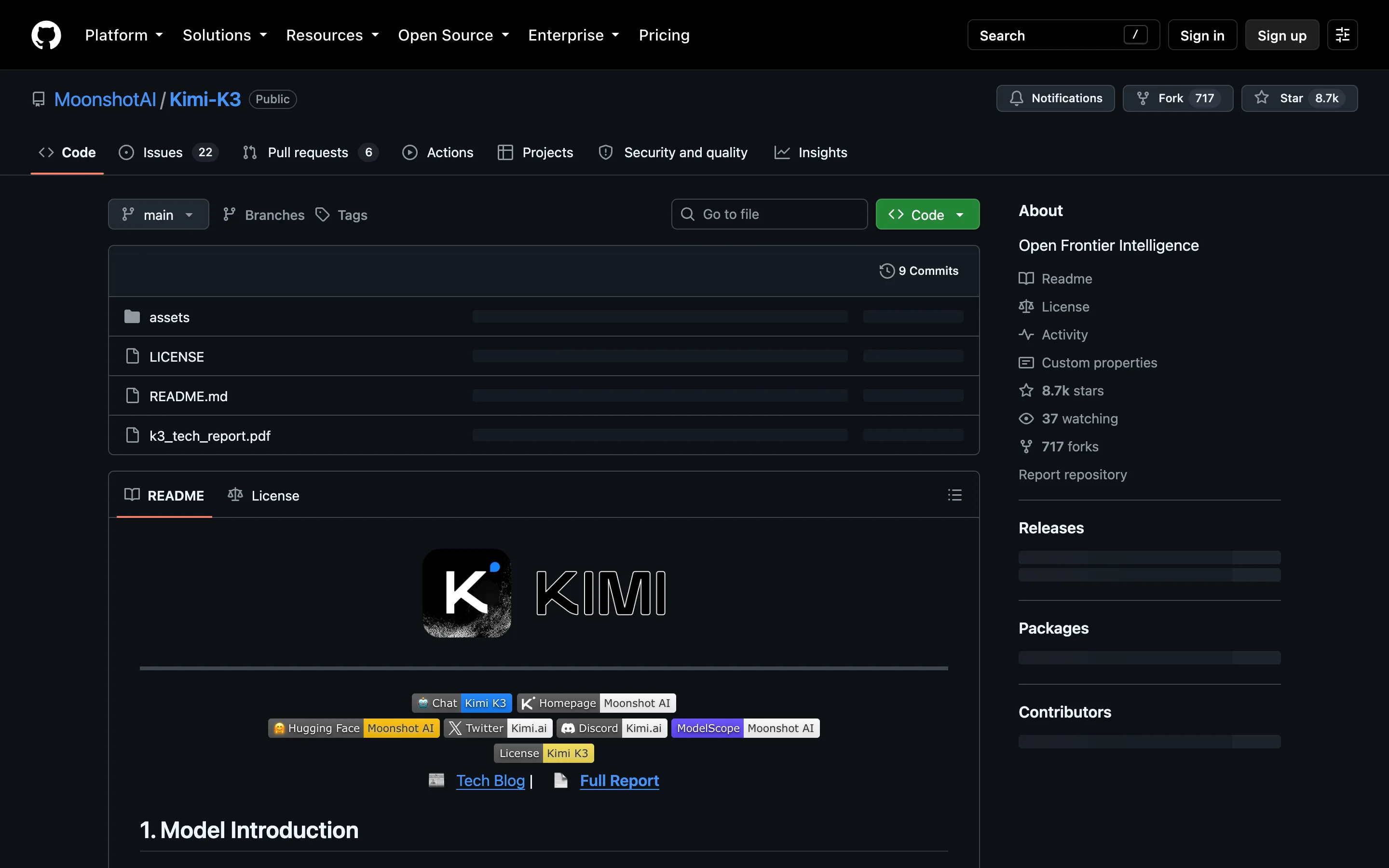
Kimi K3 from Moonshot AI is a 2.8T-parameter mixture-of-experts model with 104B active parameters per token, native vision, and a 1,048,576-token context window. Its weights went public in July 2026 under the bespoke Kimi K3 License, which is open weight but not OSI open source: it gates commercial inference above a revenue threshold and makes large products display "Kimi K3" in their interface.
On coding it reports DeepSWE 67.5, FrontierSWE 81.2, ProgramBench 77.8, Terminal-Bench 2.1 88.3 and Kimi Code Bench 2.0 72.9. Its AutomationBench score of 30.8 sits within a point of the 31.4% Anthropic reports for Fable 5.1, though neither lab states a matching harness version.
The practical problem is size: at 2.8T parameters this is a datacenter model. Rent it from a hosted provider unless you run a multi-node GPU cluster.
DeepSeek V4 Pro: The Strongest Truly Open License
DeepSeek V4 shipped in two variants in 2026, and both are MIT licensed with weights on Hugging Face. That makes it the most permissive option on this list by a wide margin: no revenue gate, no attribution requirement, no security review. V4-Pro is 1.6T parameters with 49B activated; V4-Flash is 284B with 13B activated. Both support a one-million-token context.
V4-Pro is also the only model here that publishes the benchmark most developers actually search for. Its card reports SWE-bench Verified at 80.6%, SWE-bench Pro at 55.4%, SWE-bench Multilingual at 76.2%, Terminal Bench 2.0 at 67.9% and LiveCodeBench Pass@1 at 93.5, alongside a Codeforces rating of 3206.
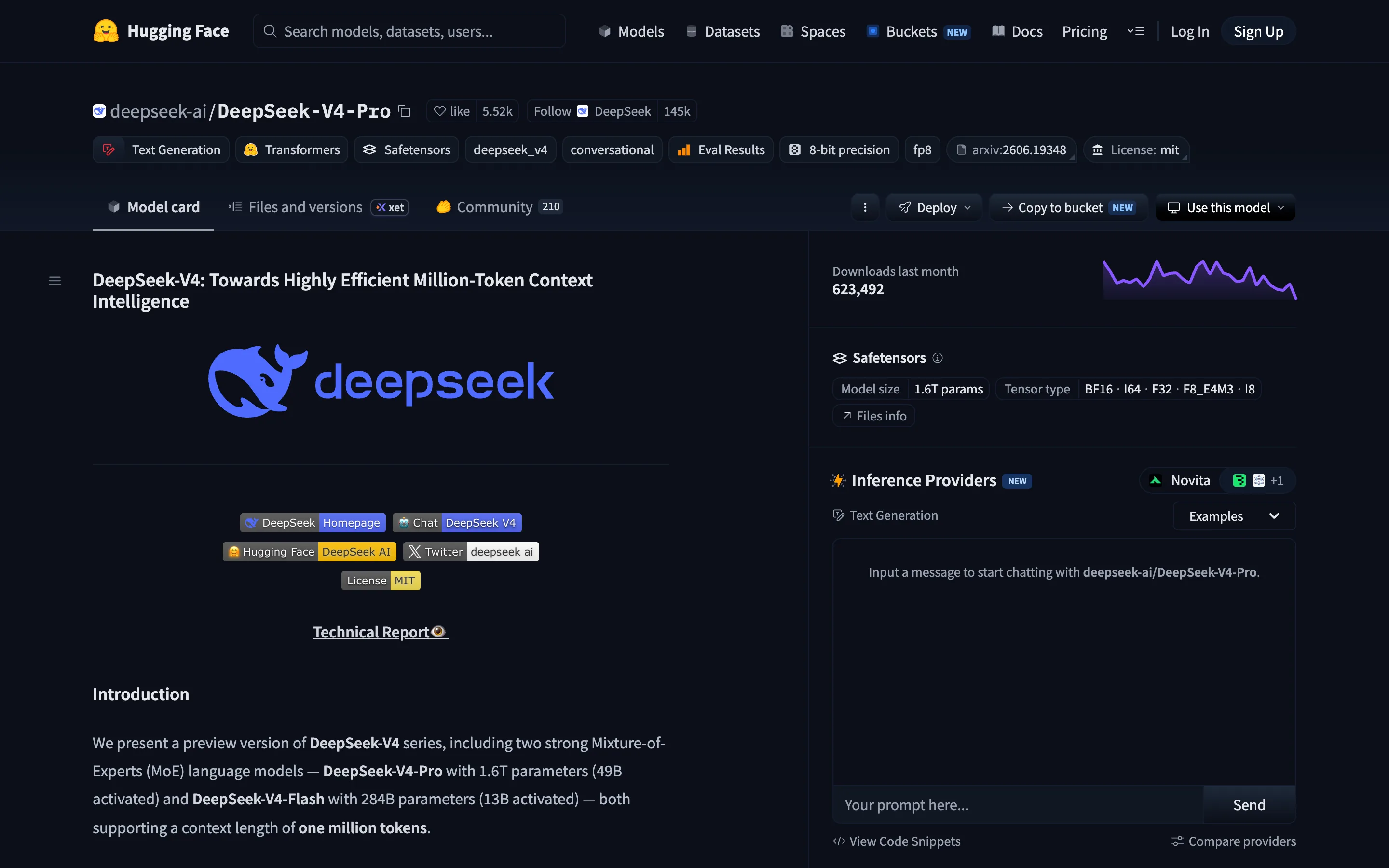
Note that the card calls the series a preview, and its LiveCodeBench 93.5 is self-reported while Fable 5.1's 90.52% is Vals-measured. Different harnesses, so treat the ordering as suggestive.
GLM-5.3: Tuned Hard for Agentic Coding
GLM-5.3 from Z.ai is a 753B-parameter model whose card states plainly that it shares a base model with GLM-5.2 and that every gain comes from post-training. Z.ai claims it is the most capable open-weights model for coding, with a 50% improvement over GLM-5.2 on its in-house Z.ai Code Bench.
The published numbers are Terminal Bench 2.1 at 88.2, Terminal Bench 3.0 at 28.3, DeepSWE (v1.1) at 66.9, FrontierSWE at 78.1, SWE-Marathon (v1.1) at 42.5 and AutomationBench (v1.0.6) at 48.2. The weights arrived roughly two weeks after the API launch because Z.ai held them for a safety review, which is unusual among open-weight labs. The license is a bespoke "glm-5.3" license, not MIT or Apache, and very large model-as-a-service providers must pass a Z.ai security review before commercial use.
MiniMax M2.5: The Cost-per-Task Winner
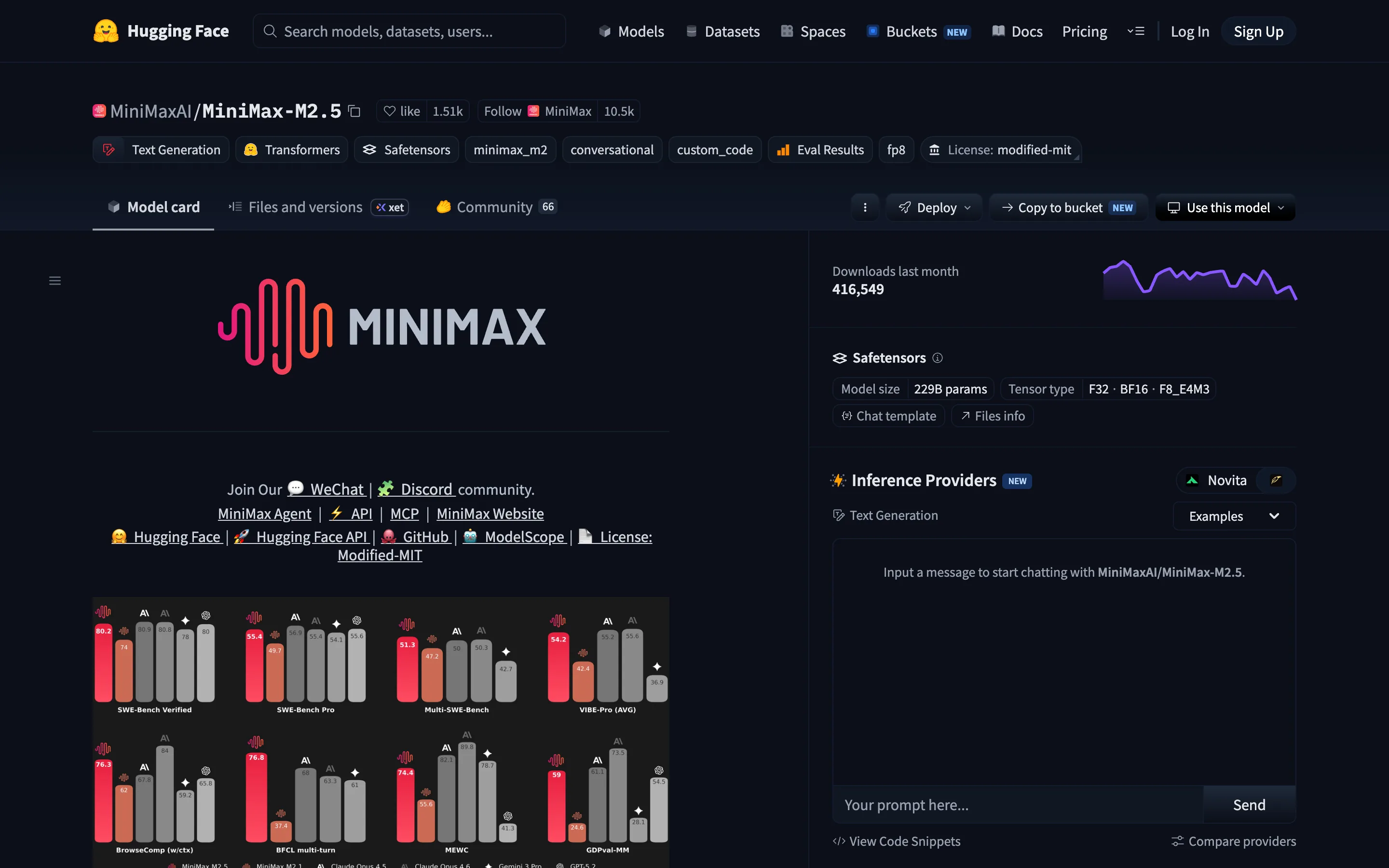
MiniMax M2.5 is the interesting one for teams watching a bill. It is 229B total parameters with only about 10B active per token, released under a Modified-MIT license, and it reports SWE-bench Verified at 80.2%, SWE-bench Pro at 55.4% and Multi-SWE-Bench at 51.3%.
The comparison set MiniMax chose is what makes that notable: its own chart puts M2.5's 80.2% against Claude Opus 4.5 at 80.9% and Claude Opus 4.6 at 80.8%. The best open weights are landing at roughly last-generation Opus level on SWE-bench Verified, not at Fable level. MiniMax also claims M2.5 finishes the benchmark in runtime comparable to Opus 4.6 at a fraction of the cost. At 10B active parameters it is the cheapest model here to serve at throughput; MiniMax recommends SGLang, with vLLM as an alternative.
Qwen3.8-27B: The One That Runs on Your Desk
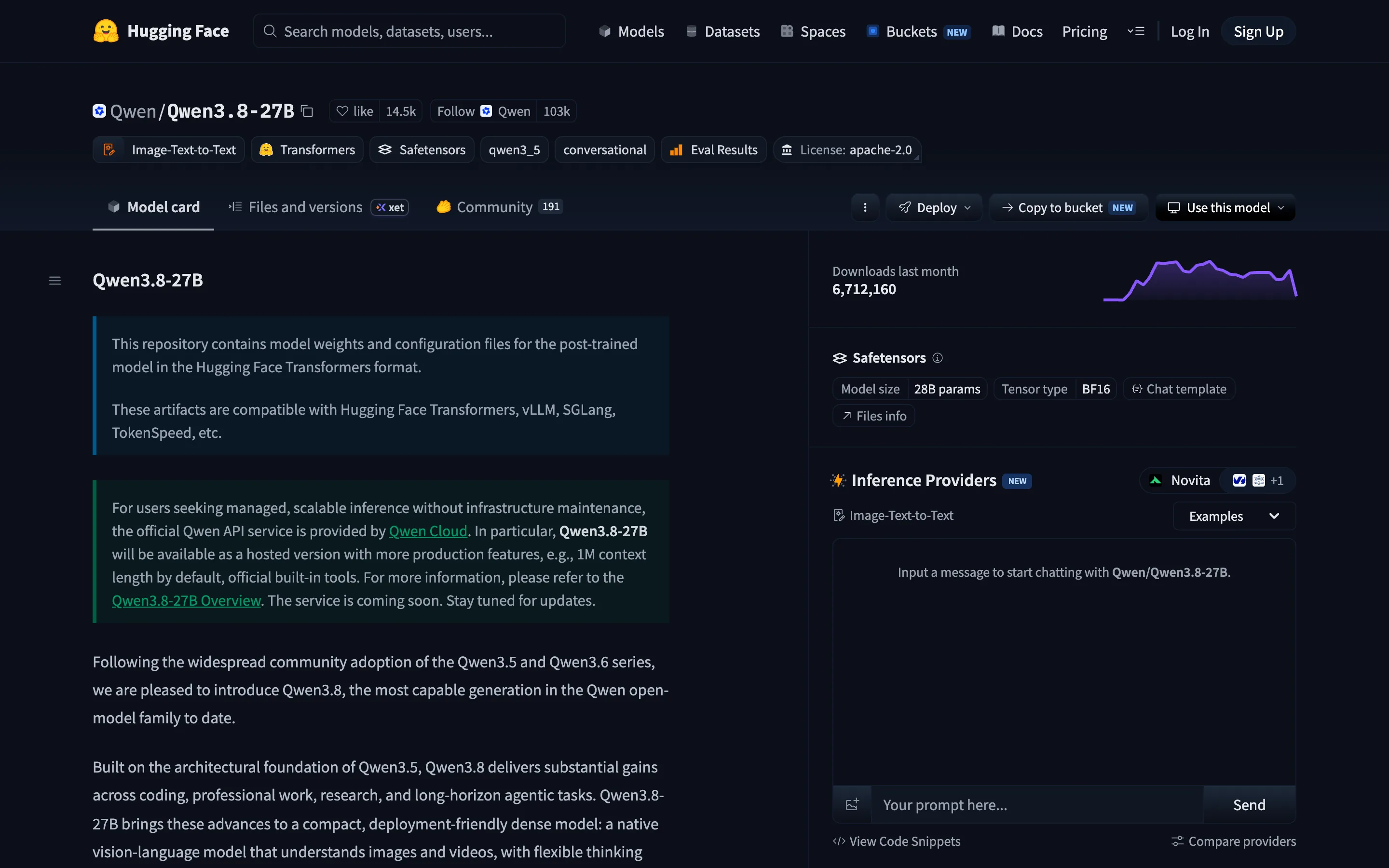
Every model above needs serious infrastructure. Qwen3.8-27B is the exception, and it is the only entry here under a plain Apache 2.0 license. It is a dense 27B-class vision-language model with a 262,144-token native context, released in August 2026, and it is compatible with Transformers, vLLM, SGLang and TokenSpeed out of the box.
Its official card reports Terminal-Bench 2.1 at 73.0 (up from 63.4 in the previous generation), SWE-bench Pro at 61.7, DeepSWE 1.1 at 42.2, OSWorld-Verified at 84.3 and LiveCodeBench v6 at 90.3. That SWE-bench Pro figure is higher than the 55.4 both DeepSeek V4 Pro and MiniMax M2.5 report, from a model two orders of magnitude smaller. Harnesses may differ, but it makes 27B dense a serious local default.
At 4-bit quantization a 27B dense model needs roughly 14 to 16 GB of VRAM before the KV cache, which fits one 24 GB consumer card such as an RTX 4090.
What Each Option Costs to Run
Claude Fable 5.1 is priced at $10.00 per million input tokens and $50.00 per million output tokens, with cache reads at $0.25 per million. No hardware to buy, but Fable 5.1 requires 30-day data retention and is not available under zero data retention unless Anthropic expressly authorizes it.
Open weights invert that trade: the license costs nothing, your code never leaves your infrastructure, and you pay in GPUs instead. That bill scales with active parameters, not total parameters, which is why MiniMax M2.5 at roughly 10B active and Qwen3.8-27B at 27B dense are the realistic self-host candidates here, while Kimi K3 at 104B active and DeepSeek V4 Pro at 49B active are cluster-scale commitments most teams should rent.
How to Pick One
- Check the license against your revenue, not your preference. MIT (DeepSeek V4) and Apache 2.0 (Qwen3.8-27B) carry no conditions. Kimi K3 and glm-5.3 both have revenue-triggered obligations, and Kimi K3 adds a user-interface attribution requirement. Read the LICENSE file before you benchmark anything.
- Match the benchmark version to your workload. For multi-step agentic work, compare Terminal-Bench at one fixed version. For single-issue bug fixing, SWE-bench Verified is the closer proxy, and it favors DeepSeek V4 Pro at 80.6%.
- Size the model to hardware you have. A 24 GB GPU means Qwen3.8-27B. One 8-GPU node means GLM-5.3 or MiniMax M2.5. Anything larger means renting inference.
- Run your own eval. Every number here is a harness result on public tasks. None of them is your codebase.
The Verdict
Need the strongest downloadable model and can rent a cluster: Kimi K3, once someone has read the license.
Need a permissive license above all: DeepSeek V4 Pro under MIT, and it is also the only model here publishing SWE-bench Verified, at 80.6%.
Running agentic coding loops on one 8-GPU node: GLM-5.3, which is post-trained specifically for this and reports Terminal Bench 2.1 at 88.2.
Optimizing cost per completed task: MiniMax M2.5, at roughly 10B active parameters and Opus 4.5-class SWE-bench Verified performance.
Running locally on one GPU: Qwen3.8-27B, Apache 2.0, 262K context, and it fits in 24 GB at 4-bit.
Need the top of the range: Claude Fable 5.1 leads on the agentic coding evaluations Anthropic reports, and no open-weight model appears in its comparison tables. The honest summary for September 2026 is that open weights have closed the gap on single-issue bug fixing to roughly last-generation Opus level, and remain a step behind on the long-horizon agentic work Fable 5.1 was tuned for.
Related DevToolLab Tools
- LLM Token Cost Calculator - price a workload against Fable 5.1's $10/$50 per million tokens before deciding self-hosting is cheaper.
- AI Token Counter - measure what a repository or prompt actually consumes, so Qwen3.8-27B's 262K limit is a fact rather than a guess.
- Cyclomatic Complexity Calculator - score the functions a model writes for you, a faster quality signal than re-reading the diff.
- JSONL Viewer - inspect the JSONL eval and fine-tuning files these models expect before feeding them a malformed line.
Related Guides
- Best Open Source Alternatives to Claude Code in 2026 - the agent layer that runs on top of whichever model you pick.
- Local LLM VRAM Requirements - the memory arithmetic behind the 24 GB claim above.
- Best CLI AI Coding Agents in 2026 - wiring an open-weight model into a terminal workflow.
- AI Reasoning Models in 2026 - when a reasoning pass earns its cost.