
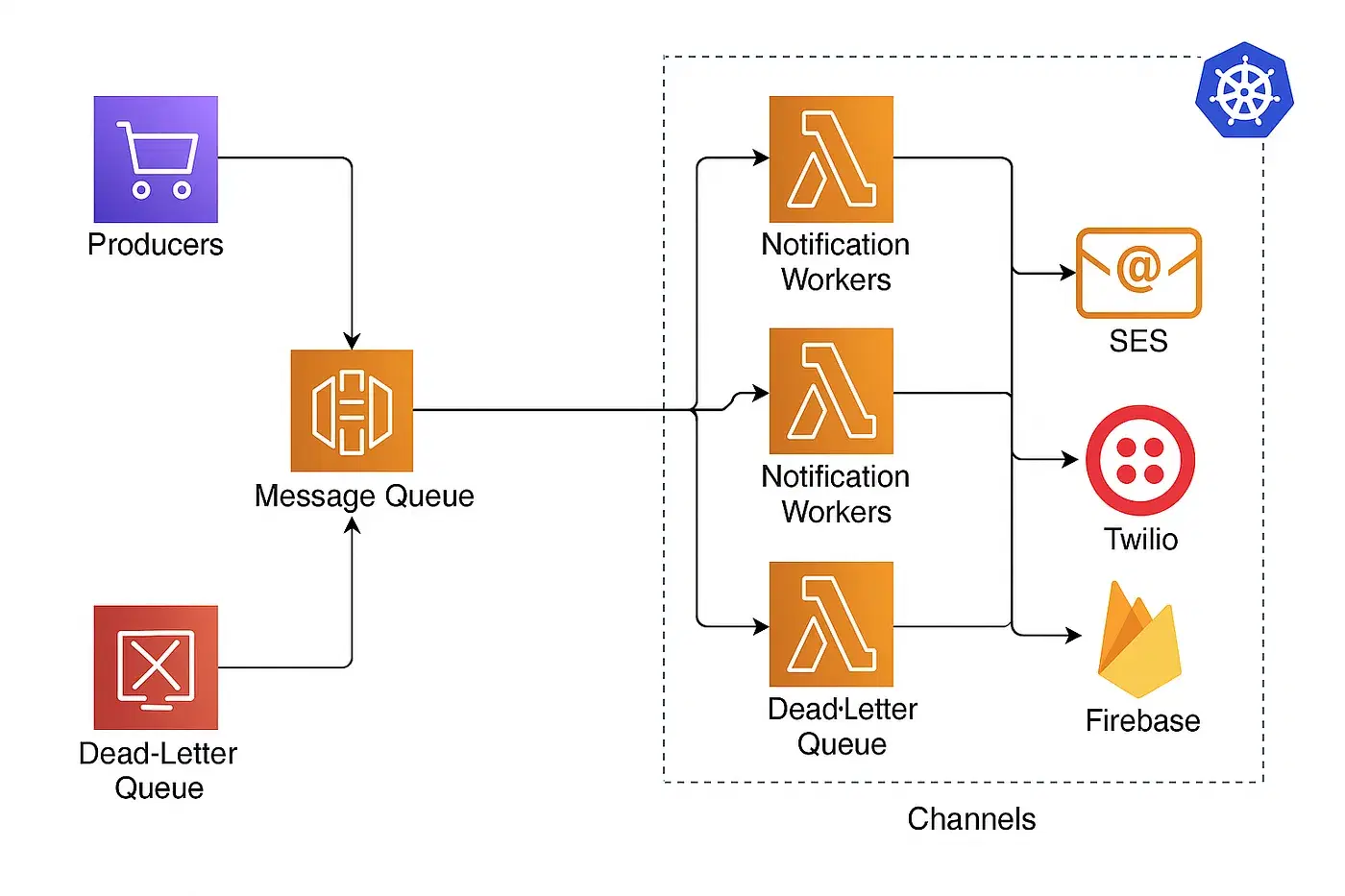
Engineering a high-deliverability unclaimed funds alerting engine requires resilient event-driven architecture and sophisticated matching algorithms.
Why Notifications Are Hard at Scale
Building a reliable notification platform that monitors public databases and alerts millions of citizens to uncollected property is a formidable systems engineering challenge. While the core product concept appears simple (match a user's name against public asset records and dispatch an alert), implementing this workflow across massive distributed datasets reveals significant operational complexities.
Data Decay and Stale Contacts
Consumer email addresses, phone numbers, and physical residences change frequently, creating high baseline bounce rates if contacts are not continuously verified.
Batch Spikes and Alert Fatigue
Public data releases often occur in massive state batch drops containing hundreds of thousands of new records, generating severe throughput spikes across notification queues. System architectures must prevent alert fatigue by ensuring consumers do not receive repeated notifications for identical recurring records.
Event-Driven Architecture for Alerts
Modern asynchronous messaging architectures decouple data ingestion pipelines from outbound notification services and other downstream services. As explained in Wikipedia's Event-Driven Architecture Overview, decoupled designs let components emit and subscribe to events independently of each other, which provides fault tolerance and horizontal scalability.
Core Architectural Pipeline
Key architectural principles include:
- Message Brokers: Ingestion pipelines send newly discovered candidate matches to a distributed message queue like Apache Kafka or RabbitMQ.
- Worker Pools: Flexible worker pools pull incoming notification tasks from the queues, with rate limits and throttling for third-party communication APIs.
- Idempotency Safeguards: Each notification task carries a deterministic idempotency key, stored in an in-memory Redis cache, so the same notification is never dispatched twice.
- Resilient Retry Frameworks: Exponential backoff policies retry failed dispatches, and dead-letter queues (DLQs) collect the ones that still fail for automatic diagnostic analysis.
Maximizing Email & SMS Deliverability
Even the most advanced matching architecture is ineffective if the alert never reaches the user's main inbox. Maintaining a high sender reputation requires complete protocol compliance.
Cryptographic Email Authentication
Outbound communication systems must enforce strict email security protocols. With three email authentication standards (SPF, DKIM, and DMARC), described in Wikipedia's Email Authentication Guide, receiving mail servers can verify that your notifications come from a legitimate sending domain; DKIM does it with a cryptographic signature on each message.
Sender Reputation Management
Engineering teams must maintain dedicated IP pools, execute gradual IP warming protocols for new sending domains, and actively process feedback loops from major internet service providers (ISPs) to purge bouncing or unsubscribed addresses instantly.
Matching Records to the Right Person
Dispatching notifications based solely on exact string equality generates an unacceptable rate of false positives, eroding user trust. A reliable alerting engine implements multi-tier entity resolution:
- Deterministic Matching: Exact validation of full legal name, standardized date of birth and known tax identification segments, where the source record includes them.
- Probabilistic Matching: Jaro-Winkler distance and Levenshtein distance tolerate minor typographical errors, hyphen omissions and even reversed name components.
- Geographic Correlation: Each candidate property address is compared one to one with the user's known residential addresses and given a confidence score.
High-priority alerts are sent only for records above a set confidence level (for example, an 85% composite score).
How a Real Platform Approaches This
Engineering these interconnected systems requires aligning data engineering, machine learning pipelines, and message delivery infrastructure into a unified user-facing service.
Purpose-built platforms such as ClaimNotify center their entire product around getting the right alert to the right person about funds they're owed. Today's platforms can continuously poll multi-state repositories, normalize data from a diverse set of public sources and run modern notification delivery pipelines, removing the manual friction that has made people less likely to find property held in their name.
Monitoring, Metrics & Feedback Loops
Running a production-grade alerting platform demands full observability dashboards with real-time delivery telemetry:
- Delivery and Ingestion Latency: Measuring the time elapsed between public data publication and final alert dispatch.
- Delivery Success Rates: Tracking bounce, drop, and spam complaint metrics across distinct sending providers and geographic recipient segments.
- Claim Conversion Rate: Measuring the percentage of dispatched alerts that result in active claim initiations, providing an objective metric of matching engine precision.
Conclusion
An unclaimed funds alert is one short message, and nearly everything that decides whether it helps happens before it is sent. The pipeline has to absorb a state batch drop without sending anyone the same alert twice, which is the job of the queue, the idempotency key and the dead-letter queue. The mail also has to pass SPF, DKIM and DMARC, or it lands in spam however good the match was.
Matching is where users decide whether to trust the service. Hold back any record under your confidence threshold, and track claim conversion over time, since it shows whether the matching engine is getting people right.
Related DevToolLab Tools
- Exponential Backoff Calculator - plan the retry delays a notification worker waits through before a failed send moves to the dead-letter queue.
- SPF Record Checker - confirm the sending domain's SPF record lists every service that sends your alerts.
- DMARC Checker - read the DMARC policy receivers apply when an alert fails SPF or DKIM.
- Email Header Analyzer - trace a delivered alert's headers to see its SPF, DKIM and DMARC results.
Related Guides
- Email Authentication for Developers - SPF, DKIM, DMARC, BIMI and MTA-STS setup for a sending domain
- Best Email API Providers - Resend, Postmark, SendGrid, Amazon SES and Mailgun for the delivery leg
- Kafka Alternatives - message brokers for the ingestion queue, with costs compared
- Rate Limiting Algorithms Compared - the throttling behind worker pools that call third-party APIs