
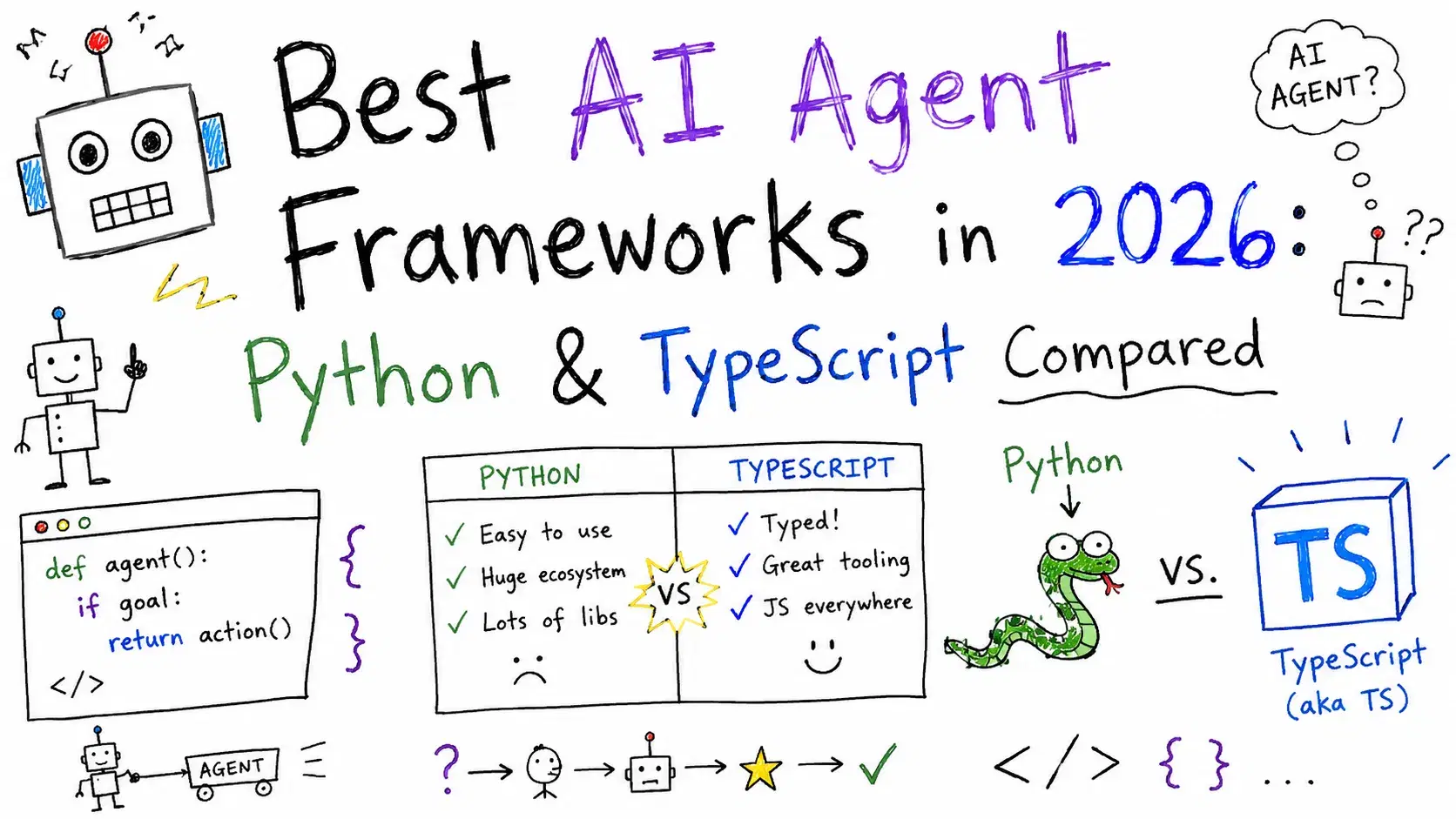
In LangChain's State of Agent Engineering report, published June 12, 2026, 57% of the 1,340 engineers surveyed said they run AI agents in production, and among organizations with 10,000+ employees that number climbs to 67% (LangChain). Agents crossed the line from demo to infrastructure sometime in the last year, and the tooling followed: LangGraph shipped 1.0, OpenAI replaced its experimental Swarm library with a production SDK, Google's Agent Development Kit went 1.0 across four languages, and a TypeScript-native framework raised $22M.
That is a lot of movement, and it makes "which framework should I use?" harder to answer than it was in 2024, not easier. This guide walks through the frameworks that actually show up in production in 2026, what each is genuinely good at, and what is annoying about it. It leans developer-first: no vendor pitches, just the tradeoffs you will hit in week two.
What an Agent Framework Actually Gives You
At its core, an "AI agent" is a loop: an LLM decides to call a tool, you run the tool, you feed the result back, and it decides what to do next until the task is done. You can write that loop yourself in about 40 lines. What a framework buys you is everything around the loop that gets painful at scale:
- Tool/function calling with schema validation, so the model's arguments are actually the right shape.
- State and memory that survives across steps and sessions, including checkpointing for long-running jobs.
- Multi-agent orchestration - handoffs, supervisors, or graphs - when one agent isn't enough.
- Guardrails on inputs and outputs so a jailbreak or a malformed response doesn't reach your users.
- Observability: tracing every step, because debugging an agent by reading logs is miserable. In the LangChain survey, 94% of teams with production agents had some form of observability in place.
The differences between frameworks come down to how much of that they handle for you, how much control they hand back, and which language and cloud they pull you toward.
The 2026 Shift: Framework Lock-In Is Fading
Before the frameworks themselves, the single most important trend: two interoperability protocols are turning agent architecture into Lego. MCP (the Model Context Protocol) standardizes how an agent talks to tools and data. A2A (Agent2Agent) standardizes how one agent talks to another, even across frameworks and vendors. A2A was donated to the Linux Foundation and reached a stable v1.0 with more than 150 supporting organizations as of April 2026 (Linux Foundation), and MCP is now native in OpenAI's SDK, Google's ADK, Microsoft's framework, LangGraph, Strands, Mastra, and more.
The practical upshot: your framework choice matters less than it used to, because the tools you wire up (via MCP) and the agents you interoperate with (via A2A) live at the protocol layer, not inside one vendor's SDK. Pick the framework with the best developer experience for your team and language, not the one you think everyone else will standardize on. If you are new to MCP, our roundup of the best MCP servers and the guide to building an MCP server in Python are good starting points.
Quick Comparison
| Framework | Language | Maintainer | License | Best For |
|---|---|---|---|---|
| LangGraph | Python, JS/TS | LangChain | MIT | Durable, controllable long-running workflows |
| CrewAI | Python | CrewAI, Inc. | MIT | Fast role-based multi-agent prototypes |
| OpenAI Agents SDK | Python, TS | OpenAI | MIT | Simple, transparent agents on OpenAI models |
| Google ADK | Python, Go, Java, TS | Apache 2.0 | Vertex AI shops, A2A-first designs | |
| Microsoft Agent Framework | .NET, Python, Go | Microsoft | MIT | Enterprise .NET / Azure Foundry |
| Pydantic AI | Python | Pydantic | MIT | Type-safe, validated structured outputs |
| LlamaIndex | Python, TS | LlamaIndex, Inc. | MIT | RAG-heavy, knowledge-intensive agents |
| Agno | Python | Agno AGI | Apache 2.0 | High-performance agents with a built-in runtime |
| smolagents | Python | Hugging Face | Apache 2.0 | Minimal, code-writing agents |
| AWS Strands | Python, TS | AWS | Apache 2.0 | Bedrock / AWS-native deployments |
| Mastra | TypeScript | Mastra (YC) | Apache 2.0 (core) | Full-stack TypeScript teams |
The Python General-Purpose Frameworks
LangGraph
LangGraph models an agent as a graph of nodes and edges over a persistent, checkpointed state object. It is the low-level, high-control option: you say exactly how execution flows, where it pauses for human approval, and how state is saved and resumed. LangGraph reached 1.0 on October 22, 2025, and its parent company LangChain raised a $125M Series B at a $1.25B valuation two days earlier (SiliconANGLE), so it is not going anywhere.
Best at: durable, long-running workflows with human-in-the-loop steps and deep observability through LangSmith. Weakness: the API is verbose and the learning curve is real. For a three-step agent it is overkill; its value shows up when flows get conditional and long.
CrewAI
CrewAI takes the opposite approach: you describe agents by role, goal, and backstory, then let them collaborate as a "crew." It is the fastest way to get a readable multi-agent prototype running, and it is genuinely independent of LangChain (a common misconception). It is MIT-licensed with a large community.
Best at: intuitive multi-agent setups and quick prototyping when the role metaphor fits your problem. Weakness: the higher-level abstractions give you less fine-grained control than a graph framework when flows get complex or highly conditional.
Pydantic AI
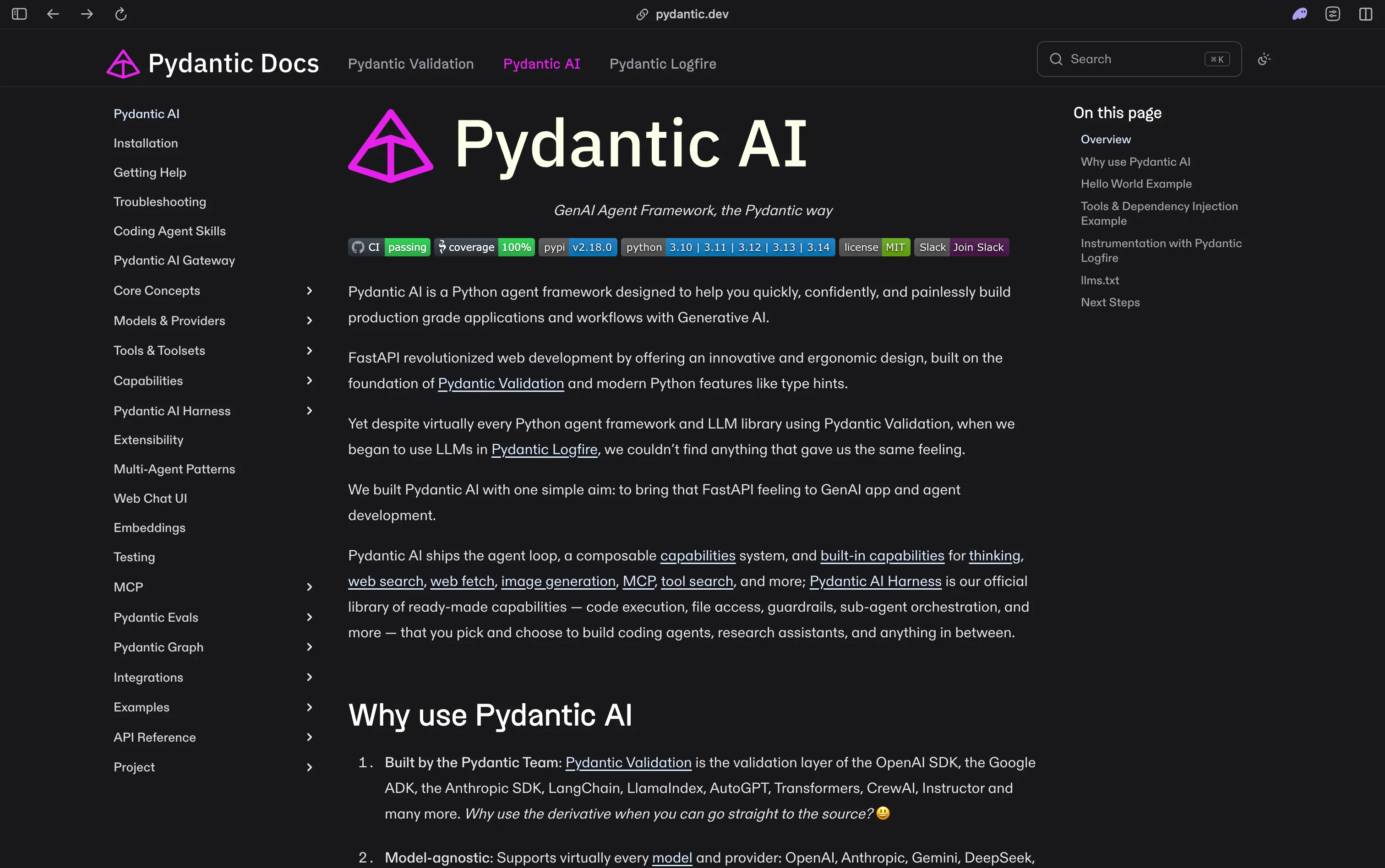
Pydantic AI brings the validation engine that half the Python ecosystem already uses to LLM outputs. You define a Pydantic model, and the framework makes the LLM return data that conforms to it, with real validation rather than hopeful parsing. It is past its 1.0 release and model-agnostic across 20+ providers.
Best at: type-safe, structured, validated outputs and a clean Python developer experience. Weakness: the multi-agent orchestration story is younger than the dedicated graph frameworks, so for complex agent-of-agents topologies you may still reach for LangGraph.
Agno
Agno (renamed from Phidata on January 31, 2025 - do not go looking for "Phidata," it is the same project) focuses on performance and pairs a lightweight SDK with AgentOS, a FastAPI-based runtime for actually deploying what you build. It is Apache 2.0 licensed.
Best at: speed and a batteries-included path from prototype to a running service. Weakness: a smaller enterprise track record than the incumbents, and some lingering confusion from the rebrand.
smolagents
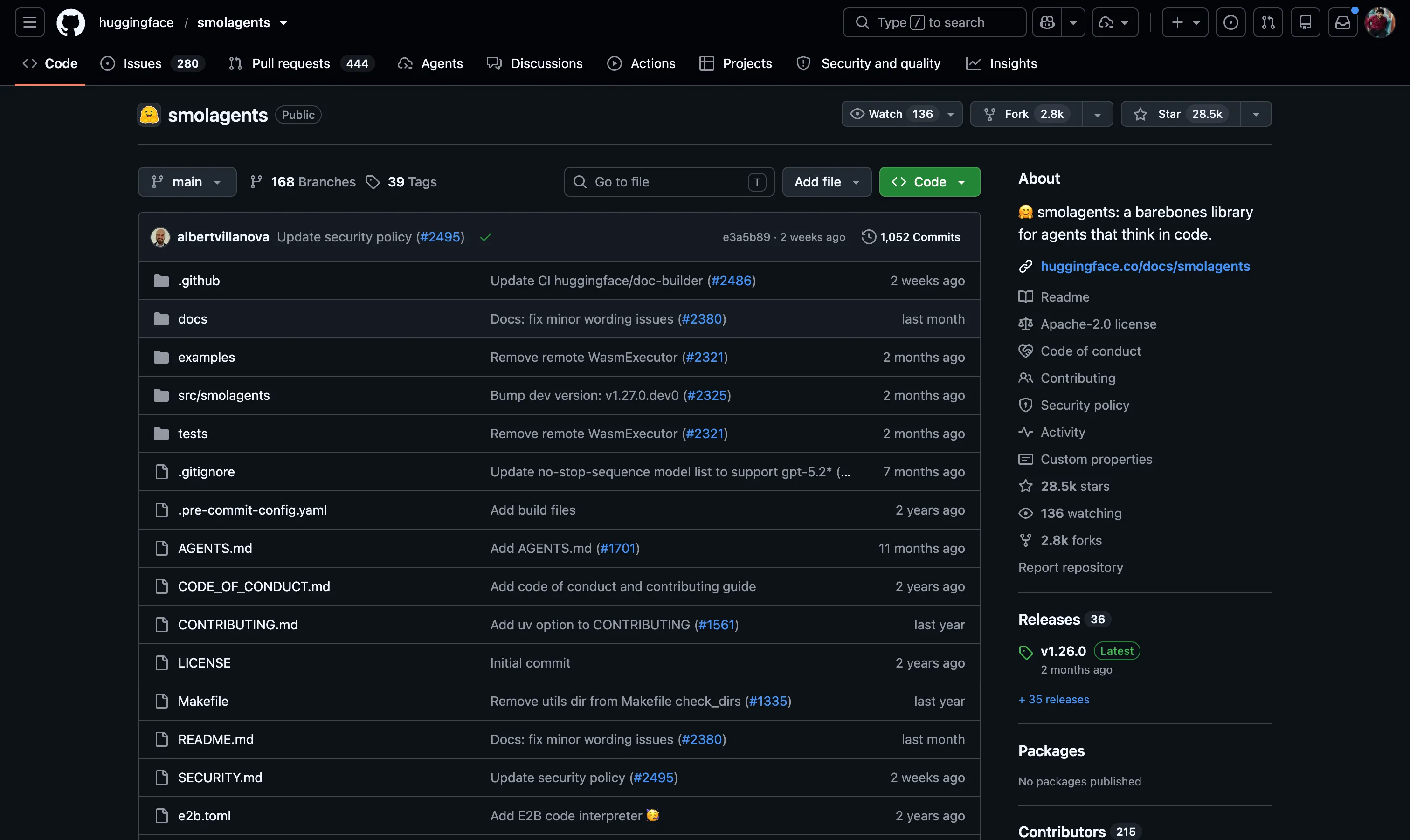
Hugging Face's smolagents is a deliberately tiny library (its core is around a thousand lines) built on one strong idea: let the LLM write executable Python code instead of emitting JSON tool calls. For a lot of tasks, "think in code" is more expressive than a rigid function-call schema.
Best at: minimalism, code-first agents, and the Hugging Face open-model ecosystem. Weakness: it is intentionally bare - not an orchestration platform - and letting a model run code demands proper sandboxing.
LlamaIndex
LlamaIndex started as the leading RAG framework and has repositioned as a data-plus-agent framework, with AgentWorkflow as its multi-agent layer and a Workflows 1.0 release for event-driven agentic systems.
Best at: RAG-heavy, knowledge-intensive agents where retrieval quality is the whole game, backed by its deep library of data connectors. Weakness: the orchestration side is less mature than purpose-built agent frameworks, and it still carries a RAG-first identity.
The Vendor SDKs
OpenAI Agents SDK
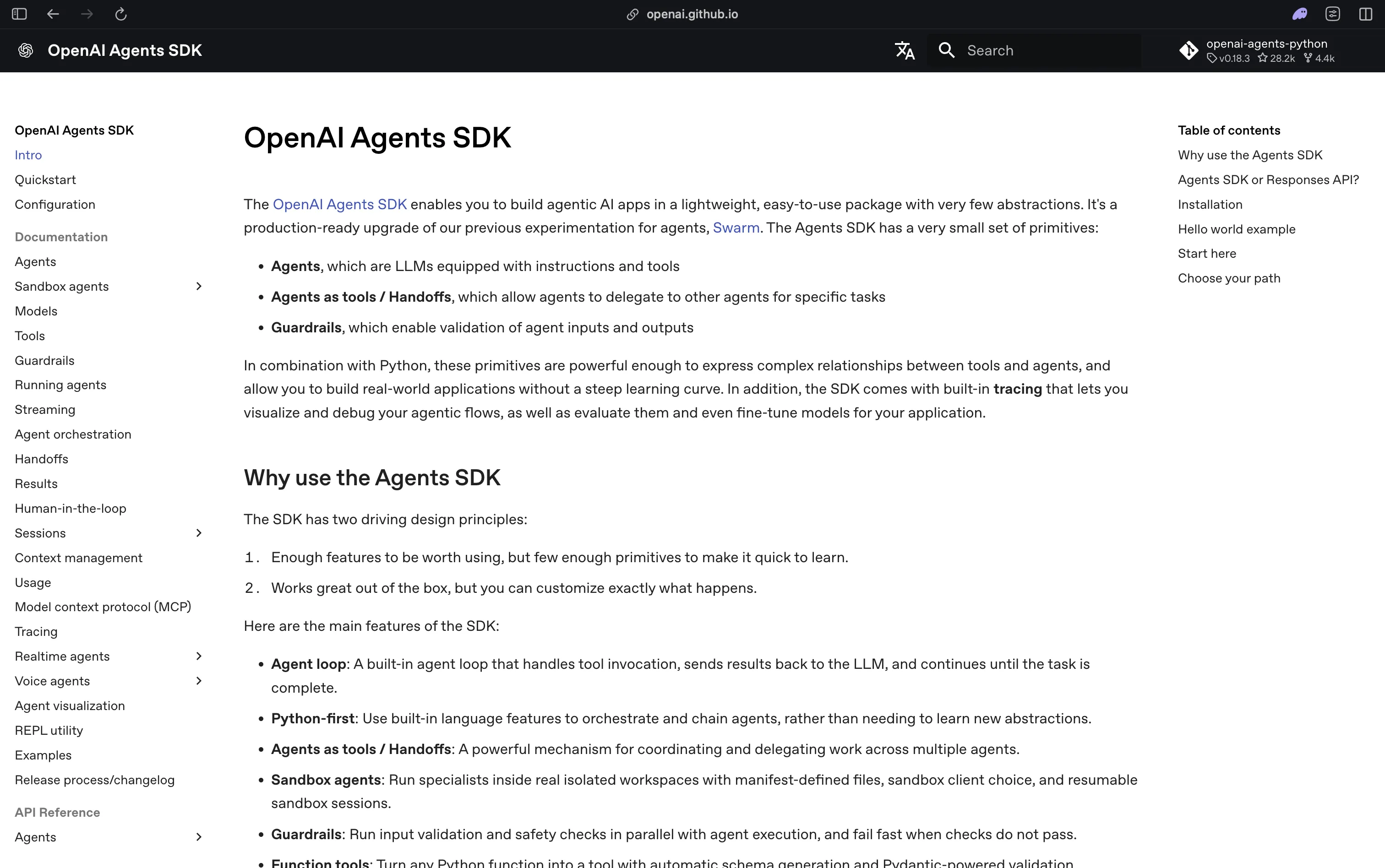
The OpenAI Agents SDK is the production successor to the experimental Swarm library (which is deprecated - don't start there). It is deliberately un-magical: the primitives are Agents, Handoffs (one agent delegates to a specialist), Guardrails (input/output validation that runs in parallel), Sessions (memory), and built-in Tracing, plus native MCP support and voice agents through the Realtime API. It ships in Python and TypeScript.
Best at: simplicity and transparency, with tight integration into OpenAI's Responses and Realtime APIs. It supports 100+ models via LiteLLM, so it is not strictly OpenAI-only. Weakness: the design gravity still points at OpenAI, and its heavy-orchestration feature set is thinner than a dedicated graph framework's. Note it is described as production-ready but is not yet a formally versioned 1.0, so pin your version.
Google Agent Development Kit (ADK)
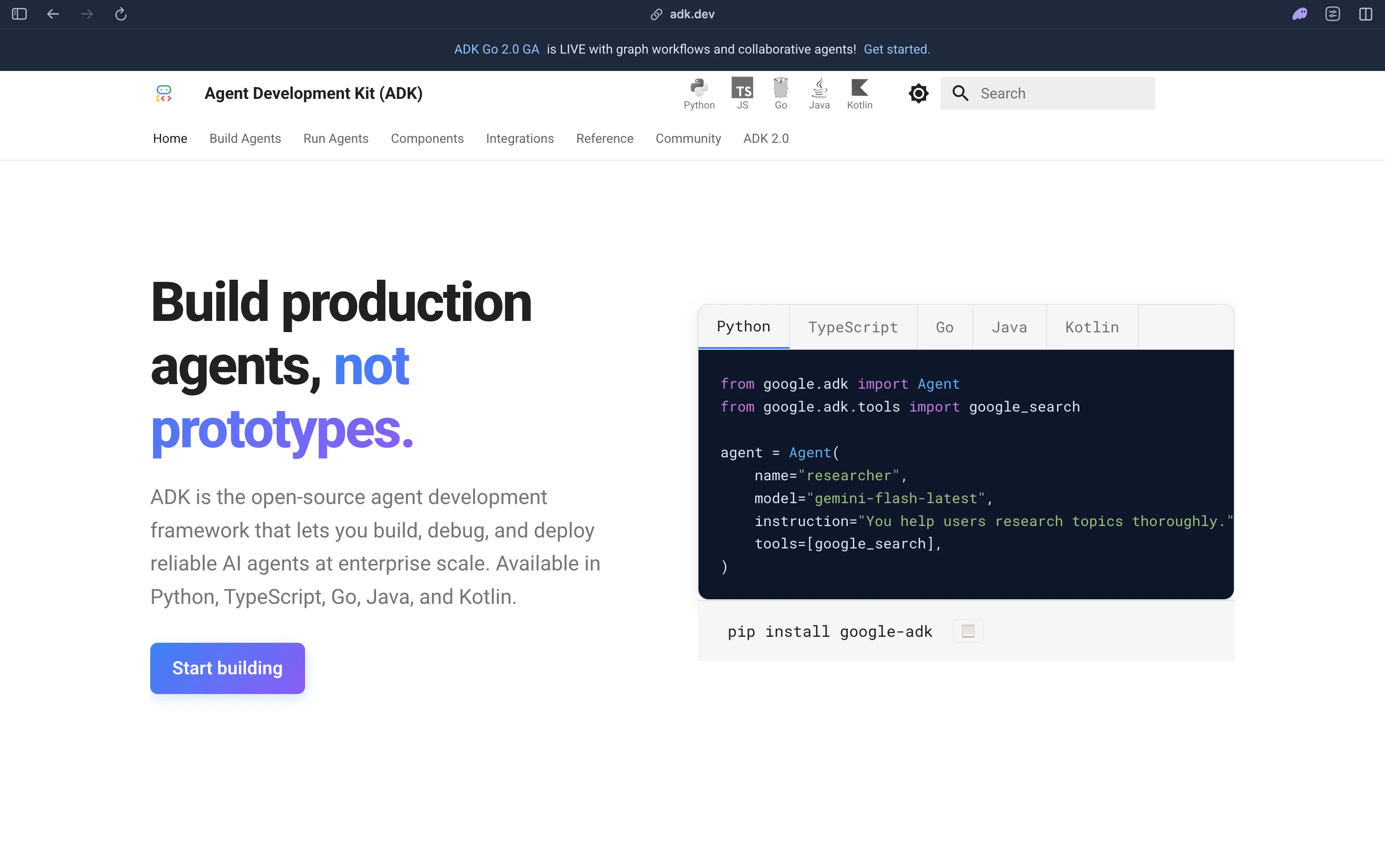
Google's ADK went 1.0 and GA across Python, Go, Java, and TypeScript around Google Cloud Next in April 2026, and it is A2A-native out of the box. It integrates tightly with Vertex AI's Agent Engine for deployment.
Best at: teams on Google Cloud, multi-language shops, and anyone designing around A2A from day one. Weakness: it is a newer ecosystem and, unsurprisingly, pulls you toward Google Cloud.
AWS Strands Agents
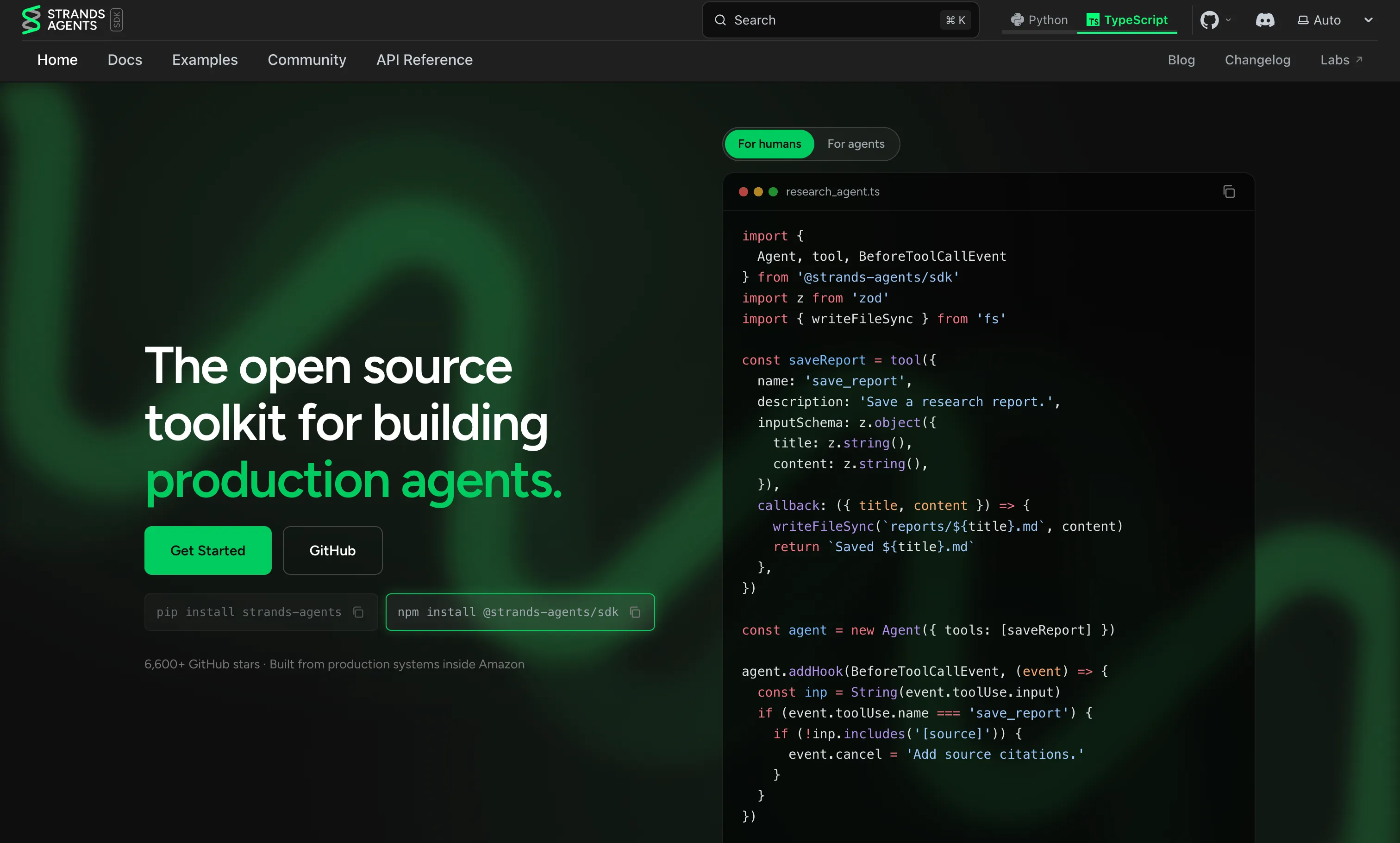
Strands is AWS's open-source, model-driven agent SDK, now at 1.0 with multi-agent primitives and A2A support. Amazon uses it internally for products like Amazon Q Developer, so it is battle-tested inside AWS. It ships Python and TypeScript.
Best at: AWS and Bedrock-native deployments with a simple, model-driven design and big-vendor backing. Weakness: the same gravity problem in reverse - it assumes you live in AWS - and the repo structure is still evolving.
Microsoft Agent Framework
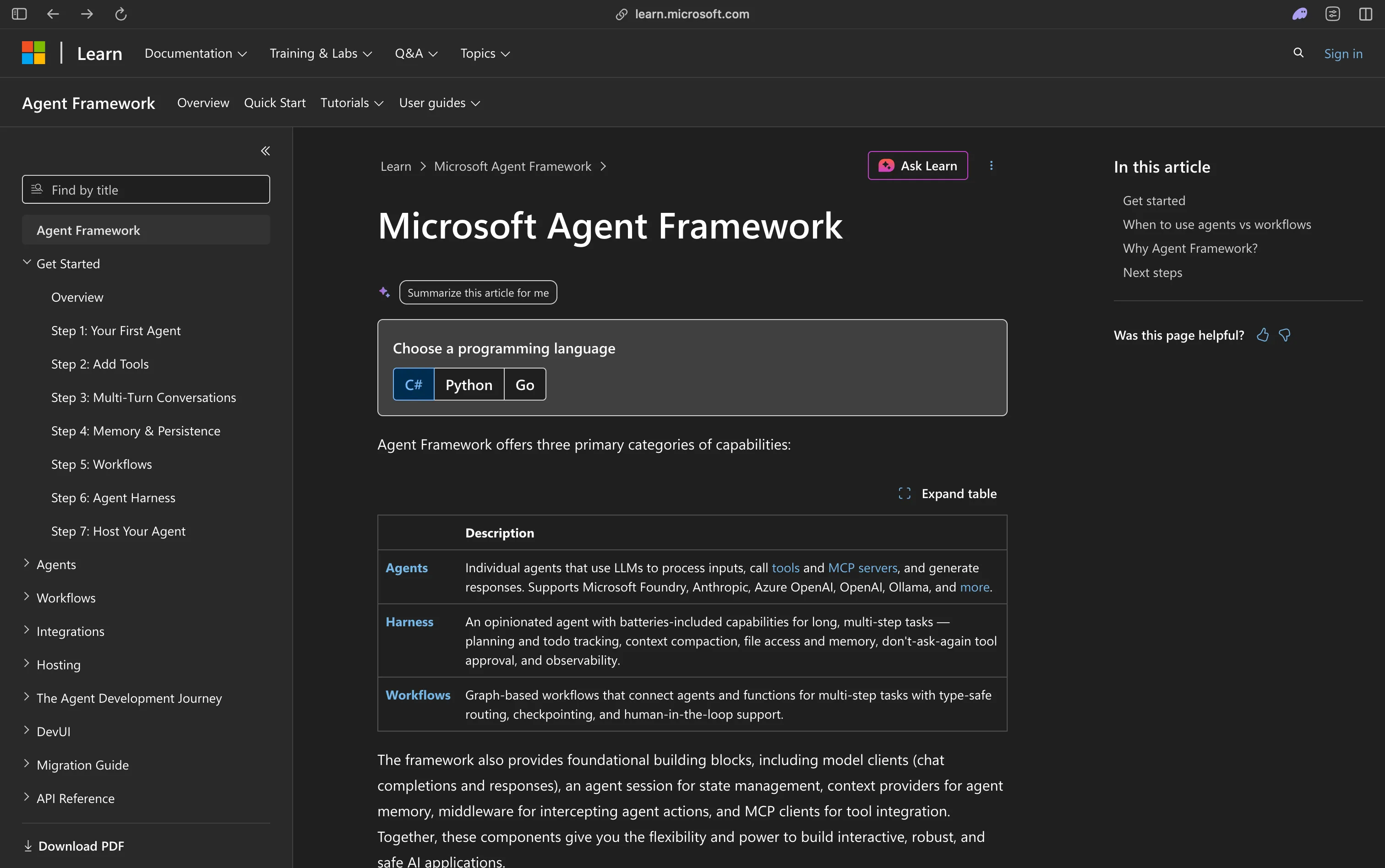
This one needs untangling, because Microsoft had three overlapping products. The Microsoft Agent Framework is the new unified SDK and the direct successor to both AutoGen and Semantic Kernel, merging AutoGen's multi-agent abstractions with Semantic Kernel's enterprise features (sessions, telemetry, type safety). It entered public preview on October 1, 2025, and supports .NET, Python, and Go.
Crucially, AutoGen and Semantic Kernel are both now in maintenance mode - bug and security fixes only, no new features. If you are starting fresh on the Microsoft stack, use Agent Framework, not Semantic Kernel, even though plenty of older tutorials still point at the latter.
Best at: enterprise .NET shops on Azure AI Foundry that need typed workflows, governance, and telemetry. Weakness: it is young as a unified product, and if you are on AutoGen or Semantic Kernel today there is a migration ahead of you.
The TypeScript Wave
Python still dominates agent development, but 2026 is the year JavaScript and TypeScript became first-class. Every major framework above now ships a TS path (LangGraph.js, OpenAI Agents JS, ADK TypeScript, Strands TS), and two TS-native options stand out.
Mastra is the leading standalone TypeScript agent framework (agents, workflows, RAG, and evals in one toolkit), built by the team behind Gatsby. It raised a $22M Series A led by Spark Capital on April 9, 2026, bringing its total to $35M (Mastra), and hit 1.0 in January 2026. Its core is Apache 2.0.
The Vercel AI SDK is the other pillar - less a full agent framework, more the standard toolkit for LLM apps in the JS ecosystem, with agent primitives, tool approval, and full MCP support added in its recent major versions. If your product is already a Next.js app, this is the path of least resistance.
Best at: full-stack teams who want their agents in the same language and repo as their app. Weakness: the surrounding model and tooling ecosystem is still richer in Python, so you occasionally hit a library that is Python-only.
How to Choose
Work top-down and you will usually land quickly:
- What language is your team fluent in? If it is TypeScript, start with Mastra or the Vercel AI SDK and skip the "but Python has more examples" guilt. If Python, continue below.
- Are you locked to a cloud or model vendor? On Azure, use Microsoft Agent Framework. On Google Cloud, ADK. On AWS/Bedrock, Strands. On OpenAI models, the Agents SDK. These integrate best with their home turf.
- Is your agent mostly retrieval over your own data? LlamaIndex, for the connectors and retrieval quality.
- Do you need type-safe, validated outputs above all? Pydantic AI.
- Do you have complex, long-running, conditional workflows with human approval steps? LangGraph, and accept the learning curve.
- Do you want a readable multi-agent prototype fast? CrewAI, or Agno if you also want a built-in runtime.
Whatever you pick, build against MCP for tools and A2A for agent-to-agent calls. That keeps the expensive parts of your system - the tools and integrations - portable if you change frameworks later.
A Minimal Type-Safe Agent
Here is what "structured, validated output" looks like in practice with Pydantic AI. The agent is told to extract fields, and the framework guarantees the result matches your schema or raises rather than handing you malformed data. It runs locally once you pip install pydantic-ai and set an API key:
Pythonfrom pydantic import BaseModel from pydantic_ai import Agent class Weather(BaseModel): city: str temperature_c: float conditions: str agent = Agent( "openai:gpt-5", output_type=Weather, system_prompt="Extract the weather details the user mentions.", ) result = agent.run_sync("It's 22 degrees and sunny in Lisbon today.") print(result.output) # city='Lisbon' temperature_c=22.0 conditions='sunny'
The output_type=Weather line is the whole point: instead of parsing free text and hoping, you get a typed Weather object your code can rely on, or a validation error you can catch. Every serious framework has some version of this now, because "get reliable structured data out of an LLM" is the single most common thing production agents need.
Related DevToolLab Tools
- JSON Schema Generator - Turn a sample response into a JSON Schema for your agent's tool and function-call definitions.
- JSON to Pydantic - Generate a Pydantic model from example JSON, the source of truth for a Pydantic AI agent's outputs.
- AI Token Counter - Estimate context-window usage and API cost before an agent loop blows its token budget.
- MCP Server Config Generator - Build a valid MCP server config to wire tools into Claude, Cursor, or your own agent.
- API Key Validator - Quickly confirm your OpenAI, Anthropic, or Google AI key works before debugging your agent code.
- JSON Viewer - Explore nested agent traces and tool-call payloads as a collapsible tree instead of a wall of text.
Conclusion
There is no single best AI agent framework in 2026, and thanks to MCP and A2A there does not need to be. Match the framework to your team's language and your cloud: Mastra or the Vercel AI SDK for TypeScript, LangGraph for complex Python workflows, Pydantic AI for type-safe outputs, LlamaIndex for RAG, CrewAI or Agno for fast multi-agent prototypes, and the OpenAI, Google, AWS, or Microsoft SDK when you are already living on that vendor's platform. Steer clear of the projects in maintenance mode (Swarm, AutoGen, Semantic Kernel) for anything new. Then spend your real effort on the parts that don't come from the framework at all: good tools, tight guardrails, and observability you can actually debug with.
Versions, funding, and licensing reflect the state of these projects as of July 2026 and move fast. Confirm the current version and license on each project's repository before you commit, and pin your dependencies.